Moneymaxxing Explained: Gen Z Money Trend
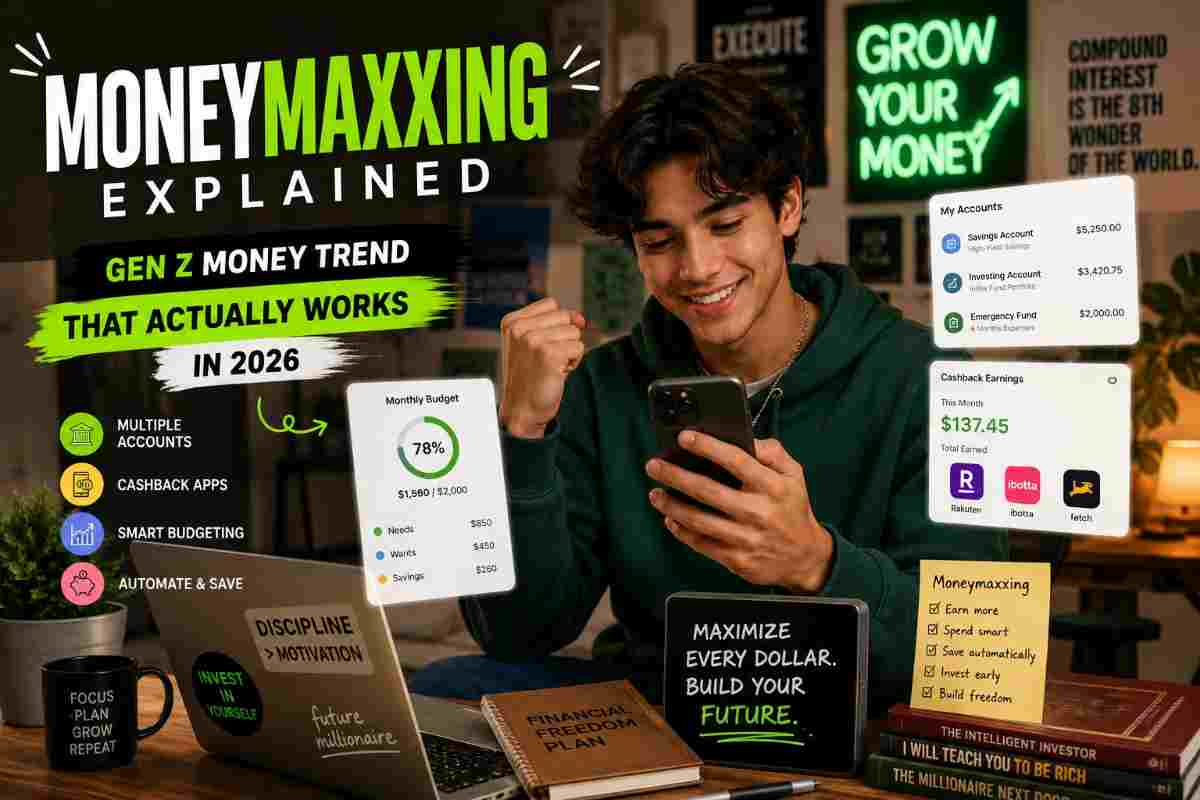
Discover moneymaxxing, a Gen Z money trend. Learn five practical ways to maximize savings, cashback, and wealth-building habits.
Let me tell you about a money trend that's actually worth your attention.
I've seen a lot of viral money trends come and go. Girl math. Loud budgeting. Cash stuffing. Most of them are entertaining but not exactly life-changing. They're trends. They fade.
But moneymaxxing is different. And here's why: it's not really a trend at all. It's a rebranding of something that actually works. Certified financial planner Felicia Greenwald, CFP®, CPA, puts it bluntly: "It's not anything new, but it's giving a new face to what people have already been doing".
Moneymaxxing is the all-in approach to making your money work harder for you. It's about taking an intentional look at your financial habits and asking: how can I make the most of what I have?
Unlike looksmaxxing, which fades over time, moneymaxxing could have lasting benefits for your financial future. Between claiming rewards, earning cash back, increasing savings growth and establishing financial flexibility, moneymaxxers are redirecting their energy and finances from things like appearance or lifestyle to their actual bank accounts.
This isn't just another TikTok fad. Financial advisors are backing it. And if you're serious about building wealth, you need to pay attention.
What Is Moneymaxxing? The Definition
Moneymaxxing is exactly what it sounds like: maximizing your money. Every dollar you earn, you optimize. Every account you have, you maximize. Every rewards point, cashback offer, and interest rate you can get, you get.
It's the practice of squeezing the most out of everything you do with your finances. That might look like:
- Moving savings into higher-yield accounts
- Using rewards programs more intentionally
- Reviewing subscriptions and recurring expenses
- Looking for ways to improve how—and where—money is allocated
On the surface, these may just feel like basic financial tips. But at its core, moneymaxxing reflects a wider desire to be thoughtful, deliberate, and proactive with your finances.
Financial expert Jesse Mecham, founder of the YNAB budgeting app, breaks it down simply: "You literally log into your bank account and you just kind of blur your eyes a little bit and start to scroll and look for those bigger numbers to pop out". That's the scroll test. That's where moneymaxxing starts.
Why Moneymaxxing Matters: The Economic Reality
Here's the thing about moneymaxxing. It's not happening in a vacuum. It's a direct response to the economic reality young people are facing.
Let me give you the numbers.
According to Northwestern Mutual's 2026 Planning & Progress study, over half of millennials and 72% of Gen Zers still rely on their parents for financial support. On average, young adults don't expect to be financially independent until age 37. That's approximately 20 years after the average American's high school graduation.
Nearly half (43%) of millennials say they don't have a retirement account, and nearly one-third (31%) lack a savings account. 79% of Gen Z respondents and 66% of millennials don't have an emergency fund.
And it's not just younger generations feeling the strain. 22% of both Gen X and Boomers do not expect to become financially independent, ever.
This is the backdrop against which moneymaxxing emerged. When the system isn't providing security, people create their own. Moneymaxxing is that creation. It's a way to build multiple safety nets, diversify risk, and create options where none seem to exist.
Jack Howard, head of money wellness at Ally Bank, told CNBC that moneymaxxing focuses on building everyday habits for long-term financial success, rather than chasing short-lived money hacks. This is why she believes the movement may have staying power. Once you've built a habit, it often stays with you and infiltrates subconsciously into daily routines.
Moneymaxxing vs. Other Maxxing Trends: What Makes It Different
If you've been on social media lately, you've probably encountered some version of "maxxing." Looksmaxxing. Sleepmaxxing. Vacationmaxxing. Even breadmaxxing. The internet has turned the suffix into shorthand for optimizing everyday aspects of your life.
Moneymaxxing is different. Here's why.
- It's sustainable. Looksmaxxing fades. Moneymaxxing builds lasting habits.
- It's backed by experts. Unlike many viral trends, financial advisors are endorsing moneymaxxing.
- It's not about deprivation. Moneymaxxing isn't about not spending anything. It's about focusing on things that bring you joy and value.
- It gamifies saving. Greenwald describes it as "like the FIRE movement — financial independence, retire early — but gamified. It makes saving feel like something you can do without going the normal route".
CFP Board Ambassador Felicia Greenwald, CFP®, CPA, explained that the moneymaxxing trend is a modern, gamified take on optimizing financial habits to make the most of one's resources. While the concept isn't new, she notes it reframes familiar ideas, similar to the FIRE movement, in a way that makes saving and financial planning feel more engaging and accessible.
How to Start Moneymaxxing: A Step-by-Step Guide
Ready to start moneymaxxing? Here's exactly how to do it, based on advice from financial experts and real people who are making it work.
Step 1: Take the "Scroll Test"
Jesse Mecham, founder of YNAB, says the first step to moneymaxxing is to examine your current financial picture. "You literally log into your bank account and you just kind of blur your eyes a little bit and start to scroll and look for those bigger numbers to pop out," Mecham said.
This is about awareness. You can't optimize what you don't know. Start by tracking every expense for 30 days. You'll be shocked at what you find.
Step 2: Identify What Purchases Aren't Worth Your Money
After figuring out where your money is going, Mecham recommends cutting out what purchases are unnecessary and doubling down on those that are. "We really have to make sure that we acknowledge where spending lights us up, where it has us feeling some joy," said Mecham.
Katia Chesnok, a mom of four who shares her moneymaxxing journey on TikTok, told ABC News that to her, moneymaxxing means automating her savings, cooking meals at home more than she eats out, and cutting out impulse purchases for unnecessary items like a trendy new gadget.
Step 3: Add a Time Limit to Cut Spending and Add to Savings
Next, Mecham says follow through with your money-saving goals by setting time limits. "Say, 'I'm going to maximize my money for 30 days. I'm going to hit these goals. I'm going to hit these targets,'" Mecham said.
"And then, 'I'm not going to money max, but I'm going to become money curious about what did I learn, and where does this take me next?'"
This is the key insight. Moneymaxxing isn't about extreme frugality forever. It's about building awareness and creating lasting habits. As Mecham puts it, one of the keys to moneymaxxing success is to shift your ideas about money in order to take control of spending habits and identify what is worth spending time and money on.
Step 4: Automate Your Savings
Chesnok said that to her, moneymaxxing means automating her savings. This is one of the most powerful moves you can make. Set up automatic transfers to your savings account on payday. If you never see the money, you can't spend it.
High-yield savings apps and rewards platforms fit the trend by design. Tools that automate savings, round up purchases, or track cashback and points are built around the same principle moneymaxxing promotes: small, consistent optimization instead of one-off budgeting efforts.
Step 5: Maximize Rewards and Cashback
Moneymaxxing involves using rewards programs more intentionally. This means using cashback credit cards (if you pay your balance in full), shopping through cashback apps like Rakuten, and redeeming rewards points strategically.
According to the Tribune, rewards-based spending has become more attractive to consumers who still want to enjoy dining out, travel, subscriptions, and other lifestyle expenses while receiving incentives in return. Digital financial platforms are capitalizing on the trend by offering cashback programs, rewards points, and savings products designed to encourage more active money management.
The Moneymaxxing Mindset Shift
Here's what makes moneymaxxing different from other money trends. It's not just about the tactics. It's about the mindset.
The moneymaxxing trend resonates across generations in part because social media has slowly dismantled the anxiety around talking about money. "Older generations are the ones that haven't talked about money their whole lives — it's been even more taboo for them," Greenwald says.
Seeing real people share their account balances, pay stubs, and savings milestones makes finances feel less isolating and more actionable. "When those numbers are real, and people are talking about real figures, it's easy for people to understand and not feel so alone in their own financial struggles," she adds.
This is the shift. Money is no longer a secret. It's a conversation. And that conversation is helping people take control.
The Accountsmaxxing Connection: Two Sides of the Same Coin
If you've been following Gen Z money trends, you've probably also heard of accountsmaxxing. While moneymaxxing focuses on optimizing every dollar, accountsmaxxing focuses on maximizing every financial account you can open.
They're related but different. Moneymaxxing is the philosophy. Accountsmaxxing is the execution. One is the mindset. The other is the action.
Both reflect the same underlying reality: young people are taking control of their finances in ways previous generations never did. And they're using social media to learn, share, and hold each other accountable.
Where Moneymaxxing Goes Wrong (The Risks)
I'm not going to pretend moneymaxxing is perfect. Like any trend, it has risks.
1. The Temptation to Chase High-Risk Assets
Nearly 40% of young adults are investing or considering investing in high-risk assets like prediction markets. Thirty-two percent of Gen Z respondents said they were currently invested in cryptocurrency or considering investing in the field in 2026.
Moneymaxxing is about optimization, not gambling. Don't confuse the two.
2. The Social Media Misinformation Problem
Six in ten young adults who followed financial advice they found on social media ended up regretting it. Not all financial advice on TikTok is created equal. Some of it is dangerous.
As more young people turn to AI chatbots for quick financial guidance, the same question applies: does the tool build a real habit, or just the feeling of one?
3. The Danger of Extreme Frugality
A relentless focus on hyper-budgeting and aggressive wealth accumulation has emerged as the dominant financial trend across global social media platforms. But extreme frugality isn't sustainable. It's exhausting. It can strain relationships. And it can make you miserable.
Moneymaxxing isn't about not spending anything. It's about focusing on things that bring you joy and value. If you're cutting everything that makes you happy, you're doing it wrong.
What the Experts Say: Is Moneymaxxing Legit?
Financial experts are surprisingly positive about moneymaxxing. And that's rare for a viral trend.
CFP Board Ambassador Felicia Greenwald, CFP®, CPA, explained that the moneymaxxing trend is a modern, gamified take on optimizing financial habits to make the most of one's resources.
Jack Howard, head of money wellness at Ally Bank, told CNBC that moneymaxxing focuses on building everyday habits for long-term financial success, rather than chasing short-lived money hacks.
Mecham, the founder of YNAB, says one of the keys to moneymaxxing success is to shift your ideas about money in order to take control of spending habits and identify what is worth spending time and money on.
The consensus is clear: moneymaxxing repackages basic budgeting principles under a viral name. What is new is the audience: a generation facing unprecedented economic challenges. And if it gets young people paying attention to their finances, that's a win.
How to Make Moneymaxxing Work for You: The Complete System
Moneymaxxing is a great philosophy. But it works best when it's part of a larger wealth-building system.
Here's the complete system I recommend:
- Step 1: Know Your Numbers. Track every expense for 30 days. You can't optimize what you don't measure.
- Step 2: Build a Budget That Actually Fits Your Life. If your income is stable, the 50/30/20 rule is a great starting point. If your income fluctuates, read how to budget with irregular income. And if you want total control over every dollar, zero-based budgeting is the way to go.
- Step 3: Save Aggressively. I've written a detailed guide on the fastest way to save $10,000 that covers real strategies with real numbers.
- Step 4: Invest Consistently. Even small amounts matter. I've shown how $10 invested consistently can grow into something meaningful.
- Step 5: Increase Your Income. Moneymaxxing isn't just about cutting costs. It's about earning more. Explore AI side hustles or passive income ideas that can add hundreds of dollars to your monthly earnings.
The complete roadmap is in Building Wealth From Scratch: The 5-Step System That Actually Works. It covers everything from your first $500 saved to financial freedom.
And if you're struggling with the money habits that keep you broke, check out 25 Money Habits Keeping You Broke. Moneymaxxing can help you identify which of these habits you have and create a plan to break them.
Final Thoughts: Moneymaxxing Is a Cultural Shift, Not a Trend
Financial advisors have called moneymaxxing not a trend, but a "cultural shift". And I think they're right.
Moneymaxxing isn't going away. The economic conditions that created it are too entrenched. When 72% of Gen Z still relies on parents for financial support and the average American doesn't expect financial independence until age 37, people are going to find creative ways to take control.
The trend promotes practicing better financial habits, such as cutting expenses, redeeming rewards points and earning interest on savings. In an affordability crunch, that's not a trend. That's survival.
Katia Chesnok, the mom of four who moneymaxxes on TikTok, puts it perfectly: "It's not about not spending anything, but it's about focusing on things that bring you joy and that bring value for you and your family".
That's the real message of moneymaxxing. It's not about deprivation. It's about intentionality. It's about making every dollar count. And it's about taking control of your financial future.
If you're ready to stop bleeding money and start building wealth, moneymaxxing is the perfect place to start.
Recommended Reading
- Building Wealth From Scratch – The complete wealth system.
- The 50/30/20 Rule – A simple budgeting alternative.
- Zero-Based Budgeting – Total control over every dollar.
- How to Budget With Irregular Income – For freelancers and gig workers.
- The Fastest Way to Save $10,000 – Achieve your savings goals.
- 25 Money Habits Keeping You Broke – More traps to avoid.
- Best AI Side Hustles for Beginners – Real ways to earn extra income.
- 10 Free Ways to Start Earning Passive Income – Build multiple income streams.
Continue learning

Questions and answers
What is moneymaxxing?
Moneymaxxing is the all-in approach to making your money work harder for you. It involves taking an intentional look at your financial habits and optimizing every dollar through rewards, cashback, savings growth, and financial flexibility. It's like the FIRE movement but gamified.
Is moneymaxxing a legitimate financial strategy?
Yes. Financial experts are backing it. CFP Board Ambassador Felicia Greenwald describes it as a 'modern, gamified take on optimizing financial habits.' Jack Howard of Ally Bank says it focuses on building everyday habits for long-term financial success, rather than chasing short-lived money hacks.
How do I start moneymaxxing?
Start with the 'scroll test' — log into your bank account and look for bigger numbers that pop out. Identify what purchases aren't worth your money. Add a time limit to cut spending and add to your savings. Automate your savings. And use rewards programs and cashback apps more intentionally.
Is moneymaxxing just extreme frugality?
No. Moneymaxxing isn't about not spending anything. It's about focusing on things that bring you joy and value. It's about being intentional with your money, not depriving yourself. As one moneymaxxer put it, 'It's about focusing on things that bring you joy and that bring value for you and your family.'
What's the difference between moneymaxxing and accountsmaxxing?
Moneymaxxing is the philosophy of optimizing every dollar. Accountsmaxxing is the execution — aggressively opening and managing multiple financial accounts. They're related but different. One is the mindset. The other is the action.
Can moneymaxxing actually make me rich?
Moneymaxxing itself won't make you rich overnight. But the habits it builds — awareness, intentionality, automation, and optimization — are the same habits that build long-term wealth. It's a tool, not a magic bullet. Combined with consistent saving and investing, it can help you build significant wealth over time.
Moneymaxxing isn't a fad. It's a response to economic reality. When 72% of Gen Z still relies on parents for financial support and financial independence doesn't come until age 37, people need to take control. Moneymaxxing is that control. It's about making every dollar count. It's about being intentional. And it's about building habits that last. Start today. Take the scroll test. Cut what doesn't matter. Automate your savings. And watch your financial life transform.