How to Budget With Irregular Income in 2026
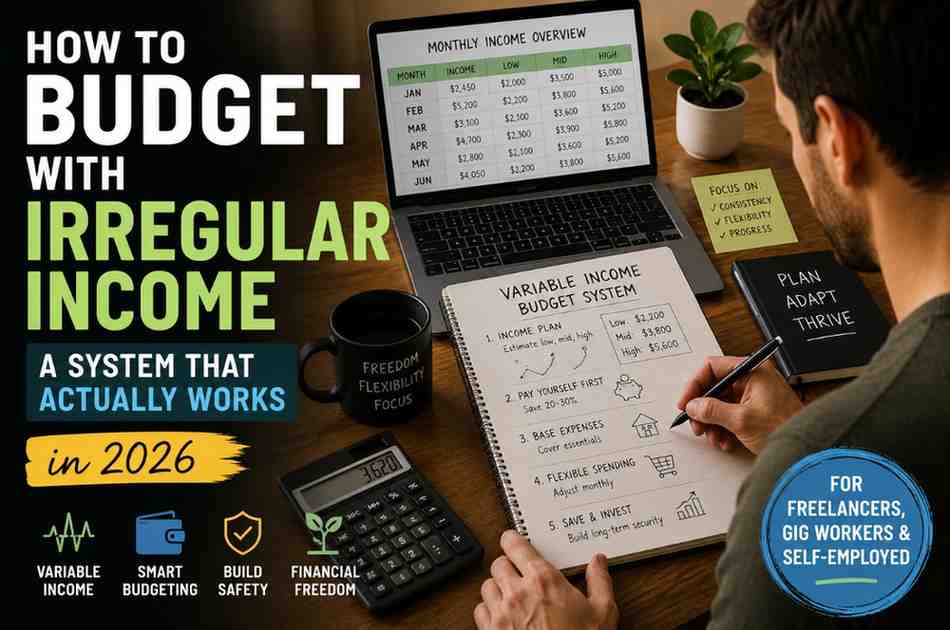
Traditional budgets don't work when your income changes every month. Here's the system I use as a freelancer to budget, save, and thrive with variable income.
Let me tell you about the worst financial year of my life.
I was a new freelancer. I had just quit my 9-to-5. I was excited. I was free. I was also completely clueless about how to manage money when income isn't predictable.
In January, I made $4,200. I felt rich. I spent like I was rich. I bought new equipment, ate out every night, and took a weekend trip. Then February came. I made $800. I couldn't pay my rent. I had to borrow from friends. I felt humiliated.
The feast-or-famine cycle is real. And it's brutal. It's stressful. It's embarrassing. And it's completely avoidable.
I spent years figuring out how to budget with irregular income. I made mistakes. I learned. I developed a system. And now, even when my income fluctuates wildly, I never stress about bills. I never panic. I have a system that works.
If you're a freelancer, gig worker, commission-based salesperson, or anyone with variable income, this guide is for you. I'm going to show you exactly how to budget when your income changes every month.
Why Traditional Budgets Don't Work for Irregular Income
Let me be blunt. Most budgeting advice is written for people with stable paychecks. It assumes you know exactly how much money you'll make every month. It assumes you can plan based on that number.
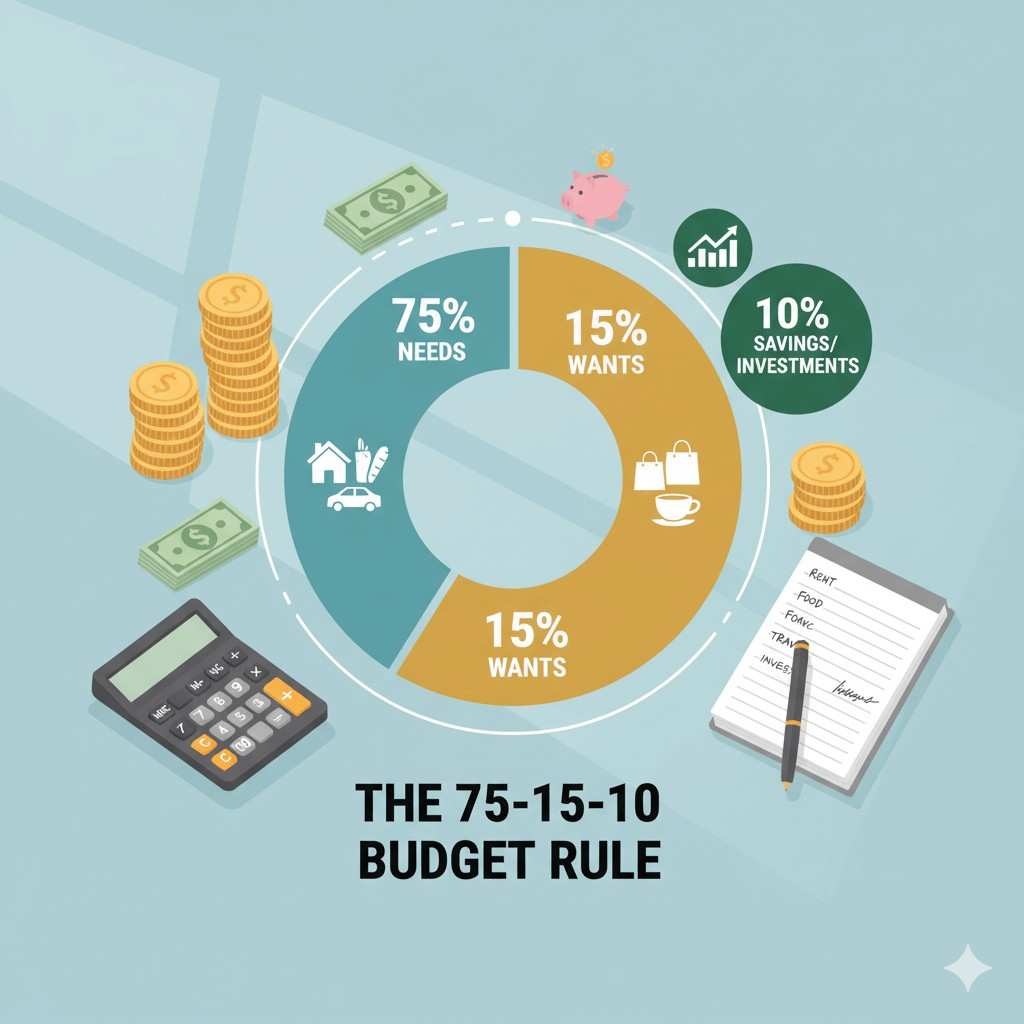
The 50/30/20 rule? Doesn't work when your income is 50% lower in February. Zero-based budgeting? Nearly impossible when you don't know how much money you have to assign. Percentage budgets? Completely useless when the base number changes every month.
I tried all of them. They all failed. Not because I lacked discipline. Because they weren't designed for my reality.
Here's the truth. If your income fluctuates, you need a different system. You need a system that accounts for variability. You need a system that protects you from the lean months. And that's exactly what I'm going to share with you.
The Core Principle: Live Below Your Average
Here's the single most important rule for budgeting with irregular income: live below your average income, not your peak income.
I made this mistake in my first year. I had a $4,200 month and I acted like that was the new normal. It wasn't. When the $800 month came, I was in crisis.
Instead, build your budget around the low end of your average income. If your average is $3,000, budget for $2,500. If your average is $5,000, budget for $4,000. The extra money from good months goes to savings. The lean months are covered because your expenses are already low.
I know it's tempting to spend more when you have a great month. I know the scarcity mindset makes you want to splurge. But that's exactly what keeps you trapped in the feast-or-famine cycle.
The Variable Income Budgeting System
Here's the system I've been using for years. It's simple. It works. And it takes about 15 minutes a month to maintain.
- Step 1: Calculate your average income. Take your total income from the past 6-12 months and divide by the number of months. This is your baseline. If you have less than 6 months of data, estimate conservatively.
- Step 2: Set your baseline budget. Build your budget around 80-85% of your average income. This gives you a buffer. On a $3,000 average, budget for $2,400-$2,550. On a $5,000 average, budget for $4,000-$4,250.
- Step 3: Prioritize essential expenses. Rent, utilities, groceries, insurance, minimum debt payments. These come first. Everything else is flexible.
- Step 4: Create a buffer fund. This is separate from your emergency fund. It's for covering expenses in lean months when your income falls below your budget.
- Step 5: Treat surplus month income as "bonus." If you earn above your budgeted amount, the surplus goes to savings, investments, or building your buffer fund. Not to lifestyle upgrades.
- Step 6: In lean months, draw from your buffer. If your income is below your budget, use your buffer to cover the gap. Don't panic. Don't incur debt. The buffer is there for exactly this reason.
- Step 7: Recalculate quarterly. Your average income changes over time. Recalculate every 3-6 months and adjust your budget accordingly.
A Real Example: How This Works With Actual Numbers
Let's make this real. Meet Sarah, a freelance graphic designer. Here's her income over the past 6 months:
- January: $3,800
- February: $2,100
- March: $4,200
- April: $2,800
- May: $3,500
- June: $2,400
Total: $18,800. Average: $3,133. Sarah's baseline budget is 85% of her average: $2,663. She rounds down to $2,600.
Here's her $2,600 budget:
- Rent: $1,000
- Groceries: $450
- Utilities: $200
- Transportation: $150
- Insurance: $120
- Internet & Phone: $90
- Savings: $200
- Personal: $190
- Miscellaneous: $200
Total: $2,600. Sarah can comfortably cover this budget in most months. In months where she earns more, she adds the surplus to her buffer. In months where she earns less, she draws from the buffer.
In January ($3,800), she has $1,200 surplus. She puts $800 in her buffer and $400 in her emergency fund. In February ($2,100), she has a $500 shortfall. She takes $500 from her buffer. No stress. No debt. No panic.
After 6 months, Sarah has built a $2,500 buffer. That's almost a full month of expenses. She has eliminated the feast-or-famine cycle from her life.
The Critical Difference: Buffer Fund vs. Emergency Fund
I want to be very clear about this. Your buffer fund and your emergency fund are different things. They serve different purposes.
Your emergency fund is for true emergencies. Medical emergencies. Car breakdowns. Job loss. It's for disasters. You should not touch it for regular monthly shortfalls.
Your buffer fund is for the expected variability in your income. It's for months when you earn less than your average. It's not an emergency. It's a normal part of having irregular income.
Think of your buffer as a shock absorber. It smooths out the bumps. It turns a scary roller coaster into a gentle wave. And it prevents you from going into debt during lean months.
I recommend building a buffer fund that covers 1-2 months of your baseline budget. In Sarah's case, that's $2,600 to $5,200. Once your buffer is fully funded, you can start directing surplus income to your emergency fund, investments, or accelerated debt payments.
The Psychological Shift: Accepting Variability
Here's something nobody tells you about irregular income. The hardest part isn't the math. It's the psychology.
When you have a great month, you feel invincible. You think, "This is it. This is the new normal. I've finally made it." And then the next month is slow and you feel like a failure.
This emotional roller coaster is exhausting. It's damaging. And it leads to terrible financial decisions. You overspend in the good months because you're euphoric. You panic in the lean months because you're scared.
The key is to detach your self-worth from your monthly income. Your income doesn't define you. It's just a number. And it's a number that fluctuates. That's normal. That's expected. That's fine.
When you accept that variability is normal, you stop reacting emotionally. You stop making impulsive decisions. You start making strategic decisions. And that's when your finances start to improve.
Tools That Make Variable Income Budgeting Easier
You don't need fancy software to make this work. But a few tools can make it much easier.
- A spreadsheet: Google Sheets or Excel. Track your income, expenses, and buffer balance. This is the most important tool.
- A budgeting app: YNAB (You Need A Budget) is excellent for irregular income. It encourages you to budget only what you have, not what you expect.
- A separate bank account: Keep your buffer fund in a separate savings account. Out of sight, out of mind. It's there when you need it.
- Automated transfers: Set up automatic transfers to your buffer account in good months. Make it effortless.
- A simple notebook: Track your spending daily. Review monthly. Adjust as needed.
What About Irregular Expenses?
Irregular income is hard enough without irregular expenses. But they're part of life. Here's how to handle them.
Create sinking funds for expected irregular expenses. Car insurance, property taxes, school fees, holiday gifts, annual subscriptions. Divide the annual cost by 12 and set aside money each month.
Here's an example. If your annual car insurance is $1,200, set aside $100 a month. If school fees are $800, set aside $67 a month. These small monthly allocations prevent these expenses from becoming emergencies.
This is where forecasting becomes critical. I covered this in detail in my article on budgeting vs forecasting. Look ahead 3-6 months. Anticipate irregular expenses. Save for them before they arrive.
How to Increase Your Minimum Income
Here's an original observation. The most stressful thing about irregular income isn't the highs and lows. It's the uncertainty of the lows. If you know your income will never drop below a certain level, the anxiety disappears.
So how do you increase your minimum income? Here are a few strategies.
- Retainer agreements: Ask existing clients for monthly retainers. A guaranteed $500 a month from one client makes a huge difference.
- Passive income: Create digital products, courses, or templates that generate income regardless of your active work.
- Diversify your client base: Don't rely on one or two big clients. A broader base smooths out the income.
- Recurring services: Subscription-based services create predictable monthly income.
- Multiple income streams: Combine freelance income with a part-time job, rental income, or investment income.
If you want to build multiple income streams, I've written a detailed guide on 10 Free Ways to Start Earning Passive Income. These are realistic, low-barrier options that can add hundreds of dollars to your monthly income.
The Variable Income Budget as Part of a Complete Wealth System
Budgeting with irregular income is a skill. It takes practice. It takes discipline. But once you master it, you're in a powerful position. You can handle financial uncertainty. You can weather economic storms. You can build wealth even with variable income.
Budgeting is the foundation. But the foundation is just the beginning. Once you've mastered variable income budgeting, you're ready to build real wealth. You're ready to invest. You're ready to build multiple income streams. You're ready to create financial freedom.
If you're ready to go beyond budgeting and build complete wealth, I've written the full roadmap in Building Wealth From Scratch: The 5-Step System That Actually Works. It covers everything from your first emergency fund to consistent investing to financial freedom.
Final Thought: Stop Being a Victim of Your Income
For years, I was a victim of my income. I felt helpless. I felt out of control. I felt like my finances were at the mercy of the market.
Then I built this system. And everything changed. I stopped reacting. I started planning. I stopped panicking. I started preparing.
Your income might fluctuate. But your system doesn't have to. Build a system that works regardless of your income. Build a system that protects you in the lean months. Build a system that helps you thrive in the good months.
If I can do it, you can too. The question is: will you build your system today?
Recommended Reading
- Building Wealth From Scratch – The complete wealth system.
- Budgeting vs Forecasting – Look ahead and prepare.
- Zero-Based Budgeting – Total control over every dollar.
- The 50/30/20 Rule – A simple alternative for stable income.
- The Fastest Way to Save $10,000 – Build your savings with variable income.
📩 Want more practical money strategies for freelancers and gig workers? Subscribe to my newsletter. No fluff. Just real advice from someone who's been there.
Continue learning

Questions and answers
How do I budget when my income changes every month?
Build your budget around 80-85% of your average monthly income. Create a buffer fund to cover shortfalls in lean months. When you have a good month, put the surplus into your buffer, emergency fund, or investments. Don't spend it on lifestyle upgrades.
What is the difference between a buffer fund and an emergency fund?
Your buffer fund covers expected income variability. It's for months when your income is lower than average. Your emergency fund is for true emergencies: medical emergencies, car breakdowns, job loss. They serve different purposes and should be separate.
How much should I have in my buffer fund?
Aim for 1-2 months of your baseline expenses. If your budget is $2,600 a month, aim for $2,600-$5,200 in your buffer. Once you have this, you can stop worrying about lean months.
How do I calculate my average income?
Add up your total income from the past 6-12 months and divide by the number of months. If you have less than 6 months of data, estimate conservatively. Recalculate quarterly as your income changes.
Can I use the 50/30/20 rule with irregular income?
No. The 50/30/20 rule assumes a stable income. It doesn't work when your income fluctuates. Use the variable income budgeting system instead. It's designed for exactly this situation.
What if my income drops below my budgeted amount for several months?
If your income drops below your budget for 3+ months, your average has changed. Recalculate your average income and reduce your budget accordingly. Cut non-essential expenses first. Use your buffer fund during the adjustment period.
Budgeting with irregular income is not about predicting the future. It's about preparing for it. Build your budget around your average income, create a buffer for lean months, and stop treating variability as a crisis. When you have a system that works regardless of your income, the stress disappears. You stop being a victim of your income. You become the master of your finances.