Budgeting vs. Forecasting: Key Differences in 2026
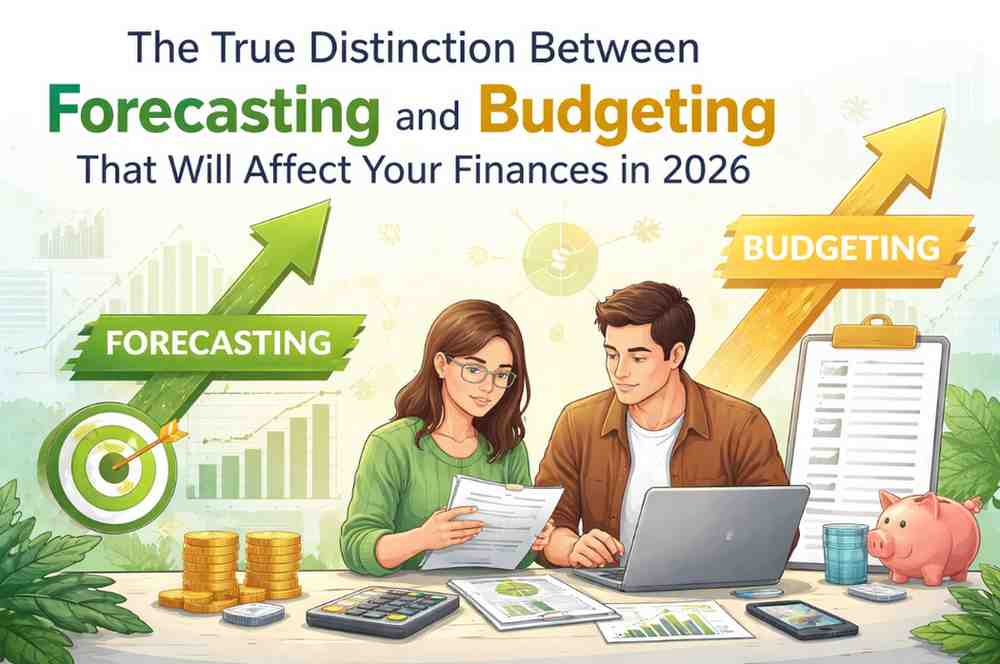
I had a perfect budget and still went broke. Learn why forecasting matters and how pairing it with budgeting gives you more control.
Let me tell you about the year I had a perfect budget and still went broke.
I was 26. I had just discovered zero-based budgeting. I was obsessed. Every dollar had a job. I tracked every expense. I felt like I had finally figured out money.
Then December hit. My car broke down. My sister needed help with school fees. My electricity bill doubled because of the winter. And suddenly, my perfect budget was useless. I had no money for any of it. I had to borrow to cover the basics.
I was furious. I had done everything right. I had followed all the rules. Why did I still end up broke?
That's when I realized something uncomfortable. Budgeting alone is not enough. It's necessary, but it's insufficient. If you only budget, you're only looking at the present. You're not preparing for the future. You're driving a car while looking at the dashboard instead of the road ahead.
That's where forecasting comes in. Budgeting tells you where your money is going this month. Forecasting tells you what's coming next month, and the month after that. And when you use both together, you stop being surprised. You start being prepared.
What Budgeting Actually Does (And What It Can't Do)
Let's be clear about what a budget is. A budget is a plan for your money this month. It says, "I have $3,200 coming in. Here's where it's all going." It's a control mechanism. It's about discipline. It's about making sure you don't spend more than you earn.
A good budget does these things:
- It stops you from overspending in the moment
- It forces you to prioritize needs over wants
- It makes savings a line item, not an afterthought
- It gives you visibility into your monthly cash flow
But here's what a budget cannot do. It can't predict the future. It can't see that your car is going to break down. It can't know your electricity bill will double. It can't anticipate that your income might drop next month.
A budget is a snapshot. And a snapshot is useful, but it's not a movie. Life is a movie. Things change. Unexpected things happen. And if your budget doesn't account for that, you're going to get blindsided.
What Forecasting Actually Is (And Why It Changes Everything)
Forecasting is looking ahead. It's answering the question, "What is likely to happen to my money in the next 30, 60, or 90 days?"
Forecasting sounds like this:
- School fees are due in two months. I need $800.
- December is coming. My utility bills always spike in winter.
- I have a side hustle that slows down in January. I need to save extra now.
- My car is getting old. I should set aside $50 a month for repairs before something breaks.
Forecasting is not about predicting the future perfectly. It's about preparing for likely scenarios. It's about looking at patterns and acting before problems hit.
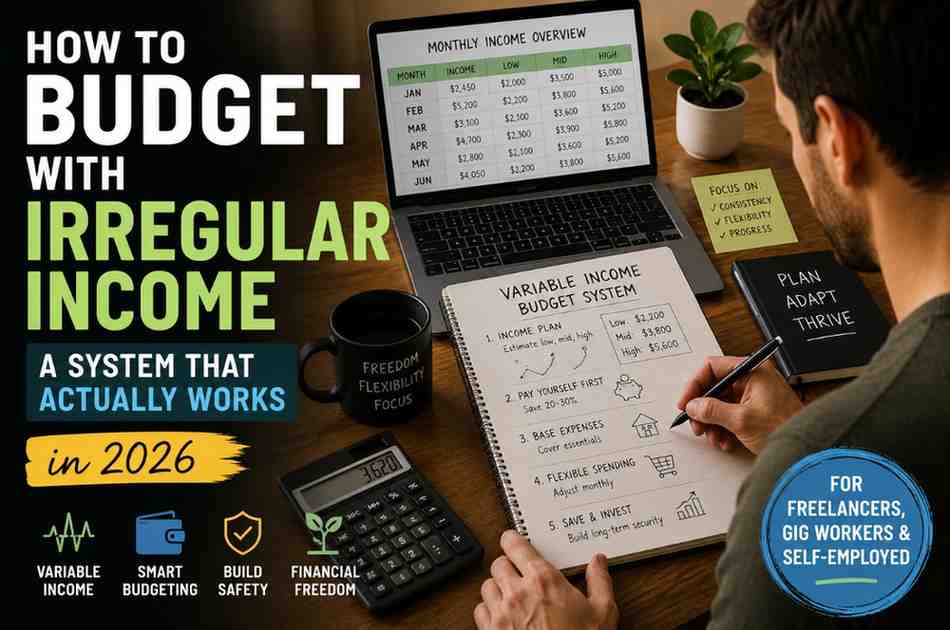
I had a client named Tunde. He was a freelancer. His income fluctuated wildly. Some months he made $4,000. Some months he made $1,500. He was constantly stressed. He never knew if he'd have enough.
We started forecasting. He looked at his average income over the past six months. He identified his lean months (January and August). He started saving extra in the good months to cover the lean months. Within six months, his stress dropped by 80%. He wasn't rich, but he was no longer terrified of the future.
The Key Differences: Budgeting vs Forecasting
| Feature | Budgeting | Forecasting |
|---|---|---|
| Purpose | Plan current spending | Predict future outcomes |
| Main Focus | Control and allocation | Awareness and preparation |
| Time Frame | Current month | Next 1-3 months (or longer) |
| Flexibility | Fixed categories | Adjusts to changing reality |
| Main Benefit | Discipline | Avoiding financial surprises |
| Who It Helps Most | Everyone with consistent income | Freelancers, gig workers, families with irregular expenses |
Think of it this way. Budgeting is like a map of your current location. Forecasting is like looking at the weather forecast for the next few days. You need both to plan a successful journey.
Why Budgets Fail Without Forecasting
Here's a hard truth. Most budgets fail. Not because people are undisciplined. Because they're unrealistic.
When you create a budget, you make assumptions. You assume your income will be stable. You assume your expenses will be predictable. You assume nothing unexpected will happen.
Those assumptions are almost always wrong.
Let me give you a real example. Sarah, a client of mine, had a perfect budget. She tracked everything. She never overspent. But she didn't forecast. Her car broke down. It cost $1,200 to fix. She didn't have the money. She put it on her credit card.
That $1,200 debt cost her $240 in interest over the next year. That's $240 she didn't need to lose. If she had been forecasting, she would have seen that her car was getting old. She would have set aside $50 a month for repairs. She would have had the money when she needed it.
This is the pattern I see over and over. People with perfect budgets who still end up in debt because they're surprised. Surprise is the enemy of financial stability. And forecasting is the antidote.
How to Combine Budgeting and Forecasting (The Simple System)
Here's the system I use and recommend to all my clients. It's simple. It takes 20 minutes a month. And it works.
| Step | Action | Time Required |
|---|---|---|
| 1 | Create a budget at the start of each month. Allocate your income to categories. | 30 minutes |
| 2 | Track your actual spending weekly. Not at month-end. Weekly. | 10 minutes per week |
| 3 | Look 30 to 90 days ahead. Any big expenses coming? Income changes? Seasonal events? | 10 minutes |
| 4 | Adjust your current budget early based on what you see coming. Don't wait until it's too late. | 10 minutes |
The key is step 4. Most people create a budget and never adjust it. They wait until the month is over to see if they succeeded. That's too late. You need to adjust early. If you see a big expense coming in two months, you need to start saving for it now. If you see a lean month coming, you need to cut back now. Don't wait.
A Real Example: How the Combined System Works
Let's make this real. Meet Amara. She's a teacher earning $3,800 a month after taxes. Here's how she uses budgeting and forecasting together.
Budgeting (Start of Month): Amara creates her monthly budget. Rent $1,200. Groceries $500. Utilities $250. Transportation $200. Savings $400. Debt repayment $300. Personal $300. Miscellaneous $150. Total: $3,300. She has $500 extra this month. She puts it into her "future expenses" fund.
Forecasting (Also at Start of Month): Amara looks ahead. In two months, her annual car insurance is due. $1,200. In three months, her son's school fees are due. $800. She needs $2,000 in three months. She has $500 saved. She needs to save $500 a month for the next three months. She adjusts her budget: she reduces her personal spending by $200 and her miscellaneous by $100, and she adds the extra $200 from this month's surplus. She's now on track.
Weekly Tracking: Every Sunday, Amara reviews her spending. She sees she's overspent on groceries by $40. She adjusts. She's underspent on transportation by $30. She reallocates. She stays on track.
Three Months Later: Amara's car insurance and school fees are due. She has the $2,000 saved. No stress. No credit card debt. No borrowing. She planned ahead and it worked.
This is the difference between just budgeting and combining budgeting with forecasting. Amara wasn't surprised. She was prepared.
Common Mistakes (And How to Avoid Them)
I've made these mistakes. I've watched clients make them. Here's what to avoid.
- Mistake 1: Creating a budget and never reviewing it. A budget is not a one-time thing. It needs to be reviewed weekly. If you only check at month-end, it's too late.
- Mistake 2: Ignoring irregular expenses. School fees, insurance, holidays, car repairs. These don't happen every month, but they happen. If you don't plan for them, they'll destroy your budget.
- Mistake 3: Being too rigid. A budget is a guide, not a prison. If you spend more on groceries and less on transportation, that's fine. Just reallocate. Don't feel like you've failed.
- Mistake 4: Not looking ahead. If you only think about this month, you'll always be surprised next month. Look 30 to 90 days ahead. Always.
The Forecasting Habit: How to Start Today
Here's the thing. Forecasting doesn't need to be complicated. You don't need software. You don't need a spreadsheet. You just need a simple habit.
- Step 1: At the end of every month, write down any expected expenses for the next three months. School fees, insurance, birthdays, holidays, etc.
- Step 2: Write down any expected income changes. Bonuses, raises, lean months, slow seasons, etc.
- Step 3: Calculate how much you need to save each month to cover those expenses.
- Step 4: Adjust your budget accordingly. Cut back now so you're prepared later.
That's it. Ten minutes a month. And it will save you thousands over the course of your life.
Budgeting and Forecasting as Part of a Complete Wealth System
Budgeting and forecasting are powerful tools. They give you control over your present and preparation for your future. But they're just the beginning.
Once you've mastered budgeting and forecasting, you're ready to build real wealth. You're ready to invest. You're ready to build multiple income streams. You're ready to create a system that grows your money over time.
Budgeting and forecasting give you stability. Investing and increasing your income give you growth. Together, they're the foundation of financial freedom.
If you're ready to go beyond budgeting and start building real wealth, I've written the complete roadmap in Building Wealth From Scratch: The 5-Step System That Actually Works. It covers everything from your first $500 saved to consistent investing to multiple income streams.
Start with budgeting and forecasting. Graduate to wealth building. And watch your financial life transform.
Final Thought: Stop Being Surprised
I spent years being surprised by my finances. Surprised by bills. Surprised by repairs. Surprised by emergencies. And every surprise cost me money.
The day I started forecasting was the day I stopped being surprised. I still had unexpected expenses. But they weren't unexpected anymore. I saw them coming. I prepared for them. And they stopped being emergencies.
If you're tired of being surprised by your money, start forecasting. It's simple. It's powerful. And it will change everything.
Recommended Reading
- Building Wealth From Scratch – The complete system.
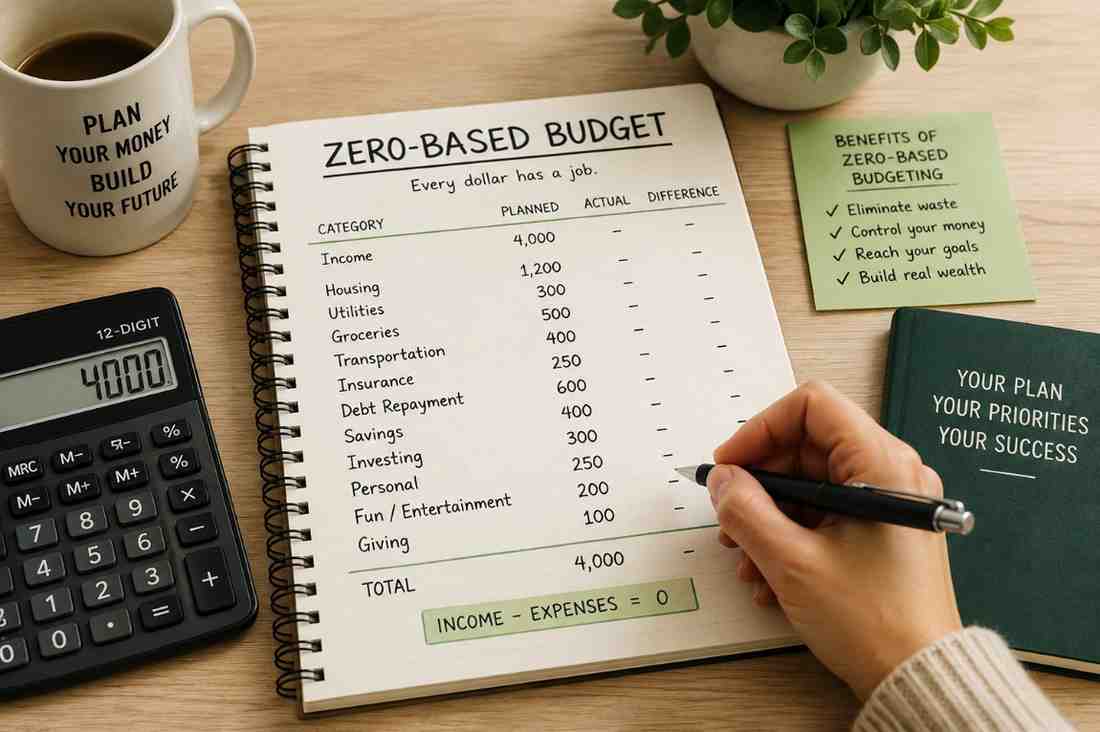
- Zero-Based Budgeting – Total control over every dollar.
- The 50/30/20 Rule – A simple budgeting alternative.
- 50 Smart Budgeting Hacks – Quick wins to save more.
- The Fastest Way to Save $10,000 – Achieve your savings goals.
📩 Want more practical money strategies? Subscribe to my newsletter. No fluff. Just real advice from someone who's been there.
Continue learning
Questions and answers
What is the difference between budgeting and forecasting?
Budgeting is planning how you'll spend your money this month. It's about control and allocation. Forecasting is predicting what will likely happen to your finances in the next 30 to 90 days. It's about awareness and preparation. Budgeting looks at the present. Forecasting looks at the future.
Why does budgeting alone fail?
Because budgets assume everything will go according to plan. Life doesn't work that way. Unexpected expenses, income changes, and irregular bills will always appear. Forecasting prepares you for these, while budgeting only handles what's happening now.
How do I start forecasting?
At the end of each month, look ahead 90 days. List any expected expenses (school fees, insurance, holidays) and any expected income changes. Then adjust your current budget to start saving for those future expenses. It takes 10 minutes a month.
Can beginners use forecasting?
Yes. Start simple. At the end of each month, write down any expenses or income changes you expect in the next two months. That basic habit is 90% of what forecasting involves at a personal finance level. No software required.
How often should I review my budget?
At least weekly. A monthly budget reviewed only at month-end is almost useless. By the time you see overspending, it's already done. Weekly check-ins let you course-correct early. Combine this with monthly forecasting and you'll have total control.
Is forecasting only for people with irregular income?
No. Everyone should forecast. Even people with stable incomes have irregular expenses like insurance renewals, school fees, and holidays. Forecasting helps you prepare for these. It's especially helpful for freelancers and gig workers, but it benefits everyone.
Budgeting without forecasting is like driving while only looking at the road directly in front of you. You might stay in your lane today, but you won't see the sharp turn coming next month. Use both together. Plan your present with a budget. Prepare your future with forecasting. When you combine control and awareness, money stress becomes something that happens to other people.