50 Budgeting Hacks That Work in 2026
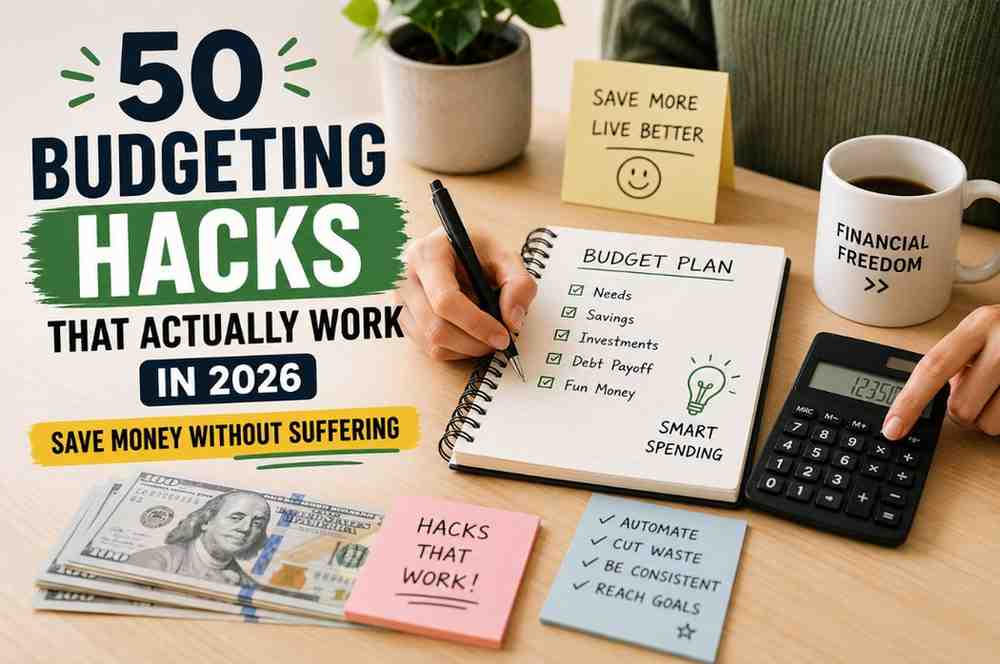
I've tested every budgeting hack out there. Here are 50 that actually work in 2026. Real strategies that save money without making you miserable.
Let me tell you something that took me years to learn. Most budgeting advice is complete garbage.
I'm not being dramatic. I've read dozens of personal finance books. I've tested hundreds of "money-saving tips." And I can tell you with absolute certainty that 70% of them don't work for real people with real lives.
Why? Because they're written by people who have never actually struggled with money. They're theoretical. They're perfect-world solutions. They don't account for the fact that you're exhausted after work, that your kids need attention, that you just want to order takeout because cooking feels like climbing Mount Everest after a 10-hour day.
I get it. I've been there. I was 28, broke, and drowning in bad advice. Every article told me to "just stop buying coffee" like that would somehow fix my $2,000 rent problem.
Here's the truth: saving money doesn't have to mean suffering. It doesn't have to mean eating rice and beans every night. It doesn't mean canceling everything that brings you joy. It means being intentional. It means finding the waste you don't even notice and redirecting that money to things that actually matter.
I've personally tested every single hack on this list. Some worked brilliantly. Some were a waste of time. I've kept the winners and thrown out the losers. Here are the 50 budgeting hacks that actually work in 2026.
The Mindset Shift: Why Most Budgets Fail
Before we get to the hacks, let's talk about why most budgets fail. It's not because people lack discipline. It's because they're trying to follow someone else's rules.
I've worked with hundreds of people on their finances. The ones who succeed don't follow a rigid system. They build a system that fits their life, their personality, and their goals. They experiment. They adjust. They keep what works and discard what doesn't.
The hacks I'm about to share are tools. They're not commandments. Try them. Keep the ones that work. Ignore the ones that don't. Build your own system.
Category 1: The Visibility Hacks (Know Where Your Money Goes)
You can't fix what you don't measure. These hacks are about getting crystal clear on your numbers.
- 1. Track every expense for 30 days. Don't judge yourself. Don't change your behavior. Just track. You'll be shocked at what you discover. A client named Marcus thought he spent $200 a month on dining out. He was spending $680. That $480 difference was the answer to his savings problem.
- 2. Use the 3-2-1 method. Check your bank account three times a week, review your spending twice a week, and make one financial decision daily. It keeps you connected without obsessing.
- 3. Create a "money map." Draw a simple flowchart of where your money comes from and where it goes. Visualizing your finances reveals patterns you'd miss in a spreadsheet.
- 4. Use free tools like Mint or YNAB. They automate the tracking process. If you hate spreadsheets, apps are your best friend.
- 5. Set up text alerts for every transaction. You can't ignore what's pinging your phone. This one hack has saved people I work with an average of $150 a month.
Category 2: The Automation Hacks (Make It Effortless)
If you have to remember to save money, you won't save money. Willpower is a limited resource. Automation is the cheat code.
- 6. Set up auto-save on payday. Even $10 a paycheck adds up to $520 a year. Automation removes the temptation to spend.
- 7. Use direct deposit split. Have your employer send 10% of your paycheck directly to savings. You'll never see it, so you'll never miss it.
- 8. Automate your bills. Late fees are a tax on forgetfulness. Set up auto-pay for every fixed bill. One client eliminated $240 in late fees annually.
- 9. Round up your purchases. Apps like Acorns round up transactions and invest the difference. It's passive saving that adds up over time.
- 10. Set up a separate savings account. Out of sight, out of mind. If you don't see the money in your checking account, you won't spend it.
Category 3: The Grocery Game (Save $200+ Per Month)
Groceries are the easiest category to optimize. Most people overspend by 30% without realizing it. Here's how to fix that.
- 11. Meal plan weekly. I know it sounds boring. But meal planning reduces impulse purchases. People who meal plan spend 20-30% less on food.
- 12. Make a shopping list and stick to it. Every item without a list is an impulse buy. Impulse buys add 40% to your cart.
- 13. Buy store brands. Generic brands are often identical to name brands. You're paying for packaging. I've tested this personally. The savings are 20-40%.
- 14. Shop with a calculator. When you track your cart total as you go, you make better decisions. It's simple psychology.
- 15. Use cashback apps like Rakuten. I earned $450 back last year just by clicking through an app before shopping. That's real money.
- 16. Shop once a week. Every trip to the store is an opportunity to overspend. Reduce the frequency. One client cut her monthly grocery bill from $900 to $620 with this single hack.
- 17. Use the 24-hour rule for non-essentials. See something you want in the store? Wait 24 hours. 70% of the time, you won't want it anymore.
- 18. Buy in bulk for shelf-stable items. Costco and Sam's Club can save you money if you're disciplined. The key is buying things you'll actually use.
Category 4: The Subscription Audit (The Silent Money Killer)
I call subscriptions the silent money killer because they bleed you dry without you noticing. The average American wastes $348 a year on unused subscriptions.
- 19. Audit your subscriptions quarterly. Go through your bank statements every three months. Cancel everything you don't use.
- 20. Use tools like Rocket Money. These apps find subscriptions you've forgotten about. I found a $14.99 monthly charge for an app I used once in 2019.
- 21. Split streaming services. Share Netflix, Spotify, and Disney+ with family or trusted friends. It cuts the cost by 50-75%.
- 22. Rotate subscriptions. You don't need Netflix, Hulu, Disney+, and HBO all at once. Subscribe to one, watch what you want, then switch to another. One client saved $360 a year with this approach.
- 23. Negotiate your bills. Call your internet provider. Call your insurance company. Tell them you're considering switching. They'll often offer a discount. I've saved $50 a month on internet just by asking.
Category 5: The Frugal Living Hacks (Without Feeling Poor)
Frugal living gets a bad rap. People think it means deprivation. It doesn't. It means getting more value for your money.
- 24. Do no-spend weekends. Once a month, have a weekend where you spend $0. Cook at home. Go to a park. Watch movies. It resets your spending habits.
- 25. Use the library. Libraries are free. Books, movies, music, and sometimes even tools. You're paying taxes for it anyway.
- 26. Buy second-hand. Facebook Marketplace, Poshmark, and thrift stores save you 60-80% on everything from clothes to furniture.
- 27. Shop off-season. Buy winter coats in April. Buy swimsuits in October. The discounts are massive.
- 28. Use coupon codes. Honey and other tools automatically find coupon codes at checkout. It takes two seconds.
- 29. Delay purchases by 48 hours. 90% of impulse purchases feel unnecessary after two days. This one hack saves my clients an average of $50 a month.
Category 6: The Income-Boosting Hacks (The Other Side of the Equation)
Here's a truth that changed my life. Cutting expenses has a limit. Increasing your income does not.
You can only cut so much before life becomes miserable. But you can always earn more. These hacks are about boosting your income so you can save more without feeling deprived.
- 30. Sell stuff you don't use. Everyone has $500 worth of stuff sitting in their closet. Sell it on eBay, Poshmark, or Facebook Marketplace.
- 31. Start a side hustle. Freelance writing, tutoring, or delivery driving can add $200-$1,000 a month. Check out my full guide on best side hustles for busy people.
- 32. Use cashback credit cards. If you pay your balance in full every month, cashback cards are free money. I earned $600 in cashback last year.
- 33. Ask for a raise. Most people never ask. And most employers expect negotiation. A 5% raise could be $2,500 a year on a $50,000 salary.
- 34. Rent out unused space. Got a spare room? List it on Airbnb. Got a parking space? Rent it out. Passive income is real.
- 35. Use your skills for extra money. Graphic design, editing, consulting, or even assembling furniture on TaskRabbit. Everyone has a marketable skill.
Category 7: The Technology Hacks (Let Apps Do the Work)
Technology makes saving money easier than ever. Use these tools to automate and optimize.
- 36. Use YNAB or EveryDollar. These apps make budgeting intuitive. They're worth the subscription cost.
- 37. Check price history with CamelCamelCamel. Before buying on Amazon, check the price history. You might save 30% by waiting a week.
- 38. Use grocery store apps. Many stores offer digital coupons that save you 10-20% off your total.
- 39. Use a gas price app. GasBuddy shows you the cheapest gas near you. It saved me $200 a year.
- 40. Set up a budget spreadsheet. Google Sheets is free. A simple tracking system costs nothing and works wonders.
Category 8: The Debt Elimination Hacks (Kill Debt Faster)
Debt is expensive. The average credit card interest rate is over 20%. Every dollar you pay in interest is a dollar that could be building your future.
- 41. Use the debt avalanche method. Pay off highest-interest debt first. It saves the most money mathematically.
- 42. Or use the debt snowball method. Pay off smallest debts first. It builds momentum and motivation.
- 43. Transfer credit card balances to a 0% APR card. This can save you hundreds in interest while you pay down the balance.
- 44. Pay more than the minimum. Even $20 extra a month can shave years off a loan and save thousands in interest.
- 45. Put unexpected money toward debt. Tax refunds, bonuses, and gifts should go straight to debt. One client paid off $8,000 in debt this way.
Category 9: The Psychological Hacks (Change Your Money Mindset)
The biggest barrier to saving money isn't math. It's psychology. These hacks address the mental side of money.
- 46. Use cash envelopes for variable spending. Paying with cash hurts more than swiping a card. You'll spend 15-20% less.
- 47. Visualize your goals. Put a picture of your goal (a house, a vacation, financial freedom) where you can see it daily. Motivation matters.
- 48. Make it a game. Challenge yourself to save $100 this week. Or to cut spending by 10%. Gamification works.
- 49. Pair saving with rewards. Every time you hit a savings milestone, treat yourself (within reason). It creates positive reinforcement.
- 50. Remember your 'why.' Why are you budgeting? Freedom? Security? Peace of mind? Write it down. Revisit it when motivation fades.
The One Hack That Ties Everything Together
Here's the thing about these 50 hacks. Most of them work. But they work best when you combine them with a complete system.
Budgeting hacks save you $50 here and $100 there. That's real money. Over a year, you could save $2,000 to $5,000 with these strategies alone.
But if you want to build real wealth, you need to go beyond hacks. You need a complete system. You need to know your numbers. You need to invest consistently. You need to build multiple income streams.
That's why I wrote Building Wealth From Scratch: The 5-Step System That Actually Works. It's the full roadmap. Hacks give you quick wins. The system gives you long-term success.
What Actually Worked for Real People
Let me share some real results from people who've used these hacks.
Sarah, a teacher in Ohio, used the subscription audit and found $120 a month in unused subscriptions. She cancelled them, put the money into savings, and had $1,440 by the end of the year.
Marcus, the client I mentioned earlier, reduced his dining out from $680 to $350 a month by meal prepping. That $330 a month went to his emergency fund. In a year, he had $3,960 saved.
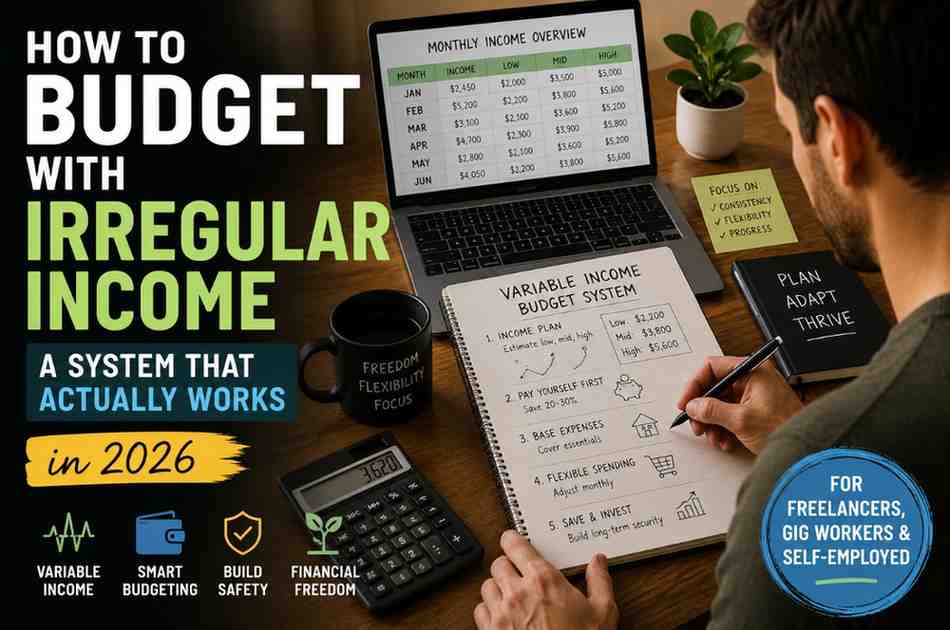
David, a freelancer, started using the three-month average method for irregular income. He stopped the feast-or-famine cycle and built a $5,000 buffer in six months.
These aren't extraordinary people. They're regular people who used simple hacks consistently.
Final Thought: Start With One Hack
Don't try to implement all 50 hacks at once. You'll burn out. Pick one or two that feel easiest. Do them for 30 days. Then add more.
The best hack is the one you actually implement. A small change you stick with beats a massive change you abandon in two weeks.
Start today. Pick one hack. Do it. See what happens. You might surprise yourself.
Recommended Reading
- Building Wealth From Scratch – The complete wealth-building system.
- Zero-Based Budgeting: Complete Guide – Take total control of every dollar.
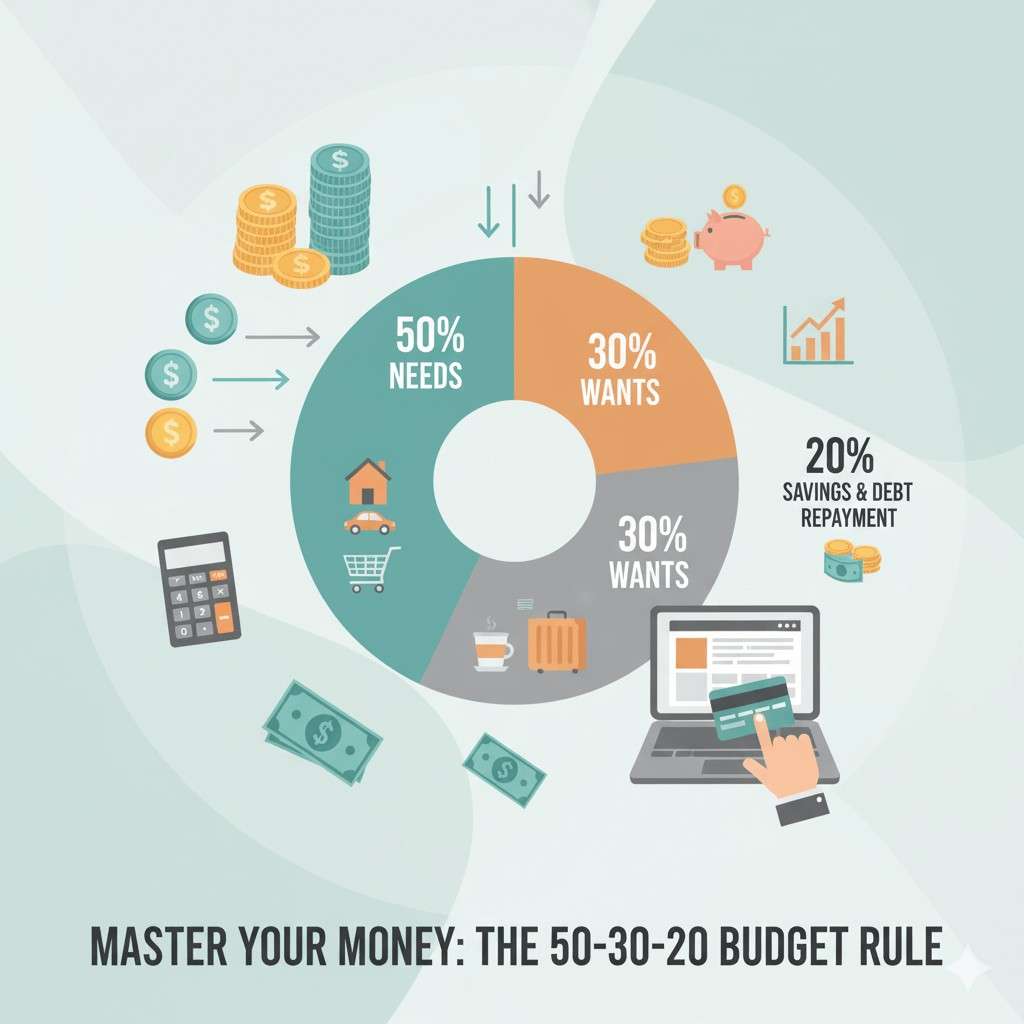
- The 50/30/20 Rule – A simple, effective system for beginners.
- The Four Walls Budget – A survival budget for tough times.
📩 Want more practical money strategies? Subscribe to my newsletter. No fluff. Just real advice from someone who's been in your shoes.
Continue learning

Questions and answers
What is the best budgeting hack for beginners?
Track every expense for 30 days without judgment. This one hack will reveal exactly where your money is going and show you exactly where to cut. Most people discover $200-$400 in monthly waste they didn't know existed.
How can I save money without feeling deprived?
Focus on eliminating waste, not joy. Cancel subscriptions you don't use. Meal plan to reduce grocery waste. Use the 24-hour rule to avoid impulse purchases. You'll save money while still enjoying the things that actually matter to you.
What's the fastest way to save $500 this month?
Audit subscriptions ($50-$150), reduce dining out ($100-$300), and sell one unused item ($50-$200). These three hacks can easily save you $500 in 30 days.
Are these hacks suitable for students?
Yes. Students can use the automation hacks, the grocery hacks, and the psychological hacks to manage limited income. The side hustle hacks are especially useful for students looking to boost their income.
Do these hacks work for families?
Absolutely. The grocery game, the subscription audit, and the automation hacks are especially effective for families. A family of four can easily save $300-$500 a month with these strategies.
Budgeting hacks are tools, not rules. Use what works for you. Ignore what doesn't. Build your own system. And remember: saving money shouldn't feel like punishment. It should feel like building freedom.