25 Money Habits Keeping You Broke: Fix These in 2026
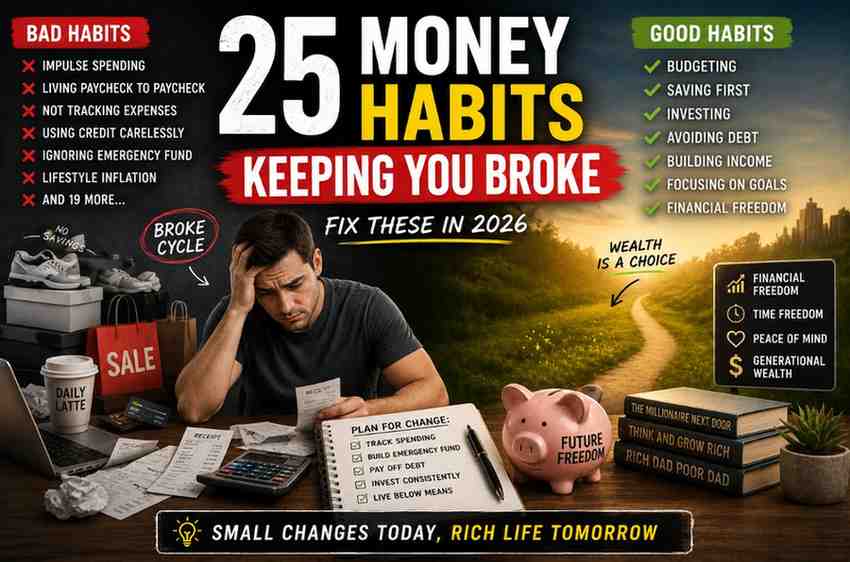
I was broke at 28. These 25 money habits kept me trapped. Here's exactly what they are, why they destroy wealth, and how to fix every single one.
Let me tell you something uncomfortable.
I was broke at 28. Not "I can't afford a vacation" broke. Not "I need to budget better" broke. I'm talking "I had $43 in my bank account and my car needed $800 in repairs" broke. I was borrowing money from my parents. I was stressed. I was embarrassed.
I thought the problem was my income. I didn't make enough. That was the excuse I told myself.
Then I met people who made less than me and were building wealth. And I met people who made more than me and were drowning in debt. That's when I realized the truth. It wasn't about how much I earned. It was about my habits. It was about the daily, seemingly small decisions that were quietly destroying my financial future.
I started paying attention. I started tracking. I started fixing. And over time, I replaced broke habits with wealth-building habits. It didn't happen overnight. But it happened.
Here are 25 money habits that keep people broke. I had most of them. Maybe you have some too. The good news is that every single one is fixable.
The Spending Habits That Drain Your Wallet
1. You Buy Coffee Every Single Day
I'm not saying never buy coffee. I'm saying buying it every day is a habit that costs you thousands. A $5 daily coffee is $150 a month. That's $1,800 a year. Invested at 7% for 20 years, that's over $75,000. You're not buying coffee. You're buying poverty disguised as convenience.
2. You Eat Out Multiple Times a Week
A meal delivery app order costs $25-40 for one person. Do that twice a week and you're spending $200-320 a month. That's $2,400-3,840 a year. Compare that to meal prepping at home for $5-10 per meal. The difference is thousands of dollars annually. You're not just paying for food. You're paying for convenience, packaging, delivery, and markup. And you're paying with your future.
3. You Buy New Clothes You Don't Actually Need
Here's a test. Go through your closet. Count how many items you've worn in the last 30 days. I did this and realized I was wearing 20% of my wardrobe. The rest was sitting there, collecting dust, representing money I'd wasted. If you're buying clothes to fill a void or because you're bored, stop. That's not shopping. That's therapy with a higher price tag.
4. You Upgrade Your Phone Annually
A new iPhone costs $1,000-1,200. The average person upgrades every 2-3 years. But some people upgrade every year. That's $1,000 annually that could be invested. Over 10 years at 7%, that's over $14,000. And for what? A slightly better camera? Your phone from two years ago works fine. It's not a status symbol. It's a liability.
5. You Pay for Subscriptions You Don't Use
The average American spends $348 a year on unused subscriptions. That's $29 a month. I audited my subscriptions and found $45 a month I was paying for services I hadn't used in months. That's $540 a year. Over 20 years at 7%, that's over $22,000. A simple 15-minute audit can save you thousands.
6. You Buy Things on Sale You Didn't Need
A 50% off item you didn't need isn't a savings. It's a 100% waste of money. Sales are designed to make you feel like you're being smart. You're not. You're being manipulated. If you wouldn't buy it at full price, you shouldn't buy it on sale. Period.
7. You Pay ATM and Bank Fees
Paying a $3 ATM fee is the equivalent of throwing money in the trash. The same goes for monthly maintenance fees, overdraft fees, and foreign transaction fees. These are taxes on carelessness. Switch to a bank with no fees and use in-network ATMs. It's not complicated. It's just intentional.
8. You Buy Extended Warranties
Extended warranties are pure profit for the store. Consumers spent $48.4 billion on protection plans in 2024. You're almost always better off putting that money in a savings account and self-insuring. Most items never break within the warranty period. And if they do, the cost to repair is often less than the warranty itself.
9. You Buy Designer Labels for Status
Designer clothes with logos are a tax on insecurity. You're paying 500% markup for a label that signals wealth. But here's the irony: wealthy people don't wear logos. Real wealth is quiet. The loudest clothes are usually worn by people trying to look rich. Stop buying labels. Start buying quality.
10. You Buy a New Car
A new car loses 20% of its value in the first year. That's thousands of dollars gone in 12 months. Wealthy people buy 2-3 year old cars and drive them for years. Warren Buffett drives a 2014 Cadillac. Bill Gates drives a Fiat500. If it's good enough for billionaires, it's good enough for you.
The Savings Habits That Keep You Stuck
11. You Save Whatever Is Left at the End of the Month
This is the most common savings mistake. You pay bills, you spend, and then you save whatever's left. But nothing is ever left. You need to save first. Pay yourself first. Automate your savings on payday. Even $50 a month is better than nothing. The habit matters more than the amount.
12. You Don't Have an Emergency Fund
An emergency fund is not optional. It's mandatory. Without one, any unexpected expense becomes a crisis. A flat tire, a medical bill, a job loss. These become emergencies because you're unprepared. Start with $500. Then $1,000. Then one month of expenses. Build it gradually. Your emergency fund is your financial firewall.
13. You Don't Track Your Spending
If you don't know where your money is going, you can't control it. It's that simple. Track every expense for 30 days. You'll be shocked at what you find. I discovered $320 a month in miscellaneous spending. That's $3,840 a year I was wasting without even knowing it. Track. Track. Track.
14. You Keep Money in a Low-Interest Account
If your savings account earns 0.01% interest, your money is losing value to inflation. Switch to a high-yield savings account earning 4-5%. On $10,000, that's $400-500 a year in interest. That's free money. Don't leave it on the table.
The Debt Habits That Weigh You Down
15. You Only Pay the Minimum on Credit Cards
Making minimum payments on credit cards is a financial death sentence. With 20%+ interest, a $5,000 balance takes over 15 years to pay off at minimum payments. You'll pay over $7,000 in interest. Pay more than the minimum. Pay as much as you can. Every extra dollar reduces your interest costs significantly.
16. You Borrow Money for Depreciating Assets
Financing a car, a boat, or expensive gadgets is a trap. The value drops immediately, but you're paying interest on the full amount. You're paying for an asset that's declining in value. That's not wealth building. That's wealth destruction. If you can't pay cash, you can't afford it.
17. You Don't Negotiate Interest Rates or Bills
Most people don't negotiate because they're afraid. But a 5-minute phone call can save you hundreds. Call your credit card company and ask for a lower rate. Call your internet provider and ask for a discount. I've saved $50 a month on my internet bill just by asking. It's not hard. It's just uncomfortable. And being uncomfortable for 5 minutes is worth saving hundreds.
The Mindset Habits That Hold You Back
18. You Think You Don't Make Enough to Invest
You can start investing with $10. Yes, ten dollars. Fractional shares make it possible. The amount doesn't matter. The habit matters. If you wait until you have $1,000 to start investing, you'll never start. Start with $10. Then $50. Then $100. Build the habit first. The amount will follow. I've shown how $10 invested consistently can grow into something meaningful.
19. You Think Budgeting Is Punishment
A budget is not punishment. It's freedom. It's telling your money where to go instead of wondering where it went. When you have a budget, you can spend without guilt because you know everything is covered. A budget is a tool. Use it. If you don't have a budget, you're flying blind. Check out zero-based budgeting or the 50/30/20 rule to get started.
20. You Compare Your Spending to Others
Comparison is the thief of wealth. When you see others buying nice things, you feel like you need to keep up. But you don't know their situation. They might be drowning in debt. They might be spending their inheritance. They might be living paycheck to paycheck. Stop comparing. Focus on your own journey. Your finances are your business. Nobody else's.
21. You Think Credit Cards Are Free Money
Credit cards are not free money. They're high-interest loans with a very pretty wrapper. When you pay with a credit card, you're spending money you don't have. The interest you pay is the price of your impatience. Use credit cards responsibly. Pay the balance in full every month. If you can't, don't use them.
22. You Buy Lottery Tickets
The lottery is a tax on people who don't understand math. The odds of winning Powerball are 1 in 292 million. You're more likely to be struck by lightning, attacked by a shark, and become president on the same day. Every $5 you spend on lottery tickets is $5 you could have invested. Stop buying hope. Start buying assets.
23. You Don't Invest in Yourself
The best investment you can make is in yourself. Books, courses, skills, certifications. These things increase your earning potential. I spent $200 on a copywriting course and it led to $5,000 in side income within a year. That's a 2,400% return. Invest in yourself. It's the only investment with guaranteed returns.
24. You Think Wealth Happens Overnight
Wealth doesn't happen overnight. It happens over decades. It's the result of consistent, boring habits repeated over time. The people who get rich are not the ones who made a big bet. They're the ones who made a small bet and kept making it. Be patient. Be consistent. And watch the compound effect work its magic.
25. You Don't Have a Plan
This is the biggest one. Without a plan, you're just drifting. You're hoping things will work out. But hope is not a strategy. You need a plan. You need to know how much you need to save, invest, and earn to reach your goals. You need a system. I've written the full system in Building Wealth From Scratch: The 5-Step System That Actually Works. It covers everything from your first $500 saved to financial freedom. You need a plan. Start today.
The Compound Effect of Bad Habits
Here's what I want you to understand. Each of these habits seems small. A $5 coffee. A $20 subscription. A $100 impulse purchase. They don't feel significant. But they add up. They compound. And over time, they destroy your financial future.
Let me show you the math. If you spend $5 a day on coffee, that's $150 a month. Over 20 years, that's $36,000 spent on coffee. Invested at 7%, it's over $75,000. That's not coffee. That's a down payment on a house. That's a retirement supplement. That's freedom.
Wealth is not about big decisions. It's about small decisions made consistently over time. Every dollar you don't spend today is a dollar that can grow tomorrow. That's the compound effect. And it works for good habits and bad habits alike.
How to Fix These Habits (A Simple System)
Fixing these habits doesn't require a massive overhaul. It requires a system. Here's what I did.
- Step 1: Track everything for 30 days. You can't fix what you don't measure.
- Step 2: Identify your biggest leaks. Which of these 25 habits are you guilty of? Pick the top 3.
- Step 3: Create a plan to fix them. Automate your savings. Cancel unused subscriptions. Cook more meals at home.
- Step 4: Create accountability. Tell someone about your goal. Check in weekly.
- Step 5: Celebrate small wins. Every time you make a good decision, acknowledge it.
- Step 6: Build your wealth system. Go beyond fixing habits and start building wealth.
The System Behind the Habits
Fixing these habits is just the beginning. Once you've plugged the leaks, you need a system to build wealth. That means budgeting, saving, investing, and increasing your income.
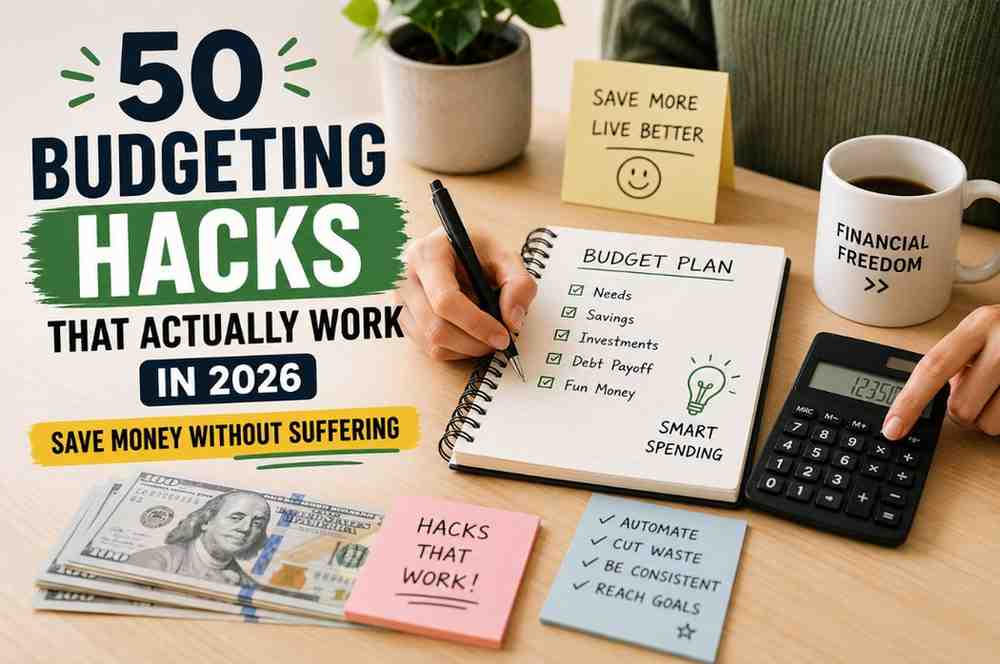
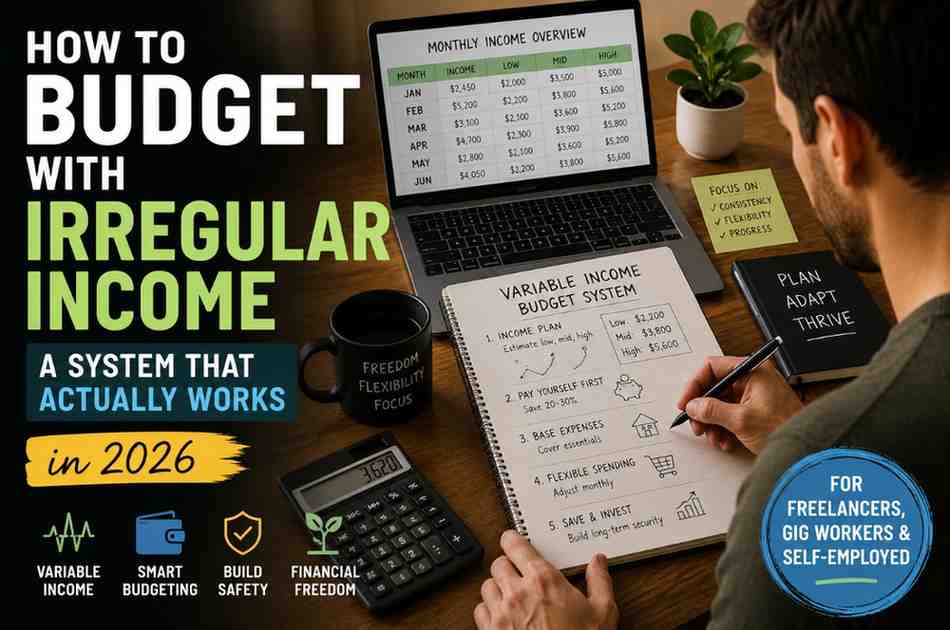
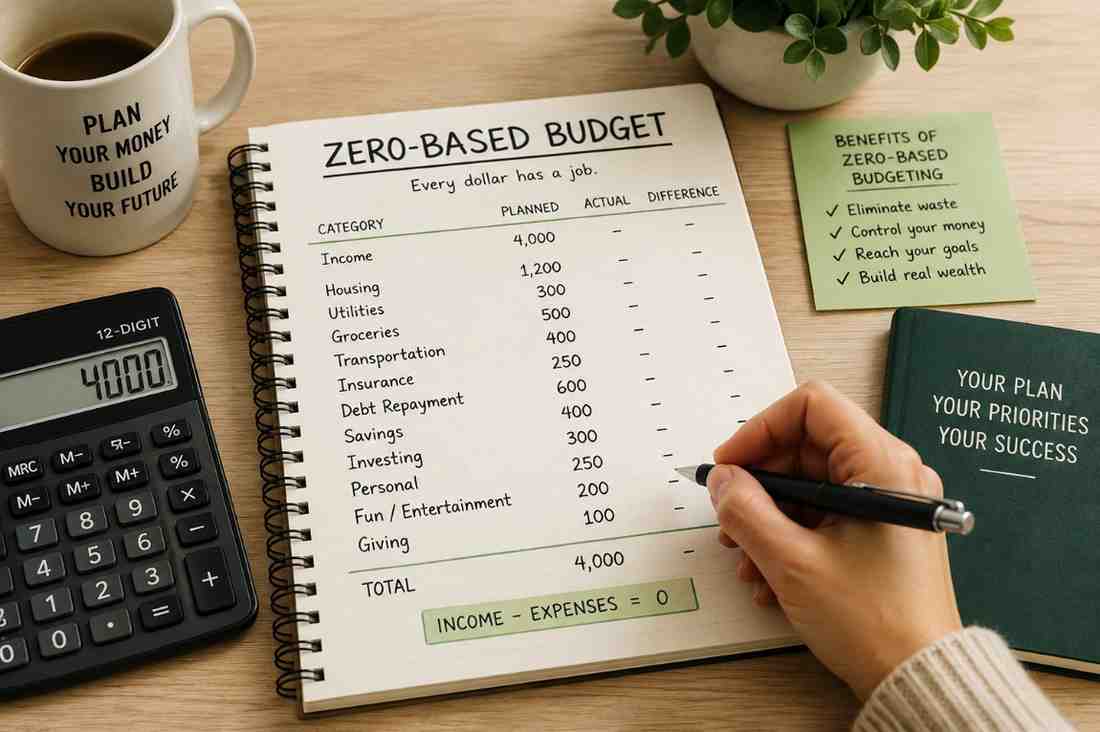
Start with a budget. If your income is stable, the 50/30/20 rule is a great starting point. If your income fluctuates, check out my guide on how to budget with irregular income. And if you want total control over every dollar, zero-based budgeting is the way to go.
Then focus on saving aggressively. I've written a detailed guide on the fastest way to save $10,000 that covers real strategies with real numbers.
Then start investing. Even small amounts matter. I've shown how $10 invested consistently can grow into something meaningful. And if you want to accelerate your income, explore passive income ideas or AI side hustles that can add hundreds of dollars to your monthly earnings.
The complete roadmap is in Building Wealth From Scratch: The 5-Step System That Actually Works. It covers everything from your first $500 saved to financial freedom.
Final Thought: You Can Change
I had 20 of these habits at age 28. I was broke. I was stressed. I was embarrassed. But I changed. I fixed my habits. I built a system. And now I'm financially free. Not because I'm special. Because I was willing to change.
You can change too. It starts with awareness. It starts with admitting you have these habits. And it starts with replacing them, one by one, with wealth-building habits.
The habits that keep you broke can be broken. They're not permanent. They're just patterns. And patterns can be changed. Start today. Fix one habit. Then fix another. And watch your financial life transform.
Recommended Reading
- Building Wealth From Scratch – The complete wealth system.
- The 50/30/20 Rule – A simple budgeting alternative.
- Zero-Based Budgeting – Total control over every dollar.
- The Fastest Way to Save $10,000 – Achieve your savings goals.
- 10 Free Ways to Start Earning Passive Income – Build multiple income streams.
- Best AI Side Hustles for Beginners – Real ways to earn extra income.
- Things Millionaires Never Buy – More spending traps to avoid.
Continue learning
Questions and answers
What is the #1 money habit keeping people broke?
Not having a plan. Most people don't have a clear financial plan. They don't know how much they need to save, invest, or earn to reach their goals. Without a plan, you're just drifting. The second biggest is saving whatever is left at the end of the month instead of saving first.
How can I stop spending money on coffee every day?
Start making coffee at home. A $30 coffee maker and $10 of beans can last a month. That's $40 vs. $150 for daily coffee shop visits. The savings are immediate and significant. You can even use the saved money for a monthly treat like a nice dinner or a weekend trip.
Is it really that bad to buy a new car?
Yes. A new car loses 20% of its value in the first year. That's thousands of dollars gone. Wealthy people buy 2-3 year old cars and drive them for years. Warren Buffett drives a 2014 Cadillac. If it's good enough for billionaires, it's good enough for you.
How do I start investing with very little money?
Open a brokerage account with a broker that offers fractional shares. Fidelity, Schwab, and Robinhood all allow you to invest with as little as $1. Start with $10 or $50 a month. The habit matters more than the amount.
What's the fastest way to fix these bad money habits?
Track your spending for 30 days. Identify your biggest leaks. Then fix one habit at a time. Don't try to fix everything at once. Pick the top 3 habits that are costing you the most and focus on those. Once they're fixed, move to the next ones.
Do I really need an emergency fund?
Yes. Without an emergency fund, any unexpected expense becomes a crisis. Start with $500. Then $1,000. Then one month of expenses. Build gradually. Your emergency fund is your financial firewall.
The habits that keep you broke can be broken. They're not permanent. They're just patterns. And patterns can be changed. Start with awareness. Track your spending. Identify your leaks. Then fix one habit at a time. Be patient. Be consistent. And watch your financial life transform. I was broke at 28. I changed my habits. I built a system. And now I'm financially free. If I can do it, you can too.