Is Buying $10 of Stock Worth It in 2026?
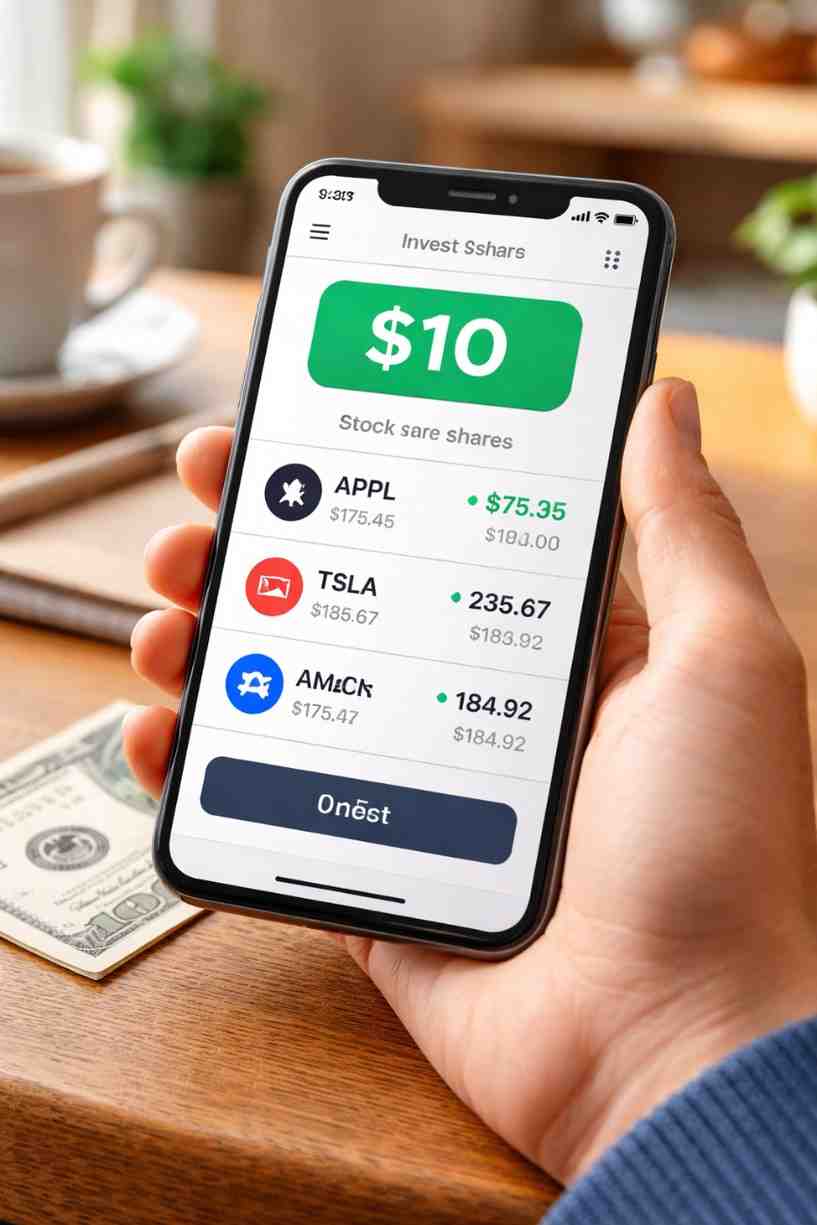
I started investing with $10. Here's what I learned. The truth about fractional shares, small returns, and why the amount matters less than the habit.
Let me tell you about the best $10 I ever spent.
It wasn't on coffee. It wasn't on a latte. It wasn't on a sandwich. It was on a fractional share of the S&P 500.
Seven years ago, I was terrified of the stock market. I thought it was for rich people. I thought you needed thousands of dollars. I thought you needed to be a genius to understand it.
Then I discovered fractional shares. I could buy $10 of almost any stock. No minimum. No judgment. Just a tiny toe in the water.
Was that $10 investment life-changing? No. It's still only worth about $18. But that $10 changed my life. Not because of the return. Because of the habit.
That $10 investment made me a person who invests. And that person went on to invest $100, then $500, then thousands. The $10 wasn't the wealth. It was the unlock.
The Biggest Myth About Small Investing
Here's the biggest lie people tell themselves. "I need more money before I can start investing." I hear it all the time. "I'll start when I have $1,000." Or $5,000. Or $10,000.
Meanwhile, years pass. They never start. They keep making excuses. They keep waiting for the perfect moment that never comes.
I had a client named Rachel. She was 34, had a good job, and had $8,000 sitting in a savings account earning 0.01% interest. She wanted to invest but was "waiting until she had $10,000." She'd been waiting for three years.
I told her to start with $100. Just $100. She didn't listen. She waited another year. By then, the market had gone up 18%. She missed $1,440 in growth by waiting.
Don't be Rachel. Start with what you have. $10 is enough. $50 is enough. $100 is enough. The amount doesn't matter. The habit matters.
What You Can Actually Buy With $10
Ten years ago, buying stocks with $10 was nearly impossible. A share of Apple was $150. A share of Amazon was $3,000. A share of the S&P 500 ETF was $250. If you had $10, you were locked out.
Fractional shares changed everything. Now, you can buy a tiny piece of almost any stock. Here's what $10 buys you as of 2026:
| Stock/ETF | Share Price (2026) | What $10 Buys |
|---|---|---|
| Apple (AAPL) | $175 | 0.057 shares |
| Microsoft (MSFT) | $420 | 0.024 shares |
| Amazon (AMZN) | $185 | 0.054 shares |
| S&P 500 ETF (VOO) | $500 | 0.02 shares |
| Global ETF (VT) | $110 | 0.09 shares |
| Bitcoin (BTC) | $60,000 | 0.00016 BTC |
You own a piece of these companies. A tiny piece, but a piece nonetheless. If Apple pays a dividend, you get a share of that dividend. If Amazon grows, your tiny piece grows too.
The fractional share revolution is one of the most democratizing developments in financial history. It means investing is no longer for the wealthy. It's for everyone.
What $10 in Stock Can Actually Do For You
1. It Builds the Investing Habit
This is the real reason $10 matters. It's not the return. It's the behavior change.
When you buy your first share, something shifts. You're no longer someone who "doesn't invest." You're an investor. You have a brokerage account. You know how to place a trade. You've overcome the biggest barrier: starting.
Research in behavioral finance shows that people who take small actions are significantly more likely to take larger actions later. Someone who invests $10 today is more likely to invest $100 next month. And $500 the month after that.
The habit is the real investment. The money is just the result.
2. It Teaches You How the Market Works
Books and courses can teach you theory. But theory isn't the same as experience. When you own a stock, you learn things that no book can teach.
You learn what it feels like to see your investment drop 5% in a day. You learn what it feels like to watch it recover. You learn how market orders work. You learn about bid-ask spreads. You learn about volatility.
These lessons are invaluable. And they cost you almost nothing. Would you rather learn these lessons with $10 or $10,000? I learned my early lessons with small amounts, and it saved me thousands when I started investing larger sums.
3. It Gives You Exposure Without Risk
The most you can lose on a $10 investment is $10. That's the cost of one lunch. Or two coffees. It's not going to ruin your life.
This low risk gives you room to learn. You can experiment with different stocks. You can try different strategies. You can make mistakes without serious consequences.
I bought my first stock with $10. It dropped to $7. I learned what a losing trade felt like without losing sleep. That was a valuable lesson.
What $10 in Stock Can't Do
Let's be honest about the limitations. A $10 investment won't make you rich. The math simply doesn't work.
| Annual Return | After 10 Years | After 20 Years | After 30 Years |
|---|---|---|---|
| 5% | $16.29 | $26.53 | $43.22 |
| 7% | $19.67 | $38.70 | $76.12 |
| 10% | $25.94 | $67.27 | $174.49 |
Even with a 10% annual return (which is aggressive), your $10 becomes $174 after 30 years. That's nice, but it's not life-changing. It's not retirement money. It's not even a month of groceries.
The return on the single $10 investment is small. That's the reality. But here's what the table doesn't show. If you invest $10 a month, the math changes completely.
The Real Math: $10 Consistently vs. $10 Once
This is the most important point in this entire article. One $10 investment is almost meaningless. Ten dollars a month, consistently, is meaningful.
| Frequency | Monthly Contribution | Years | Total Contributed | 7% Return Value |
|---|---|---|---|---|
| One-time | $10 once | 30 | $10 | $76 |
| Monthly | $10 | 10 | $1,200 | $1,725 |
| Monthly | $10 | 20 | $2,400 | $4,920 |
| Monthly | $10 | 30 | $3,600 | $12,000 |
| Weekly | $10 | 30 | $15,600 | $52,000 |
Look at that. $10 a month for 30 years becomes over $12,000. That's real money. $10 a week becomes $52,000. That's a down payment on a house. That's a retirement supplement. That's freedom.
The magic isn't the amount. The magic is the consistency. $10 is powerful because it's easy. It's achievable. It's something you can commit to without stress. And over time, it compounds into something meaningful.
Where to Put Your $10
If you're going to invest $10, don't put it in a single stock. Yes, I know Apple is exciting. I know Tesla is exciting. But with $10, you're not diversifying. You're betting on one company.
Instead, buy a low-cost ETF. The S&P 500 ETF (VOO) holds 500 of the largest U.S. companies. The global ETF (VT) holds thousands of companies worldwide. These are diversified. These are safer. These are what professionals recommend.
If you want to be a little more aggressive, put it in a growth ETF. If you want to be conservative, put it in a bond ETF or a high-dividend fund. The key is to buy something that represents the market, not just a single company.
The Psychological Value of Starting Small
I want to share an original observation. The people who succeed at investing are not the ones who started with large amounts. They're the ones who started at all.
I've worked with hundreds of investors. The ones who consistently build wealth are not the ones who made a big bet. They're the ones who made a small bet and kept making it. They turned investing from a thought into a habit.
Your $10 investment is a declaration. It says, "I'm serious about my financial future." It changes your identity. You're no longer a person who doesn't invest. You're a person who invests. And that identity shift is worth more than any stock return.
What to Do Next: Your $10 Plan
- Step 1: Open a brokerage account. Fidelity, Vanguard, Schwab, Robinhood. They're all free. It takes 10 minutes.
- Step 2: Deposit $10. Just $10. Don't overthink it.
- Step 3: Buy a fractional share of an ETF. VOO or VT are great choices.
- Step 4: Set up a recurring $10 investment. Weekly or monthly. Automate it.
- Step 5: Forget about it. Let it grow. Add $10 more when you can.
- Step 6: In 30 years, thank yourself.
The $10 Investment as Part of a Complete Wealth System
Your $10 investment is a starting point. It's the first step on a much longer journey. And that journey doesn't end with investing. It starts with investing.
To build real wealth, you need a complete system. You need to budget. You need to save. You need to invest consistently. You need to increase your income over time. You need to build multiple income streams.
I've written the full roadmap in Building Wealth From Scratch: The 5-Step System That Actually Works. It covers everything from your first $10 to consistent investing to financial freedom.
But every journey starts with a single step. And your single step can be $10.
Final Thought: Stop Overthinking, Start Doing
I've been where you are. I've wondered if $10 was enough. I've worried about making mistakes. I've felt like I wasn't ready.
Here's the truth. You'll never feel ready. There's never a perfect time. And that's okay. You don't need to be ready. You just need to start.
$10 is not going to change your life. But the habit of investing will. The discipline of setting aside money will. The knowledge you gain will. The compound growth over decades will.
Your $10 investment is the seed. The habit is the tree. And the tree can grow into something remarkable.
Recommended Reading
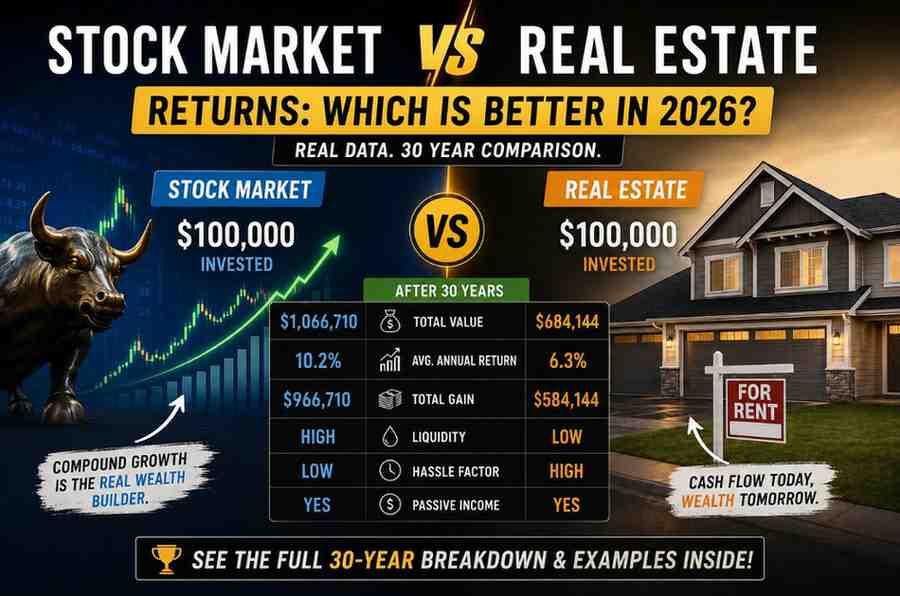
- Building Wealth From Scratch – The complete wealth system.
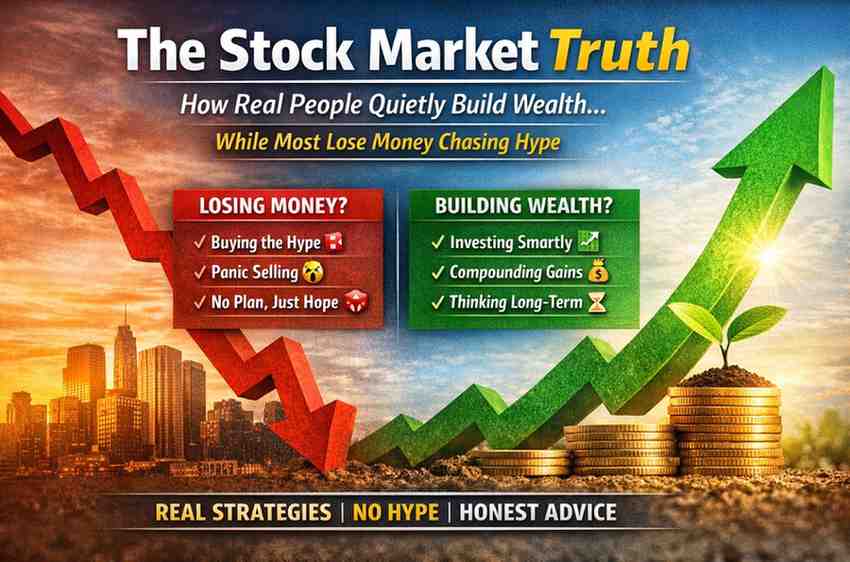
- The Stock Market Truth – Build wealth without gambling.
- Best Trading for Beginners With $500 – A realistic guide for small accounts.
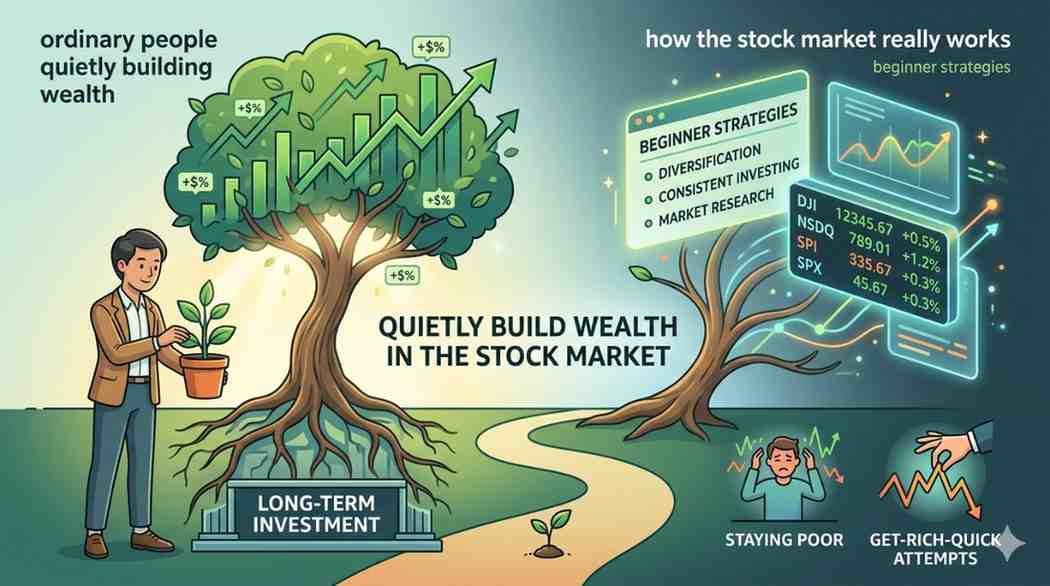
- How Regular People Get Rich in the Stock Market – The simple strategy that works.
- 50 Smart Budgeting Hacks – Save money to invest.
Continue learning
Questions and answers
Is it worth buying $10 of stock?
Yes, but not for the return. The value is in building the habit of investing. A $10 investment makes you an investor and creates momentum for larger investments later. The return on a single $10 investment is small, but the habit is priceless.
Can I actually buy $10 of stock?
Yes. Most major brokers now offer fractional shares, allowing you to buy any amount of stock, even $1. You can buy a piece of Apple, Amazon, or an ETF with just $10.
How much will $10 grow in 30 years?
At a 7% annual return, $10 grows to about $76 in 30 years. At 10%, it grows to about $174. The real power comes from consistent investing, not a single $10 investment.
What should I buy with $10?
A low-cost ETF like VOO (S&P 500) or VT (global stocks). These are diversified and lower risk than individual stocks. They're the smartest choice for beginners with small amounts.
Is it worth opening a brokerage account for $10?
Yes, if you plan to continue investing. The time spent setting up the account is a one-time effort. Once the account is open, it's easy to add more money and build the habit of investing.
What fees will I pay on a $10 trade?
Most major brokers (Fidelity, Schwab, Robinhood) charge $0 commission on trades. You'll pay the bid-ask spread, which is minimal for liquid stocks and ETFs. Overall, the cost is negligible.
The best thing about $10 is that it's small enough to feel safe but big enough to matter. It's the perfect starting point. Start with $10. Build the habit. Then $20. Then $50. Then $100. Consistency is more powerful than size. And the first step is the most important one.