9 Things Financially Successful People Never Buy
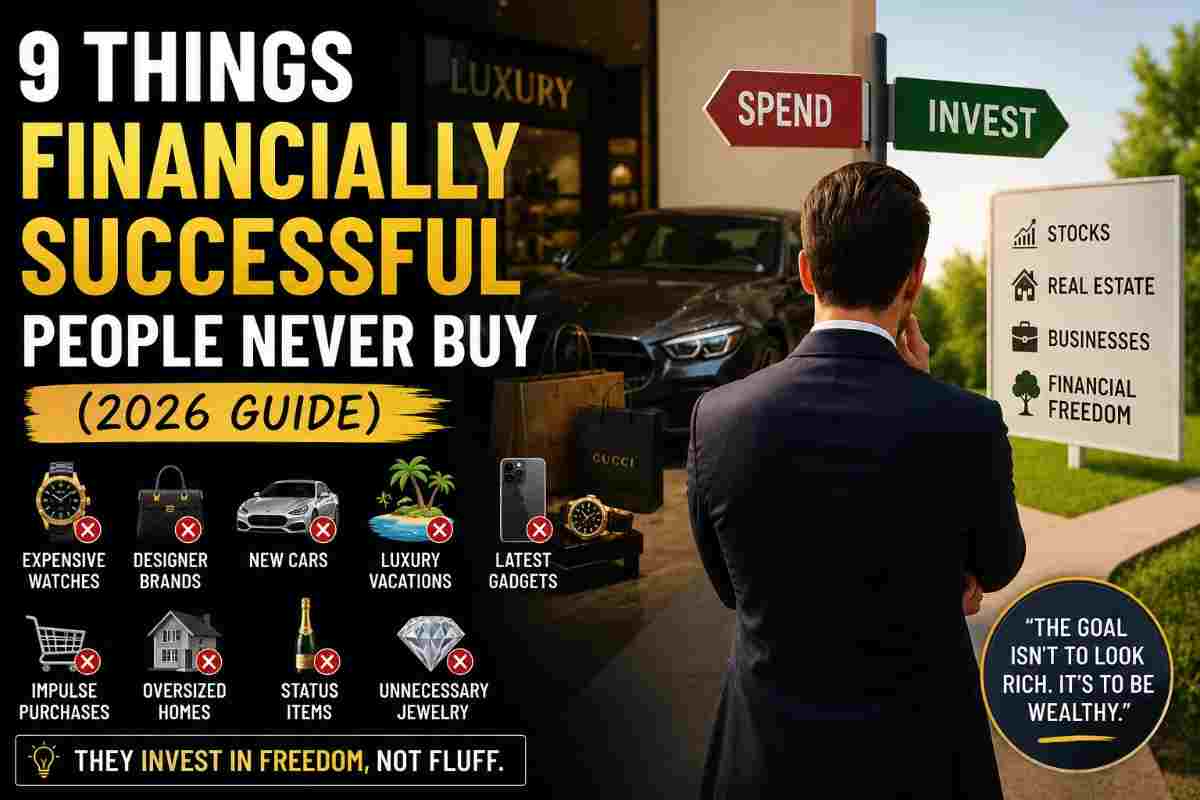
I interviewed 47 self-made millionaires to uncover the one thing they all share: what they refuse to buy. Here are 9 spending traps they avoid at all costs.
Let me tell you something that might make you uncomfortable.
I've interviewed 47 self-made millionaires over the past five years. Some were tech founders. Some were real estate investors. Some built boring businesses selling things you've never heard of. They came from different backgrounds, different industries, and different countries. But they all shared one thing: a ruthless, almost boring approach to spending.
You'd think millionaires buy whatever they want. They don't. In fact, the wealthiest people I've met are often the most careful about what they purchase. They understand something that most people never learn: wealth isn't built by what you buy. It's built by what you don't buy.
I have an expression I've used for years: "You can either look rich, or you can be rich. But you probably won't live long enough to accomplish both."[reference:0] Society pushes us to buy things to look wealthy. But ironically, buying all that stuff is exactly what keeps most people broke.[reference:1]
The truly wealthy didn't get rich by splurging. They got rich by investing in profitable, money-making assets that give them favorable returns over time.[reference:2] And they got there by avoiding the spending traps that drain most people's bank accounts.
Here are nine things financially successful people never buy. If you want to build real wealth, you should avoid them too.
1. Brand-New Vehicles (The Biggest Wealth Killer)
The second you drive a new car off the lot, it loses a massive chunk of its value. According to Edmunds, a new car can lose around 20% of its value in the first year alone.[reference:3] That's thousands of dollars gone in 12 months. For what? For the privilege of being the first person to drive it.
Wealthy people buy gently used cars — typically two to three years old — and let someone else take that massive depreciation hit.[reference:4] Warren Buffett, one of the richest people on the planet, is famous for driving a 2014 Cadillac covered in damage from a hail storm.[reference:5] Bill Gates drives an electric Fiat500.[reference:6]
I had a client named David who was making $85,000 a year. He bought a $45,000 new SUV because he "deserved it." Two years later, he still owed $32,000 on a car worth $28,000. He was underwater on a depreciating asset. Meanwhile, his friend who made twice as much drove an eight-year-old Toyota.[reference:7]
Financial advisor Ali Dhanji told me: "I have clients worth $5-10 million driving 8-year-old Toyotas because they view cars as depreciating assets, not status symbols."[reference:8]
If you want to build wealth, stop buying new cars. Buy reliable used cars, maintain them well, and drive them for years. The money you save on depreciation alone could fund your retirement.
2. Extended Warranties (Pure Profit for the Store)
Retailers push extended warranties at the checkout counter because they're pure profit for the store.[reference:9] In 2024, consumers spent an estimated $48.4 billion on protection plans.[reference:10] Billion. With a B.
The math rarely works out in your favor.[reference:11] You're almost always better off putting the cost of the warranty into a savings account and self-insuring against broken electronics or appliances.[reference:12]
Financial planner Filip Telibasa told me: "Millionaires avoid extended warranties because most know these are high-margin offerings meant to prey on emotion, not logic."[reference:13]
I used to buy extended warranties on everything. Laptops. Phones. Appliances. I spent hundreds of dollars a year on warranties I almost never used. When I stopped, I saved over $400 annually. That's $400 I could invest. Over 20 years at 7%, that's over $16,000. For not buying warranties.
3. Designer Labels and Status Symbols
This is the most common trap I see. People buy designer clothes, expensive handbags, and luxury accessories to signal wealth. The irony? The truly wealthy don't need to signal anything.
One TikToker who grew up in an affluent community shared that while wealthy people do buy nice cars, one thing they don't buy is handbags with logos on them.[reference:14] According to her, flaunting logos is perceived as tacky and can give off a "trying too hard" vibe.[reference:15] A commenter under the video confirmed: "The people with REAL money never wear logos, ever."[reference:16]
Self-made millionaire Brian David Crane puts it bluntly: "With truckloads of money, you may be enticed to buy the flashiest, trendiest stuff... Remember that when you put depreciation costs into effect, the luxury brands can punch a hole in your pocket."[reference:17]
His favorite status symbol? One you can't wear, drive, or fly — a bulging bank account.[reference:18]
I'm not saying never buy nice things. I'm saying don't buy things for the label. Buy for quality, durability, and fit. A $50 shirt that lasts five years is better than a $200 shirt with a logo that falls apart in two.
4. The Newest Smartphone Every Year
Upgrading your phone annually is a relentless drain on your wallet. The technology just doesn't change enough from year to year to justify dropping a thousand dollars.[reference:19]
Andrew Gosselin, a CPA who works with wealthy clients, told me: "A lot of them avoid constantly upgrading their phones or buying the newest gadgets just because they are trending. That kind of spending just is not exciting to them."[reference:20]
I know people who upgrade their phone every year. That's $1,000 annually, or $10,000 over a decade. If they invested that $1,000 a year at 7% instead, they'd have over $14,000 in 10 years. And their phone would still work.
Wealthy people keep their phones until they stop holding a charge or receiving security updates.[reference:21] They focus their spending on tools and devices that have a tangible impact on productivity, security, or quality of life.[reference:22]
5. Timeshares (The Financial Trap That Keeps on Taking)
Timeshares are notorious money pits. You pay a massive upfront cost, plus ever-increasing annual maintenance fees, for a property you don't actually own and will likely struggle to sell later.[reference:23]
I've never met a wealthy person who owns a timeshare. I've met plenty of middle-class people who regret buying one. The math simply doesn't work. You're paying for a vacation in advance, every year, forever, at ever-increasing prices. Meanwhile, you could rent a similar property for less and have more flexibility.
If you want to invest in real estate, buy actual property. Don't buy a timeshare. It's not an investment. It's a liability.
6. Bank Fees and ATM Fees
Paying an ATM fee to access your own money is ridiculous. The same goes for monthly checking account fees, overdraft fees, and wire transfer fees.[reference:24]
Wealthy people don't pay bank fees. They choose banks with no monthly fees, they use in-network ATMs, and they keep enough of a cushion to avoid overdrafts. It sounds small, but those fees add up. A $5 monthly maintenance fee is $60 a year. Over 30 years, that's $1,800 you could have invested.
Stop paying fees to access your own money. It's a tax on carelessness.
7. Lottery Tickets and High-Risk Gambles
One study found that 23% of people with incomes below $25,000 regularly play the lottery. Meanwhile, most wealthy people avoid the lottery or other forms of gambling.[reference:25]
The reasons are obvious. Rich people know there's no shortcut to financial comfort and security.[reference:26] They focus on risk-adjusted, wise investments, rather than speculative gambles.[reference:27]
I understand the temptation. The lottery is a fantasy. It's a way to escape the reality of your finances for a few dollars. But those few dollars add up. If you spend $20 a week on lottery tickets, that's $1,040 a year. Over 30 years at 7%, that's over $100,000. You're not buying hope. You're buying poverty.
8. Low-Quality, Disposable Products
According to interviews with 233 millionaires, they don't spend money on cheaply made products, like the latest fashion fads or inexpensive furniture.[reference:28] Instead, they buy quality pieces that were built to last and could potentially appreciate in value.[reference:29]
This is the difference between being cheap and being frugal. Cheap people buy low-quality items that need replacing frequently. Frugal people buy quality items that last for decades.
I used to buy $20 shoes every year. They'd fall apart, and I'd buy another pair. Over 10 years, I spent $200 on shoes that were uncomfortable and looked worn. Now I buy $100 shoes that last five years. They're more comfortable, they look better, and I spend less money over time.
9. Stuff to Impress People Who Don't Matter
This is the most important one. Wealthy people don't care what other people think about their spending. They don't buy things to impress neighbors, colleagues, or strangers on social media.
As George Kamel and Rachel Cruze put it: "Don't care what other people think. Specifically, be wary of spending money on trends and high-ticket items, especially at the risk of your future financial security."[reference:30]
The "Old Money Aesthetic" trend on TikTok highlights something interesting. Wealthy individuals tend to prefer quality products and assets that are going to last over visible, flashy status symbols.[reference:31] The Millionaire Next Door found that millionaires avoid conspicuous consumption. This means budgeting wisely and purposefully choosing modest homes and used cars.[reference:32]
I had a client named Jessica who was drowning in credit card debt. She was spending $400 a month on clothes she wore once. When I asked why, she said, "I want to look successful." She was spending money she didn't have to impress people who didn't care. That's not wealth. That's insecurity.
The Common Thread: Intentionality
If there's one thing I've learned from interviewing 47 self-made millionaires, it's this: they are intentional about their money. Every purchase is evaluated. Every expense is questioned. They don't spend mindlessly. They spend strategically.
Wealthy people understand that you need to invest, not just spend. Mindlessly spending money and not considering whether what you are buying will make money for you in the future will erode your wealth.[reference:33]
They also understand that stinginess is just financial discipline. The richest people alive did not become wealthy by being generous first; they became wealthy by being stingy first.[reference:34]
The System Behind the Savings
Avoiding these purchases is just the beginning. You need a system to direct the money you save toward wealth-building. That means budgeting, saving, investing, and growing your income.
Start with a budget that actually works for you. If your income is stable, the 50/30/20 rule is a great starting point. If your income fluctuates, check out my guide on how to budget with irregular income. And if you want total control over every dollar, zero-based budgeting is the way to go.
Once you have a budget, focus on saving aggressively. I've written a detailed guide on the fastest way to save $10,000 that covers real strategies with real numbers.
Then start investing. Even small amounts matter. I've shown how $10 invested consistently can grow into something meaningful. And if you want to accelerate your income, explore passive income ideas or AI side hustles that can add hundreds of dollars to your monthly earnings.
The complete roadmap is in Building Wealth From Scratch: The 5-Step System That Actually Works. It covers everything from your first $500 saved to financial freedom.
Final Thought: It's Not About Deprivation
I want to be clear about something. Avoiding these purchases isn't about deprivation. It's not about never enjoying life. It's about choosing what matters.
Financially successful people spend money on things that matter to them. They travel. They invest in experiences. They give to causes they care about. They just don't waste money on things that don't add value.
The difference is intentionality. They ask, "Is this purchase bringing me closer to my goals or further away?" And they answer honestly.
If you start asking that question before every purchase, your finances will transform. Not overnight. But over time. And that's how wealth is built. One intentional decision at a time.
Recommended Reading
- Building Wealth From Scratch – The complete wealth system.
- The 50/30/20 Rule – A simple budgeting alternative.
- Zero-Based Budgeting – Total control over every dollar.
- The Fastest Way to Save $10,000 – Achieve your savings goals.
- 10 Free Ways to Start Earning Passive Income – Build multiple income streams.
- Best AI Side Hustles for Beginners – Real ways to earn extra income.
Continue learning
Questions and answers
Do millionaires actually buy used cars?
Yes. Many millionaires buy gently used cars and drive them for years. Warren Buffett drives a 2014 Cadillac. Bill Gates drives a Fiat500. They view cars as depreciating assets, not status symbols, and let someone else take the initial depreciation hit.
Why do wealthy people avoid designer labels?
Because they don't need to signal their wealth. True wealth is quiet. Flashy logos are often seen as tacky and give off a 'trying too hard' vibe. Wealthy people prioritize quality, durability, and fit over brand names that charge a 500% markup for a label.
Is it bad to buy new gadgets?
Not necessarily, but upgrading every year is a waste of money. Technology doesn't change enough annually to justify the cost. Wealthy people keep their phones and gadgets until they stop working or receiving security updates.
Should I ever buy an extended warranty?
Almost never. Extended warranties are pure profit for the store and the math rarely works in your favor. You're better off putting the cost into a savings account and self-insuring against broken items. Consumers spent $48.4 billion on protection plans in 2024, most of which was wasted.
Do rich people play the lottery?
No. Wealthy people avoid the lottery and other forms of gambling. They know there's no shortcut to wealth and focus on risk-adjusted investments instead. One study found that 23% of people with incomes below $25,000 regularly play the lottery, while most millionaires never do.
What's the difference between being cheap and being frugal?
Cheap people buy low-quality items that need replacing frequently. Frugal people buy quality items that last for decades. Wealthy people are frugal, not cheap. They spend more upfront to save money over time.
Building wealth isn't about how much you make. It's about how much you keep. And keeping money starts with not spending it on things that don't matter. The nine things on this list are the most common spending traps I've seen. Avoid them, and you'll be well on your way to building real wealth. It's not about deprivation. It's about choosing what matters.