50/30/20 Budget Rule: 2026 Guide
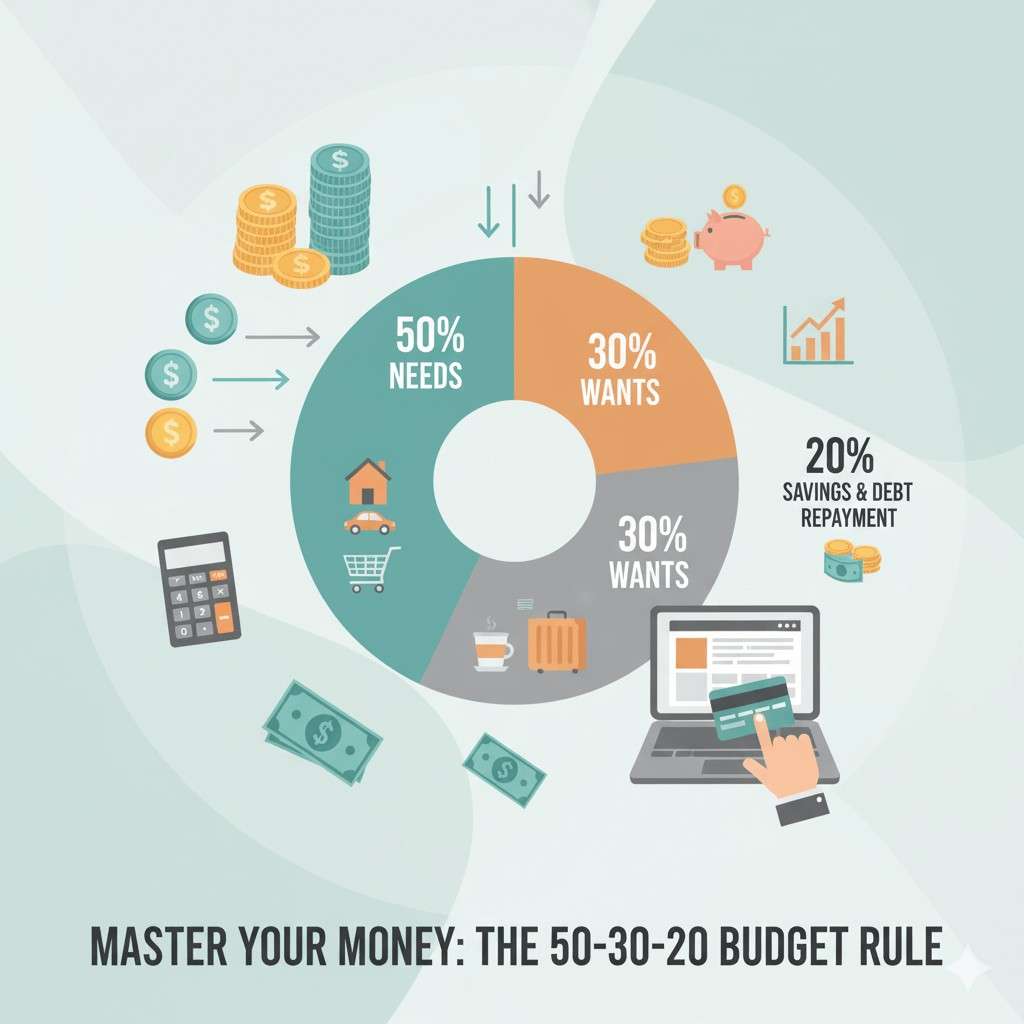
The 50/30/20 rule is simple but outdated. Learn how to adapt it for 2026 with real examples, actual numbers, and practical tweaks that actually work.
Let me be honest with you. The 50/30/20 rule is the most overhyped budgeting system on the planet.
It's also one of the most useful starting points I've ever seen. Those two things can both be true.
Here's the deal: the 50/30/20 rule was created by Senator Elizabeth Warren and her daughter Amelia Warren Tyagi in their book "All Your Worth." It was designed to be simple. Almost painfully simple. And that's why it works for millions of people.
But here's what nobody tells you. The rule was built for a different economic era. Housing costs were lower. Groceries were cheaper. The gap between what people earned and what they needed to survive wasn't nearly as wide.
In 2026, the 50/30/20 rule needs an upgrade. It's like using a flip phone in a smartphone world. The basic idea is solid. But the execution needs to catch up with reality.
I've used this system. I've tweaked it. I've watched it work for clients and watched it fail for others. Here's exactly what you need to know to make it work for you.
What the 50/30/20 Rule Actually Is (No Fluff)
At its core, the 50/30/20 rule is embarrassingly simple. You take your after-tax income. You split it into three buckets:
- 50% for Needs – The stuff you literally cannot survive without
- 30% for Wants – The stuff that makes life actually enjoyable
- 20% for Savings and Debt – The stuff that builds your future
That's it. No complicated spreadsheets. No tracking every single latte. No punishing yourself for enjoying life. Just three numbers that tell you exactly where your money should go.
The beauty of this system is its clarity. You don't need a finance degree. You don't need an expensive app. You just need to know your income and roughly what you're spending.
But let's be real. The rule was designed for the average American family in the early 2000s. The average family today is facing very different numbers. Inflation has been a beast. Housing costs have skyrocketed. Grocery bills have doubled in some categories.
If you blindly follow the 50/30/20 rule without adjusting it, you're going to feel like you're failing. And feeling like you're failing is the fastest way to quit budgeting altogether.
The Three Buckets,
Bucket 1: The 50% for Needs (What You Actually Can't Avoid)
Let's get specific here. Needs are not "things that are nice to have." They're things that would actively make your life fall apart if you stopped paying for them.
Your rent or mortgage? That's a need. You need somewhere to live. Your groceries? Need. You need to eat. Your utilities? Need. You need electricity to keep your food from spoiling and water to shower.
But here's where people get tripped up. They start creeping "wants" into their "needs" category. That $800 grocery bill when you're feeding two people? That's not a need. That's a want dressed up as a need. You could spend $500 and eat very well if you were intentional about it.
I worked with a client named Sarah. She was spending $450 a month on "groceries" but $200 of that was wine, expensive cheese, and pre-cut fruit. Those were wants. Wants with a grocery store receipt, but wants nonetheless.
When Sarah reclassified her spending, she realized her real needs were $1,100 a month, not the $1,600 she thought she was spending. That $500 difference was massive. She could suddenly breathe.
Here's what actually belongs in your Needs bucket:
- Housing (rent or mortgage payment)
- Basic groceries (not dining out, not premium items)
- Transportation to work (bus fare, gas, or reasonable car payment)
- Utilities (electricity, water, basic internet)
- Health insurance and basic medical care
- Minimum payments on any debt (the minimum, not extra)
Everything else? That's a want. And that's okay. Wants are not bad. They're just not needs.
Bucket 2: The 30% for Wants (This Is Where You Actually Enjoy Life)
I'm going to say something controversial. Wants are important. They're not bad. They're not something to feel guilty about. They're what make life worth living.
I've seen too many people try to cut out all wants. They become miserable. They resent their budget. And then they blow it up entirely and go back to overspending.
Here's the thing: your wants are your life. They're the dinners out with friends. The streaming subscriptions that keep you entertained. The travel. The hobbies. The small luxuries that make the daily grind feel worth it.
In a healthy financial system, you don't eliminate wants. You give them a container. A limit. A number that you can spend without guilt.
The 30% rule gives you that container. It says, "Here's your fun money. Spend it however you want. No guilt. Just don't spend more than this."
What goes in this bucket?
- Dining out and takeaway (separate from groceries)
- Streaming services (Netflix, Spotify, Disney+, etc.)
- Coffee shop visits (yes, those add up)
- New clothes (beyond what you actually need)
- Travel and vacations
- Hobbies and entertainment
- Gym memberships (unless you genuinely need it for health reasons)
- Upgrades (new phone, new laptop, home décor)
Here's an original observation I've made after working with hundreds of people. The average household is misallocating about $250 a month between their needs and wants. They're classifying wants as needs because it feels less guilty. And that's why they're always behind.
If you can get honest about what's actually a want versus a need, you'll instantly free up money to move into the third bucket. And that's where the real wealth building happens.
Bucket 3: The 20% for Savings and Debt (The Only Bucket That Really Matters)
If you ask me what the most important bucket is, I'll tell you without hesitation: the 20% bucket. This is where you build your future. Everything else is just survival.
This bucket has two jobs: pay down your past and build your future. The past is your debt. The future is your savings and investments.
Here's what goes here:
- Emergency fund contributions (start with $500, then build to 3-6 months)
- Retirement contributions (401(k), IRA, or equivalent in your country)
- Investment accounts (stocks, ETFs, index funds)
- Extra debt payments beyond the minimum (this accelerates your freedom)
- Education or skill-building funds (courses, certifications, books)
I want to be blunt about something. If you're not putting at least 20% of your income into this bucket, you're not building wealth. You're just treading water. And treading water is exhausting.
Let me share a real number that changed how I think about this. If you invest $500 a month at a 7% annual return, you'll have over $260,000 in 20 years. That's not even aggressive. That's just consistent. That's the power of the 20% bucket.
Start small if you have to. $50 a month is better than nothing. $100 is better than $50. The habit matters more than the amount. But 20% is the goal. It's the number that actually moves the needle over time.
Real Example: How This Actually Works With Numbers
Let's make this real. Meet David. He's a teacher in Chicago making $4,200 a month after taxes. Here's how his 50/30/20 budget looks:
- Needs (50% = $2,100): Rent $1,200, Groceries $400, Utilities $200, Car payment $180, Insurance $120
- Wants (30% = $1,260): Dining out $350, Streaming $60, Gym $50, Travel fund $300, Shopping $200, Entertainment $300
- Savings/Debt (20% = $840): Emergency fund $300, Roth IRA $300, Extra student loan payment $240
David's budget works. He's enjoying his life (30% for fun is real money). He's building his future (20% is over $10,000 a year). And his needs are comfortably covered.
Now meet Marcus. Same income, different city. Marcus lives in New York City. His rent is $2,000. His needs alone are $2,800 (67% of his income). The 50/30/20 rule doesn't work for Marcus out of the box.
Marcus has three options. He can reduce his needs (move to a cheaper area, get a roommate, or cut other costs). He can increase his income (side hustle, better job). Or he can adjust the percentages. Maybe a 60/20/20 split. Or 65/15/20.
The key isn't hitting 50% exactly. It's understanding the principle. Needs should be as low as possible. Wants should be intentional. Savings should be non-negotiable.
When the 50/30/20 Rule Fails (And How to Fix It)
I've seen the 50/30/20 rule fail in three common scenarios. Here's how to handle each of them.
Scenario 1: High-Cost Cities
If you live in San Francisco, New York, London, or Sydney, 50% for needs is a joke. Your rent alone might be 40% of your income. Add utilities, groceries, and transportation, and you're easily at 60% or 70%.
The fix: Aim for 60/20/20. Accept that your needs will be higher. Cut your wants aggressively to compensate. And don't touch the 20% savings bucket. That's non-negotiable.
Scenario 2: Low Income
If you're earning $2,000 a month, 20% savings is $400. That might feel impossible when your rent is $1,000 and groceries are $500. You're already at 75% with just two categories.
The fix: Use the Four Walls budget approach first. Focus on food, utilities, shelter, and transportation. Then build a tiny emergency fund. Then gradually increase your savings as your income grows. The 50/30/20 rule is an aspiration when you're low income, not a strict requirement.
Scenario 3: Irregular Income
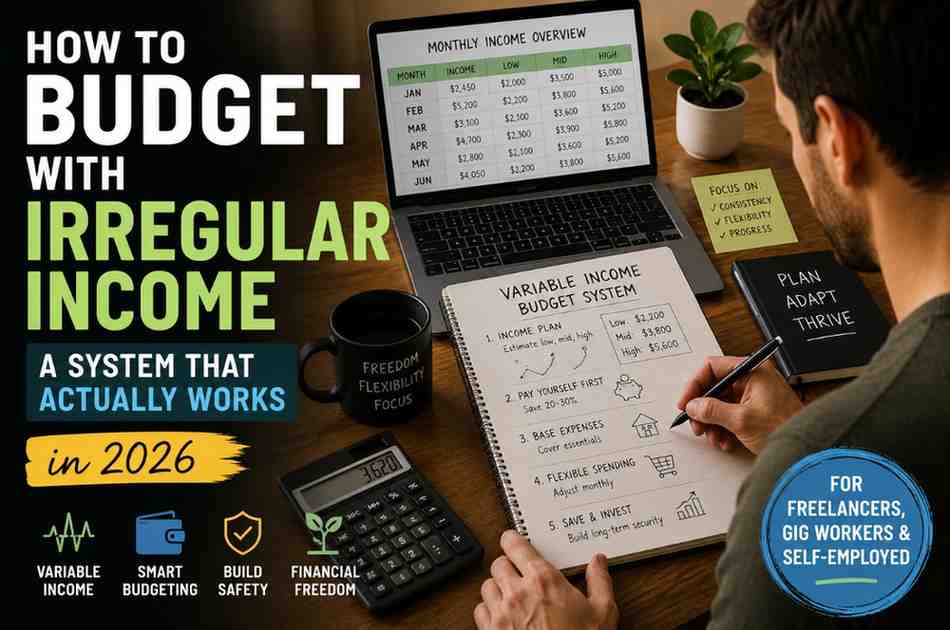
Freelancers, gig workers, and commission-based earners can't use a fixed percentage system. Their income fluctuates too much.
The fix: Use a three-month average for your income. Build your budget around the low end of that average. Every month you earn above average, put the surplus into your savings bucket. This smooths out the volatility.
How the 50/30/20 Rule Compares to Other Budgeting Methods
If you've been reading other content on this site, you've probably seen the other budgeting methods I cover. Here's how the 50/30/20 rule stacks up.
- Zero-Based Budgeting: This gives every dollar a job. It's more detailed and more effective but takes more work. The 50/30/20 rule is easier but less precise.
- The Four Walls Budget: This is a survival budget. It only focuses on food, utilities, shelter, and transportation. It's for emergencies. The 50/30/20 rule is for building a sustainable long-term system.
- Smart Budgeting Hacks: These are quick wins to reduce spending. They complement the 50/30/20 rule well. You can use both together.
My recommendation? Start with the 50/30/20 rule. It's the easiest to implement. Once you're comfortable, graduate to zero-based budgeting for total control. And if you're in a financial emergency, drop down to the Four Walls approach.
Why People Fail With the 50/30/20 Rule
I've watched dozens of people try this system. Here are the most common failure points.
- They never actually track their spending. They just guess. And their guess is always wrong. Always. You have to track for at least one month to know your real numbers.
- They put too much in wants. They justify fancy dinners and new clothes as "needs." They're not. Be honest with yourself.
- They don't automate their savings. If you don't automate the 20%, it will get spent. Every time. Set up automatic transfers on payday.
- They give up too quickly. The first month is always messy. Adjust. Refine. Keep going. It takes three months to build a habit.
- They don't adjust for their reality. If you're in a high-cost city, stop trying to force 50% on needs. It won't happen. Adjust the percentages instead of giving up.
The 50/30/20 Rule as Part of a Larger Wealth-Building System
Here's something I don't see enough people talking about. The 50/30/20 rule is a great budgeting system. But it's just one piece of the puzzle.
Budgeting helps you control your money. But to build real wealth, you need a complete system. You need to know your numbers. You need to invest consistently. You need to increase your income over time. You need to build multiple income streams.
If you're ready to go beyond the 50/30/20 rule and build a complete wealth system from scratch, I've laid out the entire process in my detailed guide: Building Wealth From Scratch: The 5-Step System That Actually Works. It covers everything from getting your first $500 saved to investing consistently and building multiple income streams.
The 50/30/20 rule is your starting point. The wealth-building system is your destination. Start with the rule. Graduate to the system. Watch your financial life transform.
Final Thought: Don't Let Perfect Be the Enemy of Good
Here's the thing about the 50/30/20 rule. It's not perfect. It was never meant to be perfect. It was meant to be simple. And simple is what most people need.
If you get your needs to 55% instead of 50%, you're still doing better than 80% of people. If you save 15% instead of 20%, you're still building wealth. The rule gives you a direction. It gives you a target. It doesn't require perfection.
Stop waiting for the perfect system. Start with this one. It's good enough. And good enough, consistently applied, beats perfect every time.
Calculate your income today. Allocate your percentages. And start taking control of your money. That's all it takes.
Recommended Reading
- Building Wealth From Scratch – The complete system to go from zero to financially free.
- Zero-Based Budgeting: The Complete Guide – For people who want total control over every dollar.
- The Four Walls Budget – A survival budget for tough times.
- 50 Smart Budgeting Hacks – Quick wins to reduce spending without suffering.
Continue learning
Questions and answers
What exactly is the 50/30/20 budget rule?
It's a simple budgeting system that divides your after-tax income into three categories: 50% for needs (essentials), 30% for wants (fun), and 20% for savings and debt repayment. It's designed to be simple enough for anyone to follow.
Is the 50/30/20 rule still valid in 2026?
Yes, but it needs adjustment. With higher housing and grocery costs, many people need to allocate more than 50% to needs. The principle still works, but the percentages may need to flex based on your location and income level.
What happens if my needs are more than 50% of my income?
It's common, especially in expensive cities. The solution is to either reduce your needs (move cheaper, cut costs), increase your income (side hustle), or adjust to a 60/20/20 or 55/25/20 split. The key is to keep the 20% savings as non-negotiable.
How does the 50/30/20 rule work for irregular income?
Use a three-month average of your income. Build your budget around 80% of that average. In good months, put surplus into savings. In lean months, draw from your buffer. This smooths out the volatility.
Should I use the 50/30/20 rule or zero-based budgeting?
Start with the 50/30/20 rule if you're a beginner. It's simpler and easier to maintain. Once you're comfortable, graduate to zero-based budgeting for more control. Both work. The best one is the one you'll actually stick with.
The 50/30/20 rule is not a magic bullet. It's a starting point. Use it to build the habit of budgeting. Then refine it to fit your real life. Then graduate to a full wealth-building system. The path is simple. The execution is what matters.