Savings Bonds in 2026: EE vs. I Bonds Explained
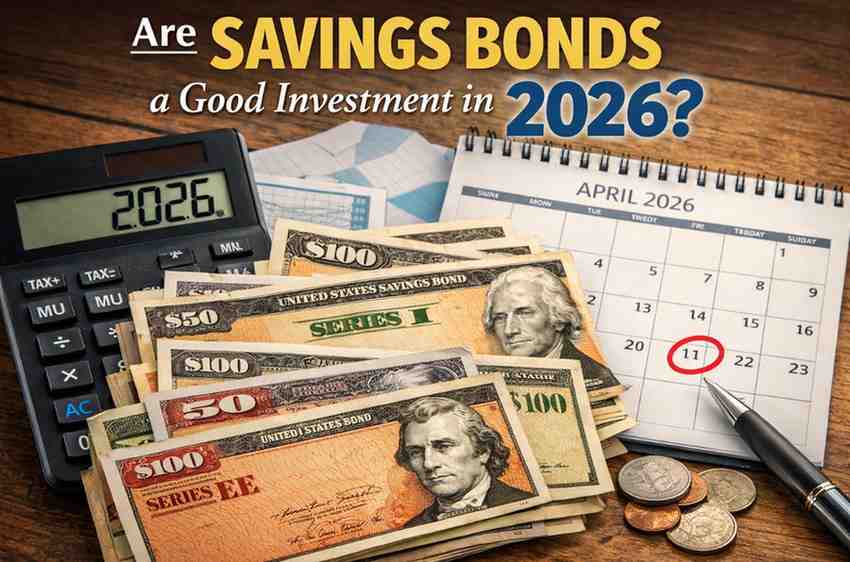
Rates are changing find out if savings bonds still beat inflation in 2026. Compare EE vs I bonds, current returns, and who should invest now.
Disclaimer: This content is for educational purposes only and does not constitute financial advice. Always consult a qualified financial advisor before making investment decisions.
If you have ever wondered whether savings bonds still make sense in 2026, you are not alone. With high-yield savings accounts paying around 4% and inflation still on everyone's mind, savings bonds look more interesting than they have in years. But are they the right fit for your portfolio? Here is a straightforward breakdown of how savings bonds work, what they pay right now, and who they are actually for.
What Are U.S. Savings Bonds?
When you buy a U.S. savings bond, you are lending money to the U.S. government. In return, the government promises to pay you back with interest. They are simple to buy, safe, and affordable you can start with as little as $25. Savings bonds are low-risk, government-backed assets designed for individual investors, not for trading on the open market.
Two Types of Savings Bonds: EE vs I
Series EE Bonds The Fixed-Rate Option: Current rate is 2.50% for bonds issued November 2025 through April 2026. The rate is fixed for the first 20 years. The key feature is a doubling guarantee — at 20 years, the bond will be worth at least double its purchase price regardless of the interest rate.
Series I Bonds The Inflation-Protected Option: Current composite rate is 4.03% for bonds issued November 2025 through April 2026. This is made up of a fixed rate (currently 0.90%) plus a variable rate that adjusts every six months based on inflation. When inflation rises, so does your return — which is why I bonds paid over 9% in 2022 when inflation spiked.
The Pros of Savings Bonds
| Advantage | Why It Matters |
|---|---|
| Government-backed safety | You cannot lose principal. The U.S. government guarantees repayment. |
| Inflation protection (I bonds) | Your return rises automatically with inflation. |
| Tax advantages | Interest is exempt from state and local tax. Federal tax deferred until redemption. |
| Education tax exclusion | Interest may be fully tax-free if used for qualified higher education expenses. |
| No fees | No commissions, management fees, or account minimums beyond the $25 purchase minimum. |
The Cons of Savings Bonds
| Disadvantage | What You Need to Know |
|---|---|
| Low returns vs stocks | 2.50–4.03% may not beat long-term stock market averages of 7–10%. |
| Illiquidity | You cannot cash a savings bond for the first 12 months. |
| Early withdrawal penalty | Cash out within five years and you lose the last three months of interest. |
| Annual purchase limit | You can only buy $10,000 per series per year. |
| No secondary market | Savings bonds cannot be sold only redeemed directly with the Treasury. |
Who Should Buy Savings Bonds?
Savings bonds make sense if you want safety above all else, are saving for a long-term goal with inflation protection, live in a high-tax state, are saving for a child's college education, or have already maxed out other safe options like a high-yield savings account.
They are probably not for you if you need access to the money within 12 months, are seeking high returns, or want to invest more than $10,000 per year.
How Savings Bonds Compare to Other Safe Options (2026)
| Investment | Rate (Approx) | Risk | Liquidity | State Tax |
|---|---|---|---|---|
| Series I Bond | 4.03% | Very low | Locked 1 year; penalty before 5 years | Exempt |
| Series EE Bond | 2.50% | Very low | Locked 1 year; penalty before 5 years | Exempt |
| High-Yield Savings Account | 4.0–4.2% | Very low (FDIC insured) | Immediate | Taxable |
| 1-Year CD | 4.1–4.5% | Very low (FDIC insured) | Locked for term | Taxable |
| 3-Month Treasury Bill | ~3.5–4.2% | Very low | Tradable | Exempt |
How to Buy Savings Bonds
You can only buy electronic savings bonds through TreasuryDirect.gov. Create an account, link your bank account, choose Series EE or Series I, enter the purchase amount ($25 minimum, $10,000 maximum per series per year), and confirm. The bonds appear in your online account and you can hold them for up to 30 years.
The Bottom Line
Buy I bonds if you want safety and inflation protection, can leave the money for at least one year, and live in a high-tax state. Consider EE bonds only if you are certain you can hold them for the full 20 years to get the doubling guarantee. Skip savings bonds entirely if you need immediate liquidity, are chasing higher returns, or want to invest more than $10,000 per year in this asset class.
If you are just starting your wealth-building journey, read the complete building wealth from scratch guide to understand the foundation before choosing individual tools like savings bonds.
More Posts You May Like
Continue learning
Questions and answers
Can I lose money with savings bonds?
No. As long as you hold them for at least one year, you will get back at least your original investment plus interest earned — minus any penalty if you cash out within five years.
Are savings bonds better than a high-yield savings account?
It depends. If you need immediate access to your money, a HYSA is better. If you want inflation protection and state tax exemption, I bonds may win. Right now the rates are similar, so liquidity is the main trade-off.
Should I buy I bonds or EE bonds?
For most people in 2026, I bonds make more sense. They pay significantly more (4.03% vs 2.50%) and offer inflation protection. EE bonds are only worth considering if you are certain you can hold them for 20 years to lock in the doubling guarantee.
What happens if I need to cash a savings bond early?
You must hold the bond for at least 12 months. If you cash it between years one and five, you lose the last three months of interest. After five years there is no penalty.
Are savings bonds worth it for retirement?
Generally no. For long-term retirement savings, stocks and index funds have historically provided much higher returns. Savings bonds are better for shorter-term goals, emergency funds, or the conservative portion of your portfolio.
Can I buy savings bonds for my child?
Yes. You can purchase bonds as a gift or open a minor linked account through TreasuryDirect.
The best investment is the one you understand and can stick with. Savings bonds will not make you rich, but they can keep your money safe and growing steadily. Use them as a tool not a lottery ticket, and not a substitute for a proper investment plan.