75-15-10 Budget Rule for High-Cost Living
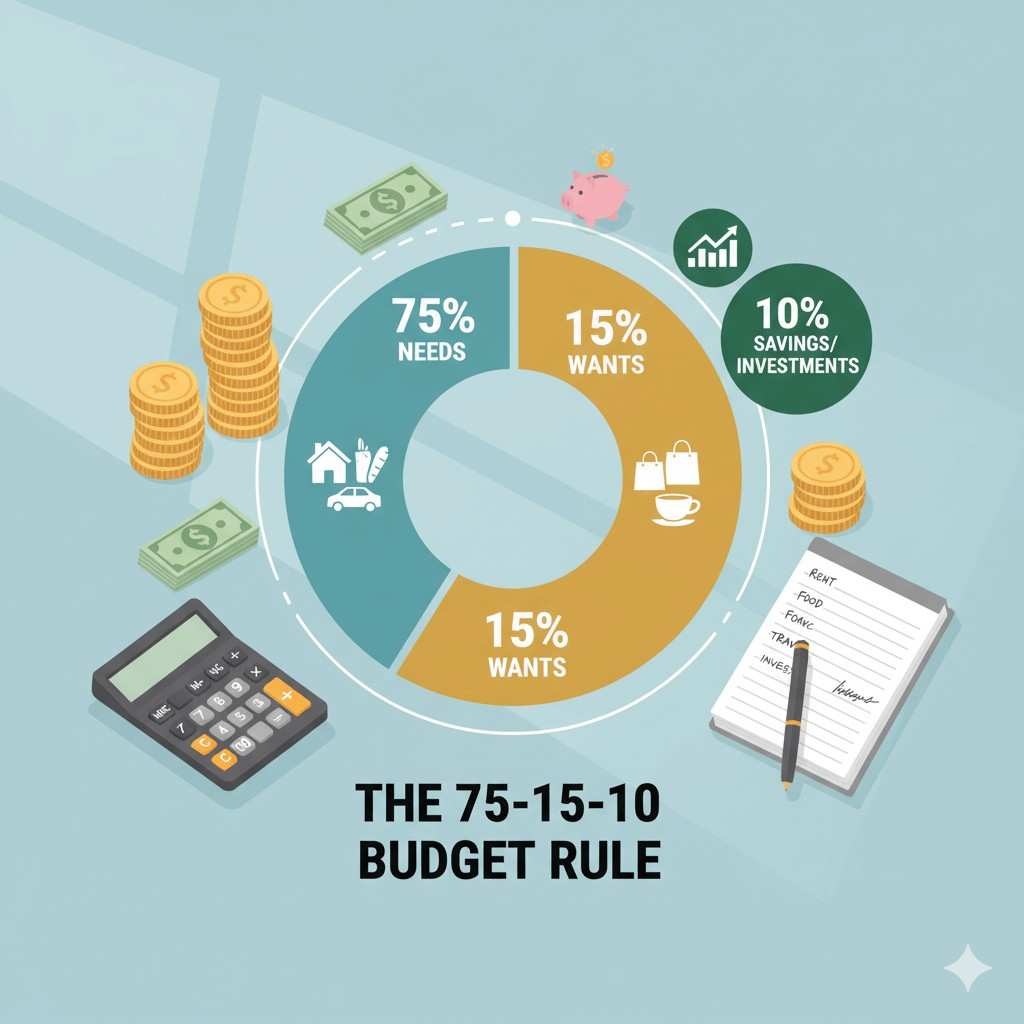
Most budgets don't work when rent is 40% of your income. The 75-15-10 rule is designed for real people dealing with inflation, high costs, and limited income.
Let me tell you about Mike.
Mike lives in Chicago. He's a warehouse manager making $58,000 a year. After taxes and health insurance, he brings home about $4,200 a month.
He tried to follow the 50/30/20 rule. He really did. But his rent was $1,600. His utilities were $250. His groceries were $600. His transportation was $300. He had a car payment and insurance. Before he even got to "wants," he was at $3,200. That's over 76% of his income just on needs.
Mike felt like a failure. Every budgeting article told him he was doing it wrong. He wasn't saving enough. He was spending too much on wants. He was irresponsible.
But Mike wasn't irresponsible. He was just living in 2026.
The 50/30/20 rule was designed for a different era. Housing was cheaper. Groceries were more affordable. The gap between income and survival was smaller. Today, millions of people are in Mike's position. Their basic needs take up 60%, 70%, or even 80% of their income. And they're being told they're failing.
The 75-15-10 rule was designed for people like Mike. It doesn't pretend your needs are lower than they are. It acknowledges reality and gives you a path forward.
What the 75-15-10 Rule Actually Is
The 75-15-10 rule is simple. It divides your after-tax income into three categories:
- 75% for needs and living expenses – The stuff you literally can't avoid.
- 15% for savings and investments – Building your future.
- 10% for debt repayment – Getting out of debt and achieving freedom.
That's it. No complicated math. No unrealistic expectations. Just three numbers that acknowledge what most people are actually dealing with.
Now, I know what some of you are thinking. "Only 15% for savings? That's not enough!" I hear you. But here's the thing: 15% of something is better than 20% of nothing. And for many people, 20% is just not possible right now.
The 75-15-10 rule is not a destination. It's a starting point. It's about getting a system in place that actually works for your life today. As your income grows, you can adjust. You can go to 70/20/10. Then 65/25/10. Then maybe 60/30/10. The rule evolves with you.
Breaking Down the Three Categories
Category 1: The 75% for Needs (The Realistic One)
This is the category that makes the 75-15-10 rule different from other budgets. It acknowledges that needs are expensive. And it doesn't make you feel guilty about it.
What goes here? Everything that keeps you alive and functional.
- Rent or mortgage
- Groceries and household supplies
- Utilities (electricity, water, gas)
- Transportation (gas, public transit, basic car costs)
- Health insurance and medical care
- Minimum debt payments
- Internet and phone (basic, not premium)
- Insurance (car, renter's, etc.)
- Childcare if you have kids
Notice what's not here. Dining out. Streaming services. Gym memberships. Vacations. New clothes beyond what you actually need. Those are wants. And in this system, wants are not part of the 75% category.
One of the most important skills in budgeting is honest classification. I've worked with clients who claimed their $300 a month dining out was a "need" because they "needed" to socialize. No. Dining out is a want. And that's okay. Just be honest about it.
Category 2: The 15% for Savings and Investments (The Future Builder)
This is where you build your future. Even in a tough economy, savings is non-negotiable. The amount might be smaller than you'd like, but it's there. And consistency beats perfection every time.
What goes here?
- Emergency fund contributions
- Retirement accounts (IRA, 401k, etc.)
- Investment accounts (stocks, ETFs, index funds)
- Education or skill development
- House down payment savings
I've had clients tell me they can't save 15%. They're struggling just to make ends meet. And I get it. But here's what I tell them: save 5% first. Get that habit going. Then 10%. Then 15%. The habit is more important than the number.
Let me show you why this matters with real numbers. If you save $200 a month (15% of a $1,600 income), and invest it at 7% annual return, you'll have over $28,000 in 10 years. Over 20 years? Over $100,000. That's not magic. That's the power of consistency.
Category 3: The 10% for Debt Repayment (The Freedom Creator)
Debt is the biggest obstacle to wealth building for most people. The average credit card interest rate is over 20%. Student loan interest can be 5% to 8%. Car loans can be 6% to 10%. Every dollar you pay in interest is a dollar that's not building your future.
The 10% category is about getting rid of debt as fast as possible.
- Extra credit card payments beyond the minimum
- Accelerated student loan payments
- Paying off personal loans faster
- Car loan extra payments
Here's something important. If you have no debt, congratulations! That 10% doesn't disappear. It gets added to your savings category. Now you're at 25% savings and investments. That's a powerful position to be in.
If you have high-interest debt (above 10%), consider putting more than 10% toward it. Maybe 15% or 20%. You can temporarily reduce your savings to accelerate debt payoff. The math works out better because debt interest costs more than savings earns.
How the 75-15-10 Rule Applies With Real Numbers
Let's go back to Mike from Chicago. His after-tax income is $4,200 a month. Here's how the 75-15-10 rule looks for him:
- Needs (75% = $3,150): Rent $1,600, Groceries $600, Utilities $250, Transportation $300, Insurance $200, Internet/Phone $100, Basic living $100
- Savings (15% = $630): Emergency fund $300, Retirement $200, Investment account $130
- Debt (10% = $420): Extra credit card payment $200, Extra student loan $220
Notice something. Mike's wants (dining out, entertainment, etc.) aren't in this budget. They're not even 30% or 20%. In this system, wants are an afterthought. If there's money left after the 15% and 10%, it goes to wants. But there often isn't.
This is the sacrifice of the 75-15-10 rule. You're not getting 30% for fun. You're getting what's left. And for many people, that's nothing. But you're saving consistently. And you're paying down debt. And that's how you escape the trap.
Who Is the 75-15-10 Rule Actually For?
This rule is not for everyone. And that's okay. Here's who it's actually designed for.
- People in expensive cities. If your rent is 35%+ of your income, the 50/30/20 rule is a joke. The 75-15-10 rule acknowledges your reality.
- Low to middle-income earners. When you're earning $30,000 to $60,000 a year, needs take up a larger percentage of your income. This is just math.
- People recovering from financial hardship. Divorce, job loss, medical bills. When you're rebuilding, you need a system that doesn't crush you.
- Students and recent graduates. You're just starting out. Your needs are high. Your income is low. The 75-15-10 rule gets you started.
- Families with high childcare costs. Childcare can be $1,000+ a month. That's a need. The 75-15-10 rule gives you room for it.
When the 75-15-10 Rule Doesn't Make Sense
I want to be honest. The 75-15-10 rule is not perfect for everyone. Here's when it might not be the right fit.
- If you're a high earner. If your needs are only 30% of your income, you don't need 75%. You can save and invest much more. Use a more aggressive allocation.
- If you have massive debt. If your debt payments are 30% of your income, 10% won't cut it. You need a debt-focused approach like the debt avalanche or snowball method.
- If you have very low needs. Some people have low expenses because they live in affordable areas or have subsidized housing. If you can save 30%+, do it.
- If you're a minimalist. If you naturally spend very little on wants, you can allocate more to savings. The 75-15-10 rule is a floor, not a ceiling.
The Difference Between 50/30/20 and 75/15/10
I've written extensively about the 50/30/20 rule on this site. It's a great system for many people. But here's the difference.
The 50/30/20 rule assumes you can keep your needs to 50% of your income. That works if you're a high earner or live in a low-cost area. It does not work if you're a teacher in New York, a warehouse worker in Chicago, or a student in London.
The 75-15-10 rule is more forgiving. It says, "Your needs might be 65%, 70%, or 75%. That's okay. Let's build a system around that."
The tradeoff is obvious. You save less. You have less for wants. But the alternative is not saving at all. And that's the real failure.
How to Make the 75-15-10 Rule Work for You
Here are the practical tips I've learned from using this system.
- Track your needs carefully. Don't let wants sneak into the needs category. Be honest with yourself.
- Automate your savings. Set up automatic transfers on payday. If you don't see the money, you won't spend it.
- Increase savings with every raise. When you get a promotion or cost-of-living increase, increase your savings percentage. Don't let lifestyle inflation steal your progress.
- Cut subscriptions regularly. Audit your subscriptions every 3 months. Cancel what you don't use. Redirect that money to savings or debt.
- Use a budgeting app. YNAB, EveryDollar, or even a spreadsheet. Track every category so you can see where adjustments are needed.
- Review monthly. Your budget should change with your life. Review it every month and adjust as needed.
The 75-15-10 Rule as Part of a Complete Wealth System
The 75-15-10 rule is a great starting point. But it's not the end of the journey. It's the beginning.
Once you're consistently saving 15% and paying down debt with 10%, you start to build momentum. Your emergency fund grows. Your debt shrinks. Your financial stress decreases.
From there, you can graduate to a more aggressive savings system. Maybe 70/20/10. Maybe 65/25/10. Maybe even 60/30/10. The goal is to keep increasing your savings rate as your income grows.
If you want to go beyond just budgeting to complete wealth building, I've written the full roadmap in Building Wealth From Scratch: The 5-Step System That Actually Works. It covers everything from your first emergency fund to consistent investing to building multiple income streams.
The 75-15-10 rule gets you started. The wealth system takes you all the way.
Final Thought: Don't Let Perfect Be the Enemy of Good
I've seen too many people give up on budgeting because they couldn't hit the perfect numbers. They'd look at the 50/30/20 rule and think, "I can't do this," and then do nothing.
Don't be one of those people. If you can only save 10%, save 10%. If you can only save 5%, save 5%. If 75% of your income goes to needs, that's okay. You're not failing. You're living in 2026.
The 75-15-10 rule acknowledges reality. It gives you a path forward even when the path is steep. Start where you are. Use what you have. And keep going.
Mike from Chicago started with the 75-15-10 rule. He saved his 15% consistently. He paid down his debt with his 10%. Two years later, he had a $5,000 emergency fund and his credit card was paid off. He's not rich. But he's no longer stressed.
That's the power of a realistic system. It doesn't promise the world. It just gives you a way forward. And sometimes, that's all you need.
Recommended Reading
- Building Wealth From Scratch – The complete 5-step system.
- The 50/30/20 Rule – The alternative for people with lower needs.
- Zero-Based Budgeting – Total control over every dollar.
- 50 Smart Budgeting Hacks – Quick wins to save more.
- The Four Walls Budget – Survival mode for emergencies.
📩 Want more practical money strategies? Subscribe to my newsletter. No hype. Just real advice from someone who's been there.
Continue learning

Questions and answers
What is the 75-15-10 budget rule?
The 75-15-10 rule divides your after-tax income into 75% for needs, 15% for savings and investments, and 10% for debt repayment. It's designed for people dealing with high costs of living, inflation, or limited income.
How is the 75-15-10 rule different from 50/30/20?
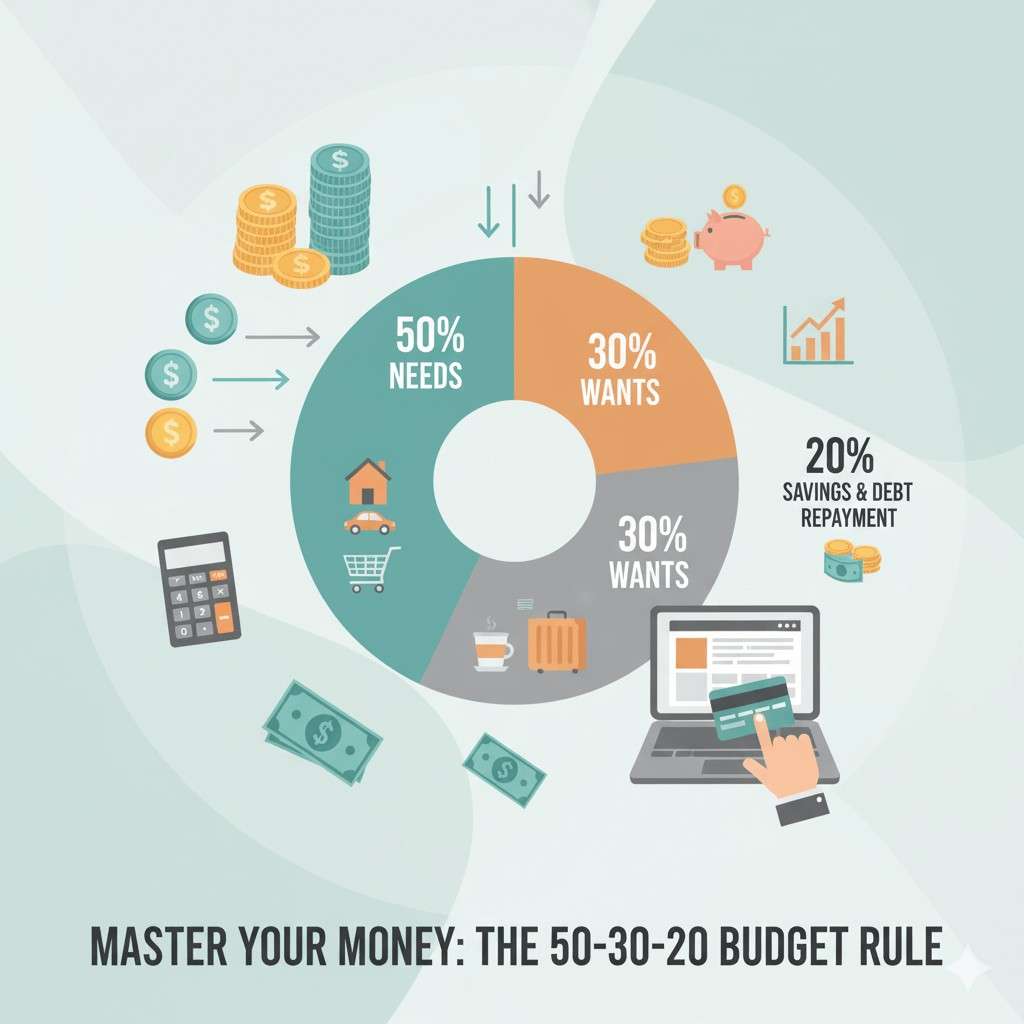
The 50/30/20 rule allocates 50% to needs, 30% to wants, and 20% to savings. The 75-15-10 rule is more realistic for people who can't keep their needs at 50% due to high housing costs, inflation, or lower income. It trades the wants category for more room for needs.
Is the 75-15-10 rule good for high earners?
Not really. High earners with low needs percentages can save more aggressively. The 75-15-10 rule is designed for people whose needs are 60% or more of their income. If you can save 20% or more, you should.
What if my needs are more than 75% of my income?
If your needs exceed 75%, you need to either reduce your needs (move cheaper, cut costs) or increase your income (side hustle, better job). The 75-15-10 rule is a target, not a guarantee. Start with what's possible and improve over time.
Can I use the 75-15-10 rule if I have no debt?
Yes. If you have no debt, the 10% category can be added to your savings category. So you'd have 75% for needs and 25% for savings and investments. That's a strong financial position.
The 75-15-10 rule is not a destination. It's a starting point. It acknowledges that life is expensive and that perfect is the enemy of good. Start where you are. Save what you can. Pay down what you owe. And as your income grows, adjust your percentages. The goal is progress, not perfection.