Real-World Asset Tokenization: $16T Opportunity
Learn how real-world asset tokenization works, why asset managers are testing it, and why experts see a trillion-dollar market.
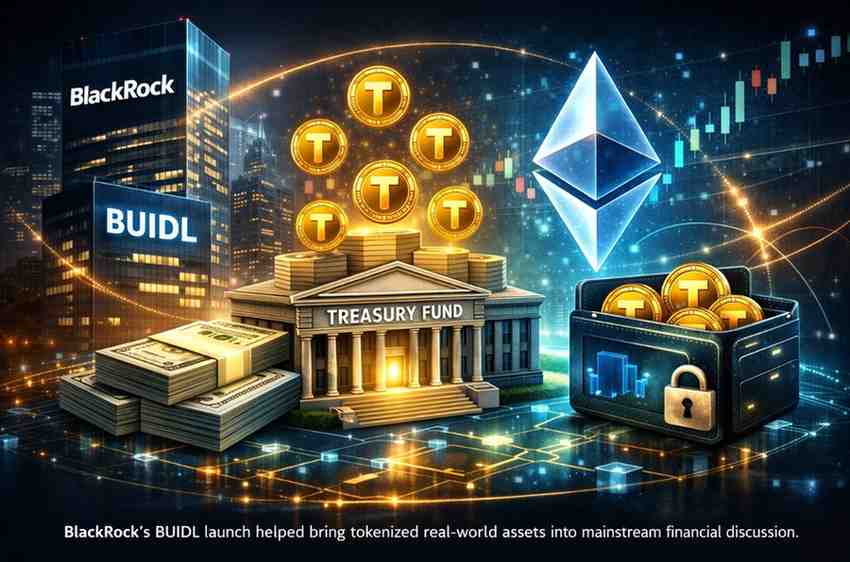
When BlackRock put a Treasury fund on Ethereum
BlackRock launched a tokenized money market fund called BUIDL in March 2024. The fund has cash and U.S. Treasury bills. Tokens on the Ethereum blockchain show who owns the fund.
Investors do not get to see cryptocurrency. The token, on the other hand, is a claim on a traditional financial instrument.
In just a few months, the fund had hundreds of millions of dollars in assets. That scale got people talking about a new way to handle money in both the traditional finance and crypto markets.
The launch also showed a change in how people are testing blockchain networks. Early crypto projects made new digital assets. Tokenization experiments concentrate on documenting the ownership of current assets through blockchain infrastructure.
What Tokenization of Real-World Assets Really Means
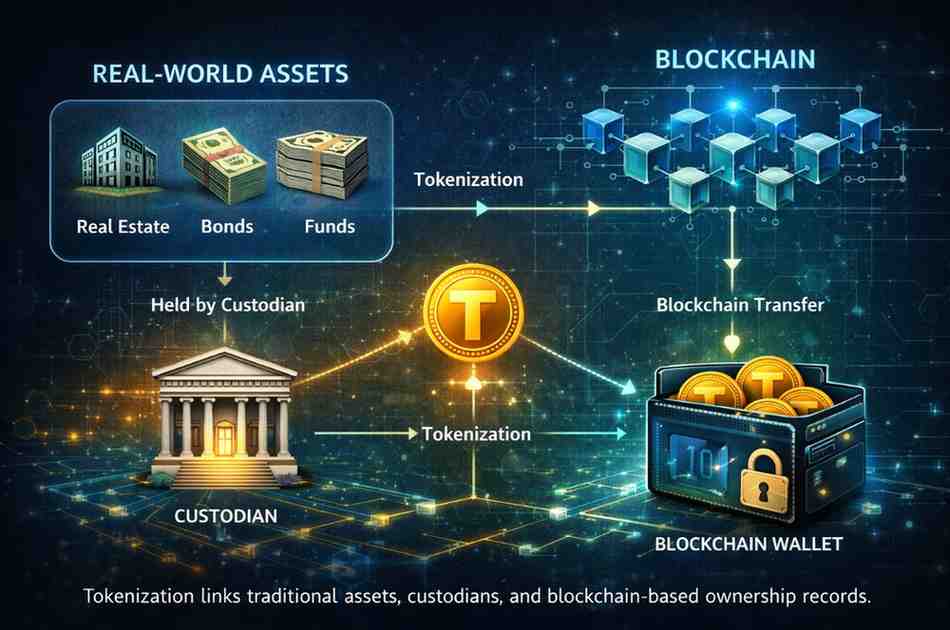
Tokenization of real-world assets turns ownership of an asset outside of the blockchain into blockchain tokens.
The token is a digital record that shows ownership of a part of the underlying asset.
For instance, if a fund has $100 million worth of government bonds, it can issue tokens that represent a small part of that portfolio. Each token stands for a specific claim.
Instead of using traditional settlement systems, transactions are now done through blockchain transfers.
Custodians in regular financial markets still hold the underlying asset.
The idea is older than most cryptocurrency projects
People talked about tokenization long before decentralized finance became popular.
In the past, banks and other financial institutions have looked into similar ideas through digital securities and electronic settlement systems. The infrastructure has changed in the last few years.
Public blockchains let anyone check financial records that are stored on networks. That feature has caught the attention of both crypto developers and banks.
A number of asset managers are now running pilot programs to see if tokenized ownership can make settlement easier or make distribution wider.
The idea is no longer just a theory
The idea is no longer just a theory. There are already a few products on the market.
The BlackRock USD Institutional Digital Liquidity Fund has short-term U.S. Treasury bonds. Tokens that stand for shares in the fund are traded on Ethereum.
Investors still have some exposure to government debt. The blockchain token keeps track of who owns what and lets people move things around the network.
Franklin Templeton OnChain Fund
Franklin Templeton started a U.S. government money fund that uses blockchain technology to keep track of who owns shares. The underlying assets are still regular securities.
Ondo Finance Treasury Tokens
Tokens from Ondo Finance are backed by U.S. Treasury funds. These tokens let crypto investors get exposure to government bonds while they hold them.
The MakerDAO protocol puts some of its collateral into traditional assets like short-term government securities. Regulated middlemen set up these positions.
In this case, blockchain protocols work with financial assets that aren't in crypto markets.
Why Banks and Governments Are Testing Tokenized Bonds
Tokenization is also showing up in the bond market.
As part of a technology test, the European Investment Bank issued a digital bond that was recorded on a blockchain network.
In Asia and Europe, other banks have done similar tests.
The reason is not ideological. It is functional.
When bonds are settled the old-fashioned way, they often need a lot of middlemen, like brokers, clearing houses, and custodians. Blockchain systems can keep track of both issuance and settlement on a shared ledger.
It is still being studied whether that lowers costs on a large scale.
Estimates of the Size of the Market
Banks and consulting firms have tried to figure out how big tokenized assets could get.
Some estimates say the market could be worth almost $16 trillion by 2030.
These estimates are based on the size of the current financial markets.
| Asset category | Approximate global value |
|---|---|
| Real estate | ~$300 trillion |
| Global bond market | ~$130 trillion |
| Private equity | ~$8 trillion |
| Commodities | ~$20 trillion |
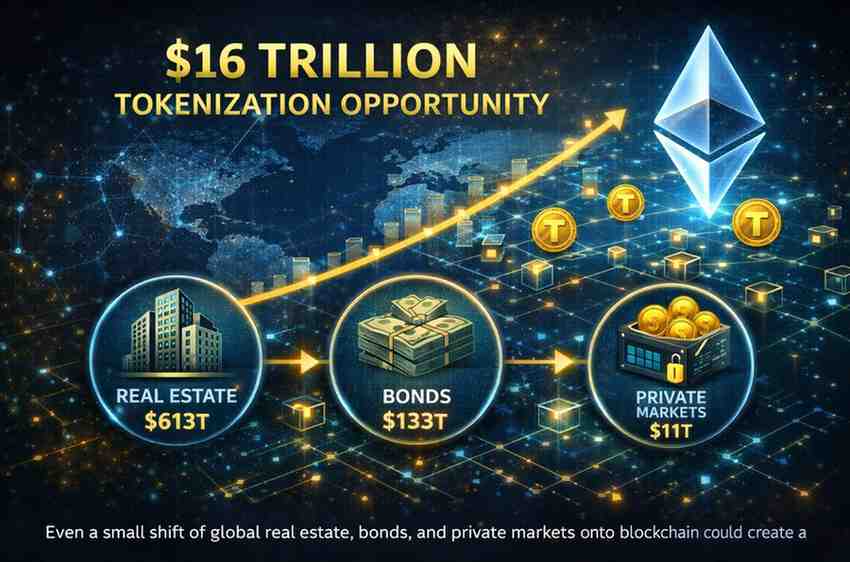
If even a small part of these markets switched to blockchain settlement systems, there would be a lot of tokenized assets.
The estimate doesn't mean that tokenization will take the place of regular markets. It shows how big the addressable asset base already is.
What DeFi Protocols Want
At first, decentralized finance used cryptocurrencies as collateral.
That made a system that went in circles. People borrowed money against crypto assets, which changed in value.
Real-world assets give you different ways to make money.
For example, government bonds pay interest that is easy to predict. Some DeFi platforms are trying out using those assets to back stablecoins or lending protocols.
This is shown by MakerDAO's exposure to Treasury bills. Some of the stablecoin's backing comes from financial instruments that make money outside of the crypto markets.
Developers think this is a way to depend less on collateral that changes value.
What Tokenization Changes and What It Doesn't
Tokenization does not change the asset's economic nature.
A token that stands for a Treasury bill still depends on the same government debt instrument.
The record-keeping system used to keep track of ownership is what's different.
In traditional markets, records are kept in centralized databases that banks and other financial institutions run.
A blockchain network keeps track of who owns tokens in a tokenized system.
Digital wallets, not brokers, handle transfers.
What infrastructure is needed for tokenized assets?
There are many parts that make up a tokenized asset system.
First, a regulated custodian must keep the underlying asset.
Second, the blockchain tokens must legally match the ownership claims they stand for.
Third, compliance procedures must decide who is allowed to hold or move the tokens.
Instead of replacing traditional financial systems, blockchain tokens work with them in most current projects.
Limits That Are Still There
Tokenization experiments are still small compared to the rest of the financial system.
Adoption is affected by a number of things.
Legal systems need to make it clear how securities law treats tokenized ownership.
Institutional investors usually need custodians who are regulated and counterparties who have been checked out.
Liquidity is also important. A tokenized asset can only be traded if there are active buyers and sellers in the market.
Because of these problems, a lot of projects are still in the pilot phase instead of being full-fledged financial markets.
Why People Are Talking About This Now
As decentralized finance grew, so did interest in tokenization.
Crypto developers started to wonder if blockchain systems could work with things that aren't digital assets.
At the same time, banks and other financial institutions began looking into blockchain settlement as part of their research into new technologies.
Those two trends came together.
Both groups are trying out the same ideas today, like using distributed ledgers to keep track of who owns what.
Regulation, infrastructure, and market demand will all play a role in whether the approach becomes popular.
Main Points
- Tokenization is a way to keep track of who owns traditional assets using blockchain tokens.
- A number of asset managers and crypto protocols are already testing tokenized government bonds, funds, and credit instruments.
- Because there are already huge amounts of global financial assets, analysts think the market could be worth trillions of dollars.
- The technology doesn't change what the assets are. It changes how records of ownership and settlement work.
- Adoption is still slow as banks test their systems and rules change.
To bulding a wealth in any space not only in trading, you need proper scaling, not only making profit is important but securing it, cutting loss and expenses is more important, you can check : building wealth from scratch to learn more about building wealth. the aim is to build wealth not just to be rich!
If you're serious about trading crypto or forex the right way without losing your savings, read these guides:
10 Trading Strategies That Work in 2025
Trading for Beginners With $500
How to Build a Smarter Crypto Portfolio
7 Common Crypto Scams and Mistakes
Is Trading Gambling? The Raw Truth Every Trader Needs to Hear.
The Trading Strategy That Finally Made Me Profitable and Why 90% of Traders Fail