Crypto in Nigeria and Africa: What to Know in 2026
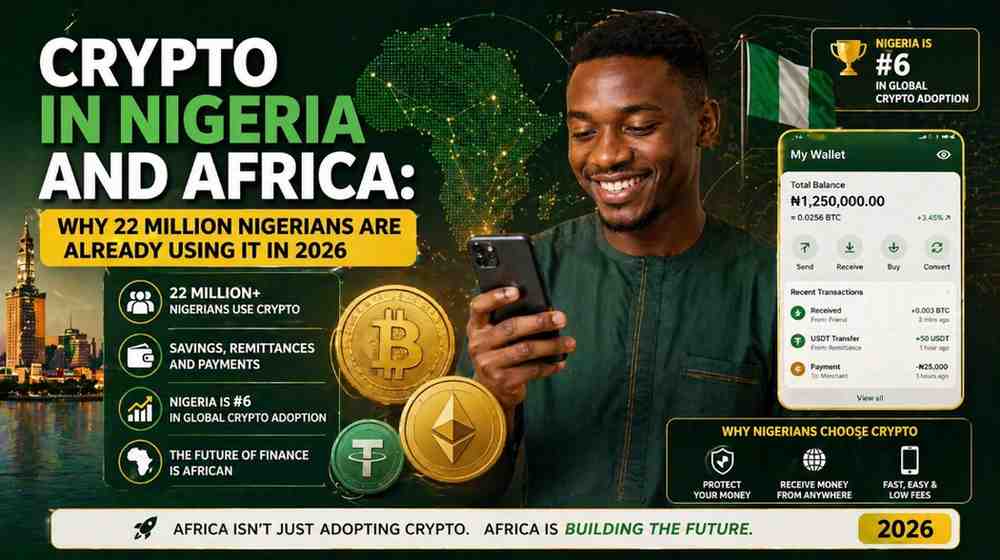
Nigeria is a global crypto adoption leader. Learn why Nigerians use crypto for savings, remittances, and payments in 2026.
Let me tell you something that most financial news outlets will never say out loud: the most interesting crypto story in the world right now is not happening in New York or London. It is happening in Lagos, in Kano, in Abuja, in every corner of Nigeria where ordinary people are quietly using crypto to survive, save, and build a future the traditional banking system refused to help them build.
We are not talking about tech bros chasing the next 100x coin. We are talking about a mother in Ibadan converting her naira to USDT because she watched her savings lose half its value in two years. A developer in Lagos getting paid in crypto because PayPal never worked properly for Nigerians. A trader in Aba paying a Chinese supplier in Bitcoin because the CBN won't release his forex allocation. These are real people solving real problems and that is exactly why Nigeria is now ranked #6 in the world for crypto adoption.
If you have been wondering whether crypto is actually useful for Nigerians, or you want to understand what is really driving this wave of adoption, you are in the right place. This is the full breakdown no hype, no get-rich-quick promises just an honest look at what crypto is doing for Africa and where it is heading in 2026.
Nigeria Crypto Adoption Statistics 2026
Before we get into the why, let us look at the numbers. Because when you see the scale of what is happening, it stops being surprising and starts making complete sense.
| Metric | Figure | What It Means |
|---|---|---|
| Nigeria Global Crypto Rank | #6 | Ahead of most wealthy nations |
| Nigerian Crypto Users (2025) | 22 Million+ | 10.3% of the entire population |
| Projected Nigerian Users by End of 2026 | 28.7 Million | Fastest growing crypto market in Africa |
| Nigeria Onchain Value (2024-2025) | $92.1 Billion | Nearly 3x more than South Africa |
| Sub-Saharan Africa Total Onchain Value | $205 Billion | 52% year-over-year growth |
| Stablecoin Growth in Sub-Saharan Africa | 180% YoY | Driven by savings and remittances |
| Nigerian Crypto Holders Under Age 30 | 52% | One of youngest crypto markets globally |
| Crypto Remittance Cost vs Traditional | ~60% cheaper | Saving families real money every month |
| Nigerian Adults Who Have Invested in Crypto | 35% | One of the highest rates in the world |
Here is the one figure that tells the whole story: over 8% of all crypto transfers in Sub-Saharan Africa involve amounts under $10,000. Globally, that number is just 6%. Think about what that means. This is not big institutions and hedge funds moving billions around. This is a student paying tuition. A mum receiving money from her son in the UK. A small business owner settling an invoice. Everyday Nigerians using crypto for everyday life. That is what real adoption looks like.
Why Are Nigerians Using Crypto? The 5 Real Reasons
People don't just wake up one day and decide to use crypto for fun. In Nigeria, every single reason behind adoption ties back to a problem the traditional system failed to solve. Here are the five biggest ones.
1. Saving in Dollars to Beat Naira Devaluation
This one hits home for almost every Nigerian. Between 2020 and 2025, the naira lost over 60% of its value against the dollar. If you saved N1,000,000 in a Nigerian bank account five years ago, the real purchasing power of that money today is a fraction of what it was and your bank account still shows N1,000,000 as if nothing happened. That is the quiet theft of inflation and devaluation.
Stablecoins changed that. USDT and USDC are cryptocurrencies that are always worth exactly $1. You can buy them on Binance or Bybit using naira, keep them in your wallet, and your savings hold their value no matter what the CBN does next. That is why stablecoins made up 43% of all crypto transactions in Nigeria in 2025. People are not speculating they are protecting what they already worked hard to earn.
2. Cheaper and Faster International Remittances
If you have ever sent money home from abroad or received money from a family member overseasyou already know the pain. Western Union, MoneyGram, and traditional bank transfers charge an average of 8.9% on every $200 sent to Nigeria. That means nearly $18 disappears before the money even lands. For families depending on remittances, that adds up to hundreds of dollars lost every year.
With crypto, the same $200 arrives in minutes. The fees are less than 1%. The person back home gets more money, faster. It is not complicated it is just better. And the Nigerian diaspora has figured this out. Ripple's payment corridors now run across more than 27 African countries, and crypto remittance volumes are growing fast because the math is simply undeniable.
3. Getting Paid for International Freelance Work
Ask any Nigerian freelancer who has worked with international clients and they will tell you the same story. The work is done, the invoice is sent, and then begins the nightmare of actually getting paid. PayPal restricts Nigerian accounts. Bank wire transfers get blocked or take weeks. Clients in the US or UK cannot always send money easily to a Nigerian account.
Crypto solved this completely and permanently. A graphic designer in Enugu finishes a project for a client in Toronto, sends a USDT wallet address, and the payment arrives within the hour. No bank. No intermediary. No explanation required. This is why crypto adoption among young Nigerian professionals — developers, writers, designers, virtual assistants is so high. It is not about investing. It is about getting paid for work you already did.
4. Cross-Border Business Payments
Ask any Nigerian importer what their biggest headache is and most of them will say the same thing: getting forex. The CBN's foreign exchange restrictions have made it genuinely difficult for Nigerian businesses to pay overseas suppliers. Importers have had to queue at banks for allocation, use the black market, or delay shipments waiting for funds to clear.
Many have simply switched to crypto. Pay your Chinese supplier in USDT. Settle your Dubai agent in Bitcoin. The payment lands in minutes, the exchange rate is transparent, and nobody has to fill out seventeen forms and wait three weeks. Cross-border business just works better with crypto and Nigerian entrepreneurs are not waiting for permission to use it.
5. Access to DeFi Saving and Earning in Dollars
This one is newer but growing fast. DeFi decentralised finance means financial products built on blockchain that anyone can access, anywhere, without a bank account or a manager's approval. We are talking about savings accounts earning 5 to 12% annual interest in dollars. Lending platforms. Yield products. Things that Nigerians with money in traditional banks have never had real access to.
DeFi activity in Sub-Saharan Africa surged in 2025, partly because Layer 2 networks brought fees down to a level where ordinary people could actually afford to participate. For someone who has never been able to grow their savings beyond what a naira account offers, earning dollar interest on crypto holdings is a genuinely life-changing shift.
Is Crypto Legal in Nigeria in 2026?
Yes and the journey to get here tells you everything about how determined Nigerians were to use crypto regardless of what the government said. In 2021, the CBN banned banks from processing crypto transactions. The goal was to stop adoption in its tracks. It did not work. Not even slightly. Nigerians moved to peer-to-peer platforms, Telegram groups, and WhatsApp communities and kept going. The ban did not stop crypto it just pushed it underground and made people more creative.
By late 2023, the CBN finally accepted reality and reversed the ban. Banks could now work with licensed crypto companies. Then in 2025, the Nigerian Investment and Securities Act formally recognised digital assets as securities under Nigerian law. For the first time, the industry had a real legal framework. Nigeria now has 25 licensed virtual asset service providers operating under proper government oversight.
The lesson here is simple: you cannot ban necessity. When millions of people need something to survive financially, they will find a way to use it law or no law. The government eventually caught up with reality, and that is actually a good thing for everyone.
Which Cryptocurrencies Are Most Popular in Nigeria?
If you ask most Nigerians what crypto they hold, the answer is Bitcoin first and by a wide margin. Bitcoin makes up 89% of all fiat-to-crypto purchases in Nigeria, compared to a global average of 51%. Nigerians treat Bitcoin the way people in other countries treat gold or a dollar savings account: as something that holds value when everything else is falling apart.
USDT is the second most popular, and honestly the most practically useful for everyday needs savings, payments, and receiving income from abroad. Ethereum comes third, mostly held by younger, more technically minded users exploring DeFi. Binance Coin is also widely held, which makes sense given that Binance is by far the most used exchange platform in Nigeria.
The Youth Factor: Why This Is Just Getting Started
Here is the thing about Nigeria that most global analysts miss when they look at crypto adoption data: Nigeria is an incredibly young country. The median age is around 18 years old. Think about that for a second. Half the country is younger than 18. These are people who have grown up with smartphones in their hands, who have never had a good experience with a bank, and who are looking for financial tools that actually work for them not tools designed for their grandparents.
More than half of Nigerian crypto holders are under 30. Some surveys put that number as high as 74%. This is not a passing trend or a speculative bubble. This is a generation building their financial lives on crypto because it genuinely works better for them than anything else on offer. By 2030, Nigeria is projected to have 40 to 45 million active crypto users about 20% of the entire population. At that scale, calling crypto an alternative financial system stops making sense. It will just be how people manage money.
Where Africa's Crypto Market Is Heading
Sub-Saharan Africa now has four countries in the global top 20 for crypto adoption up from just two in 2024. Nigeria leads the entire region with $92.1 billion in onchain value, nearly three times the volume of South Africa. Ethiopia and Kenya have entered the top 20 for the first time. Kenya passed its first comprehensive crypto regulatory law in 2025. Ghana, Botswana, and Namibia are all building their own frameworks.
Multiple African central banks including Nigeria's are now exploring central bank digital currencies and blockchain-based payment systems. What started as ordinary people finding workarounds to broken financial systems is turning into formal infrastructure. The continent is not catching up to the global crypto market. It is actively shaping where crypto goes next.
The Risks You Need to Know Before You Start
I would be doing you a disservice if I only told you the good parts. The truth is that crypto in Nigeria has also caused serious harm to people who were not careful and mostly that harm came from scams. Ponzi schemes dressed up as crypto investment platforms have taken real money from real Nigerians who could not afford to lose it. MMM was just the beginning. If anyone whether it is a friend, a Telegram group, or a website promises you guaranteed daily profits from crypto, it is a scam. Full stop. There is no such thing as guaranteed returns in crypto.
Beyond scams, there is the issue of education. Many people using crypto in Nigeria still do not fully understand what they are holding or how to keep it safe. If you lose your private key or your seed phrase, your funds are gone forever. Not temporarily unavailable gone. There is no crypto customer service line to call. No way to reverse a wrong transaction. This is why taking time to actually learn before you invest is not optional. It is the most important step.
Internet access is also still uneven across Nigeria. Crypto works best with reliable connectivity, and that is something many people outside major cities do not have consistently. And while regulation is improving, it is still developing which creates some uncertainty for businesses trying to operate at scale across African borders. These are real issues worth knowing about. They are not reasons to stay away from crypto. They are reasons to go in informed.
To bulding a wealth in any space not only in trading, you need proper scaling, not only making profit is important but securing it, cutting loss and expenses is more important, you can check : building wealth from scratch to learn more about building wealth. the aim is to build wealth not just to be rich!
Continue learning


Questions and answers
Is crypto legal in Nigeria in 2026?
Yes, crypto is fully legal in Nigeria in 2026. The CBN reversed its 2021 ban in late 2023, and the Nigerian Investment and Securities Act 2025 formally recognised digital assets as securities under Nigerian law. The SEC now oversees 25 licensed virtual asset service providers in the country. You can buy, sell, and hold crypto legally.
Which crypto exchange is best for Nigerians in 2026?
Binance is the most widely used exchange in Nigeria because of its naira support and peer-to-peer trading features. Bybit and KuCoin are solid alternatives. For direct naira-to-crypto P2P trading, Noones is popular. Whichever platform you choose, always enable two-factor authentication and never share your login details or seed phrase with anyone.
How many Nigerians use crypto in 2026?
About 22 million Nigerians held cryptocurrency as of 2025 that is 10.3% of the entire population. By end of 2026, that number is expected to hit 28.7 million. By 2030, projections put Nigeria at 40 to 45 million active crypto users, roughly 20% of the total population.
What is the safest way for Nigerians to save in dollars using crypto?
Buy USDT or USDC on a reputable exchange like Binance or Bybit using naira, then withdraw to your own personal wallet Trust Wallet or MetaMask are the most popular options. Do not keep large amounts sitting on an exchange long term. Write down your seed phrase, store it somewhere safe offline, and never share it with anyone under any circumstances.
Why is Nigeria so high in global crypto adoption rankings?
Because crypto solves real, urgent problems for ordinary Nigerians. Naira devaluation, expensive remittances, blocked international payments, and exclusion from global banking have pushed millions of people toward crypto as a practical solution. That kind of necessity-driven adoption is far stickier than the speculative buying you see in wealthier markets.
What are stablecoins and why do so many Nigerians use them?
Stablecoins are crypto assets pegged to a stable value usually the US dollar. USDT and USDC are always worth $1 each no matter what the market is doing. Nigerians use them to protect savings from naira devaluation, send money internationally without heavy fees, and receive payments from foreign clients. They made up 43% of all crypto transactions in Sub-Saharan Africa in 2025.
What are the biggest crypto scams Nigerians should avoid?
Watch out for Ponzi schemes promising guaranteed daily or weekly returns, fake investment platforms, paid signal groups on Telegram and WhatsApp, people impersonating major exchanges, and fake airdrop links asking you to connect your wallet. The rule is simple: if anyone is guaranteeing you profits from crypto, it is a scam. Real investing never comes with guarantees.
Can someone abroad use crypto to send money to Nigeria?
Absolutely and it is one of the best ways to do it. Traditional remittance services charge around 8.9% on every $200 sent to Nigeria. Sending USDT or Bitcoin cuts that cost by about 60%. The money arrives in minutes. The person in Nigeria can then sell on a local P2P platform or exchange to convert to naira. Many Nigerian families are already doing this regularly.
Twenty-two million Nigerians did not start using crypto because someone told them to. They started because they needed it. Because the naira was falling and their savings were disappearing. Because they had skills the world wanted to pay for but no reliable way to receive that payment. Because they had family abroad who were losing nearly 9% of every transfer to middlemen. Crypto was not a luxury for these people. It was a solution. And that is exactly why this adoption is not going to slow down. If you are reading this and you are still on the fence about crypto start by learning. Read, ask questions, understand what you are getting into before you put any money in. The opportunity is real. So are the risks. Go in educated, go in careful, and keep grinding toward green.