10 Trading Strategies That Work in 2025
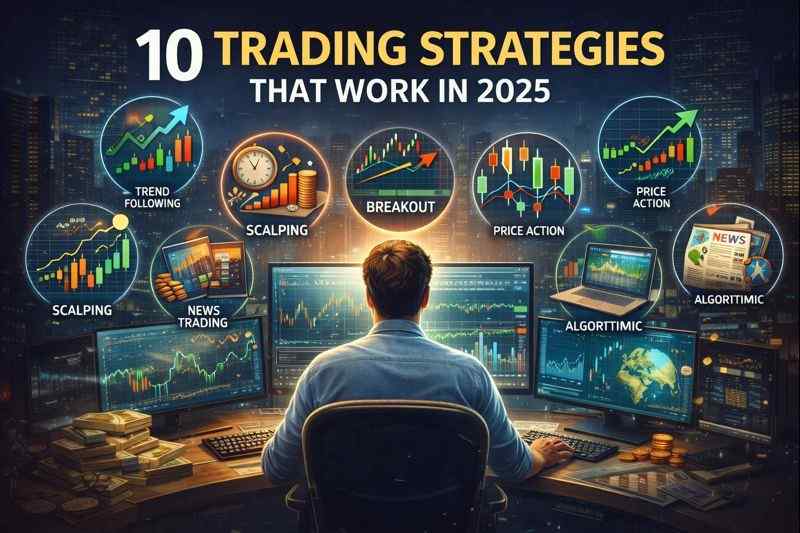
Discover 10 trading strategies for 2025 to manage risk, improve consistency, and navigate fast-moving financial markets.
10 Trading Strategies That Work in 2025
A Guide to the Real World Based on Real Life, Not Hype
Most traders don't fail because it's impossible to trade. They fail because they have the wrong ideas about trading, don't know how to control their risk, and don't have a plan.
If you've ever
- Opened a trading account with a lot of excitement
- Watched a few YouTube videos and thought you were "ready"
- Made some quick wins and then lost everything
- Jumped from one strategy to another looking for security
You aren't lazy. You're not dumb. You're going through what almost every retail trader goes through.
This guide is meant to break that cycle.
Not to sell hopes. Not to promise quick cash. But to help you understand what trading strategies really do, how they are used in real life, and why discipline is more important than choosing a strategy.
Writer and Openness
Written by Mubarak Isa, a teacher of trading and personal finance who focuses on real-world trading strategies, risk management, and the psychology of traders.
This information is only for learning. It doesn't give financial advice or promise profits. There is risk in trading, and losing money is part of the learning process.
What Most People Don't Know About Trading Strategies
A strategy is not a secret code.
A strategy is just:
- A clear way to get into the market
- A clear way to handle risk
- A process that can be used again and again
Most traders don't lose money because their strategy is bad; they lose money because
- They don't know when to use it
- They use it in the wrong market conditions
- They change the rules in the middle of a trade
- They take too much emotional and financial risk
Professionals think about probabilities. Beginners think about results.
That difference in mindset is more important than the signs.
1. Strategy for Following Trends
Following trends is one of the oldest and most reliable strategies for stocks, forex, and crypto.
The main idea is simple:
Trade in the same direction that the market is already going.
Tools that are often used:
- Averages of Moving Averages
- ADX
- MACD
Best for: Newbies and swing traders Time commitment: Medium Risk level: Moderate
Most beginners fail at trend trading because they enter too late or don't want to leave when momentum slows down. Patience, not excitement, is what trend trading rewards.
2. Breakout Plan
Breakout trading looks for times when the price breaks free from a range, support, or resistance level.
It works best when:
- Times of high volatility
- When the forex session overlaps
- When the crypto market is moving
Best for: People who trade a lot Risk level: High
Experience in the real world
It happens a lot that people think they have broken out. A lot of traders lose money because they think every breakout is real. Volume confirmation and patience are very important here.
3. The Scalping Strategy
Scalping means opening and closing trades in just a few seconds or minutes.
The goal is to catch small changes in price over and over again.
What you need:
- Quick execution
- Low spreads
- Good emotional control
Best for: Full-time traders Worst for: People who are just starting out
The hard truth
Scalping makes emotional mistakes worse. A lot of new traders trade too much, trade out of anger, and get mentally burned out.
4. Strategy for Swing Trading
The goal of swing trading is to take advantage of price changes that happen over a few days.
For people with:
- Work
- School
- Other duties
Tools that are often used:
- RSI
- Stochastic Oscillator
- Fibonacci retracement
Best for: People who trade part-time Risk level: Moderate
Experience in real life
Swing trading helps people who are addicted to screens and under a lot of stress, which is why so many retail traders who make money end up here.
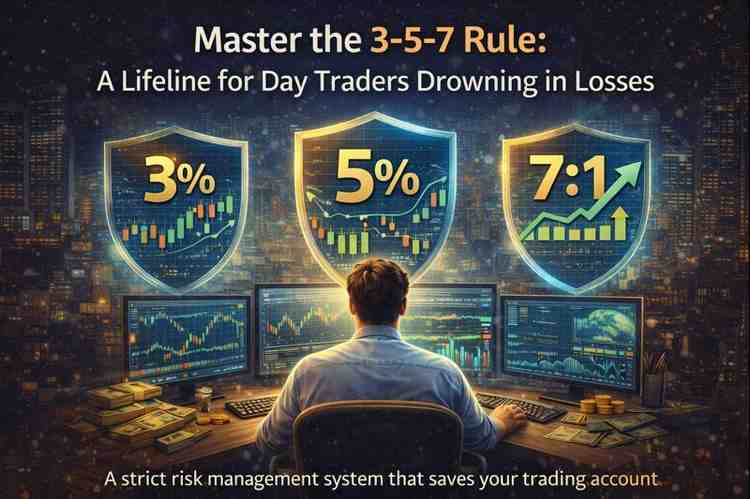
5. The 3-5-7 Risk Rule (Survival Framework)
This is not a way to trade; it's a risk survival system.
- Don't risk more than 3% on each trade
- Don't have more than 5% total exposure
- Look for good reward-to-risk ratios
Why this is important
Without risk control, a lot of profitable plans don't work. This rule is there to keep you in the game long enough to learn.
6. Strategy for Price Action
Price action is all about reading how the market behaves in real time.
Traders don't rely on indicators as much as they study:
- Patterns of candlesticks
- Structure of the market
- Support and resistance
Best for: Traders with some experience to advanced traders
A mistake that happens a lot
Too much analysis. A lot of traders see patterns everywhere and forget to confirm them.
7. Strategy for Trading News
This strategy trades on the volatility that happens when big economic news comes out, like:
- NFP
- CPI
- Decisions about interest rates
Best for: Advanced traders Risk level: Very high
Caution
Slippage and emotional reactions cause a lot of accounts to lose money in news trading. It is not easy for beginners.
8. Algorithmic (Automated) Trading
Automation uses bots or code to make trades.
Some common tools are:
- Trading bots in Python
- MetaTrader Expert Advisors
- TradingView scripts
Advantage: Takes away emotion Risk: Bad testing and blind trust
Check the facts
Automation doesn't get rid of risk. It just changes the way mistakes happen.
9. The Mean Reversion Strategy
Mean reversion says that prices will eventually go back to their average.
Tools that are often used:
- RSI
- Bollinger Bands
Works best when: The market is range-bound Fails when: Strong trends take over
10. Strategy for Global Diversification
Professional traders don't rely on just one market.
They spread risk across:
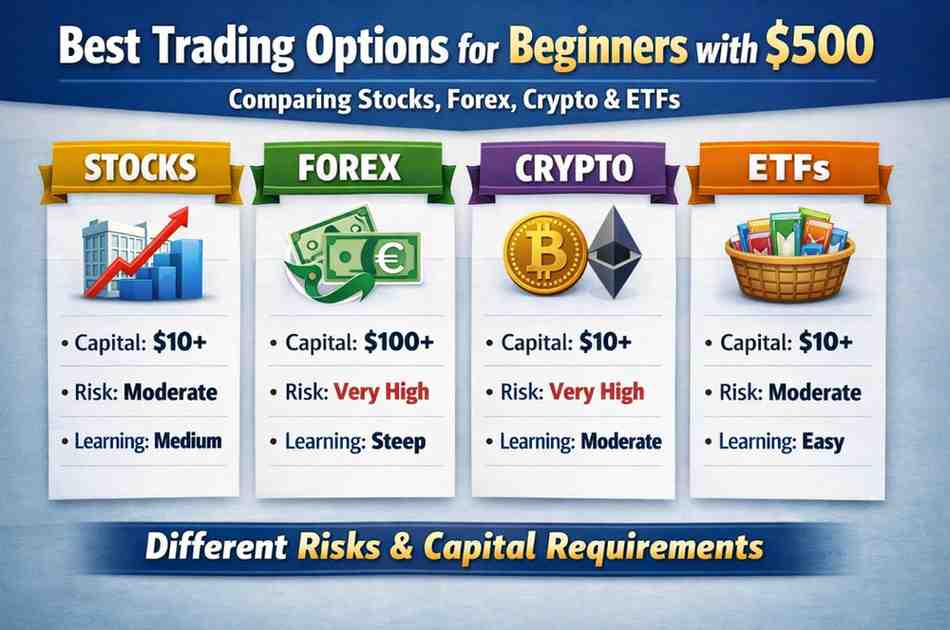
- Stocks
- Forex
- Crypto
- Different areas
Diversification makes regional news and shocks less important.
Which trading strategy works best for you?
| Strategy | Best For | Time Required | Risk Level |
|---|---|---|---|
| Trend Following | Beginners | Medium | Moderate |
| Swing Trading | Part-time traders | Low | Moderate |
| Scalping | Full-time traders | High | High |
| Price Action | Experienced traders | Medium | Moderate |
| News Trading | Advanced traders | Low | Very High |
| Algorithmic | Technical traders | Low (after setup) | Variable |
Mistakes That Traders Make in the Real World
- Changing strategies too often
- Trading too much
- Not paying attention to stop losses
- Making positions bigger because of emotions
- Trading without writing down what you do
These mistakes cost more than bad strategies do.
Questions that are often asked
Is there a strategy that always works? No. Markets are always changing.
How many strategies should a beginner use? At most, one or two.
Can small accounts make money? Yes, but it takes time.
What is the safest strategy for beginners? Swing trading and following trends.
Why do most traders still lose money? Because they don't follow the rules and don't manage their risks well.
To bulding a wealth in any space not only in trading, you need proper scaling, not only making profit is important but securing it, cutting loss and expenses is more important, you can check : building wealth from scratch to learn more about building wealth. the aim is to build wealth not just to be rich!
Last Thoughts: Have the Right Expectations
There is no one-size-fits-all trading strategy.
To be successful in trading, you need to:
- Discipline
- Control of risk
- Stability of emotions
- Consistency
Your results change over time when you treat trading like a business instead of a game.