NFTs and DeFi: A Real Talk Crypto Guide
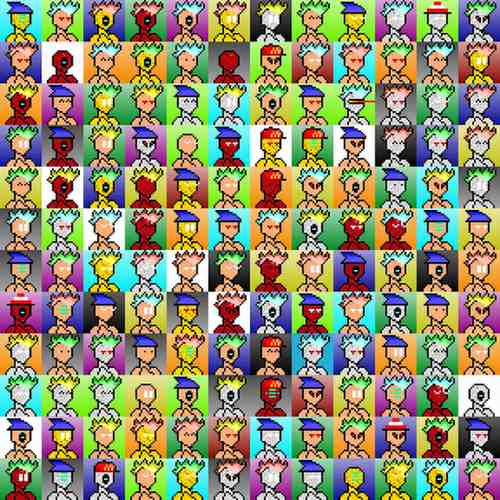
Understand what NFTs and decentralised finance actually do, how the technology works, where the risks sit, and how to evaluate a project without chasing hype.
NFTs and decentralised finance are often presented as either the future of money or a collection of expensive mistakes. Neither description is useful on its own. These technologies can support interesting experiments, but a real use case does not automatically make a token valuable, a platform safe or an investment sensible. This guide explains the basics without assuming you are a developer or experienced trader. It is educational, not a recommendation to buy tokens or deposit money.
What is an NFT?
NFT stands for non-fungible token. It is a unique token recorded on a blockchain. Unlike units of the same cryptocurrency, which are generally interchangeable, an NFT has an identifier that distinguishes it from other tokens. It can be associated with digital art, a membership pass, an in-game item, a ticket or another claim.
The token itself does not automatically give its holder copyright, ownership of the underlying artwork, exclusive access or a legal right to a physical object. Those rights depend on the project's terms, applicable law and how the asset is structured. A blockchain record can show that a wallet holds a token; it cannot by itself prove that the token's marketing claims are enforceable.
What NFTs can and cannot prove
- A blockchain record can show that a particular wallet holds a token at a given time.
- A token may point to an image or file stored elsewhere; the linked content may change or disappear.
- Holding an NFT does not automatically transfer copyright or permission to reproduce artwork.
- Uniqueness does not guarantee demand, resale value or a liquid market.
- A project can change its services or benefits even if the token record remains.
Where NFTs may have practical uses
Possible uses include digital collectibles, event access, membership credentials, game items and records that need to be checked across systems. A ticket represented by a token could make certain transfers easier to verify, but the benefit depends on the organiser, ticketing system and resale rules. A blockchain is not automatically better than a conventional database.
Creators should also be realistic about royalties. Some marketplaces or smart contracts can support creator fees on secondary sales, but enforcement varies by marketplace policy. A creator should not assume every future resale will generate a royalty.
What is DeFi?
DeFi means decentralised finance. It describes financial services built with blockchain-based software, often using smart contracts. Depending on the protocol, users may swap tokens, lend, borrow or provide liquidity without a traditional bank acting as the central operator.
A smart contract is code deployed to a blockchain that can automatically carry out defined actions. Automation does not remove risk. Code can contain bugs, governance can be concentrated, and users may have limited ways to reverse a transaction or recover funds.
Common DeFi activities
Token swaps
A decentralised exchange may let users swap tokens through smart contracts and liquidity pools. The displayed price is not necessarily the final price. Slippage, network fees, pool depth and market movement can change the result.
Liquidity provision
Some protocols let users deposit token pairs into a pool used by traders. Providers may receive fees or token incentives. Returns are uncertain and can be offset by token-price changes, smart-contract failures or impermanent loss. Incentive rates can change quickly and should not be treated as guaranteed interest.
Lending and borrowing
Some protocols let users supply crypto assets to lending pools or borrow against collateral. Borrowers may be liquidated if collateral value falls or loan conditions change. Lenders face smart-contract, liquidity and protocol risks. These deposits are not the same as a bank savings account and may not have government-backed deposit insurance.
Stablecoins
Stablecoins are tokens designed to track another asset, often a currency such as the US dollar. Their stability depends on the issuer, reserve assets, redemption arrangements, market confidence and the mechanism used to maintain the peg. A stablecoin can trade below its target value or become difficult to redeem. The label stable is not a guarantee.
Why advertised yields can mislead
A high annual percentage yield may be driven by temporary token rewards, leverage, borrowing demand or assumptions that do not hold for long. The rate can change, and rewards may be paid in a volatile token. Consider a hypothetical protocol advertising 20% on a $1,000 deposit. That does not mean you will safely receive $200: fees, token-price changes, withdrawal restrictions or a contract exploit could cause a loss.
Risks to understand before connecting a wallet
- Smart-contract risk: bugs, exploits or design flaws can allow funds to be drained or locked.
- Custody risk: a lost seed phrase or compromised private key can mean permanent loss of access.
- Phishing risk: fake websites and approval requests can trick users into signing harmful transactions.
- Liquidity risk: you may not be able to sell or withdraw at the price you expect.
- Market risk: token prices can fall sharply, including stablecoins losing their peg.
- Governance risk: a small group may control upgrades, fees or treasury decisions.
- Legal risk: rules differ by country and may change; services can be restricted.
- Operational risk: network congestion, wrong addresses and incompatible networks can create costly mistakes.
How to assess a project
- Identify the actual product. Can you explain what it does without repeating a slogan?
- Read the terms. Understand what the token gives you and what it does not.
- Check who controls upgrades, treasury funds and governance decisions.
- Look for independent security reviews. An audit is useful evidence, not a guarantee.
- Understand where returns come from and who pays the fees.
- Check liquidity and realistic exit options; a quoted price does not prove you can sell.
- Be wary of anonymous claims, guaranteed returns, secrecy and pressure to act quickly.
- Never share your seed phrase or sign a transaction you do not understand.
A safer way to learn
You do not need to buy a token to understand the technology. Start with educational material from established consumer-protection and financial-regulatory sources. Explore public blockchain data without connecting a wallet. If you decide to experiment, use only an amount you can afford to lose entirely, keep long-term savings separate and avoid borrowing to speculate.
The practical conclusion
NFTs can represent unique digital tokens, and DeFi can automate financial activities through smart contracts. Those are technical capabilities. Whether a particular project is useful, secure or worth paying for is a separate question. Focus on the rights you receive, the service that exists today, the risks you can explain and the exit route you can actually use.
Related reading
Continue learning
Questions and answers
Does owning an NFT mean I own the artwork?
Not automatically. An NFT records a token on a blockchain, while copyright and other rights depend on the licence, sale terms and applicable law.
Can DeFi platforms guarantee returns?
No. Advertised yields can change and may depend on token incentives, market demand and risk-taking. Smart-contract, liquidity and market losses are possible.
Are stablecoins risk-free?
No. A stablecoin can lose its peg, face redemption problems or be affected by issuer, reserve, market and regulatory risks.
Is a smart-contract audit a guarantee of safety?
No. An audit may identify some issues in reviewed code, but it cannot guarantee that a protocol is secure or protect against every operational, governance or market risk.
Do I need to buy crypto to learn about NFTs and DeFi?
No. You can learn the concepts and inspect public blockchain information without buying tokens or connecting a wallet.