How to Build an Emergency Fund on a Low Income: A Realistic Step-by-Step Plan
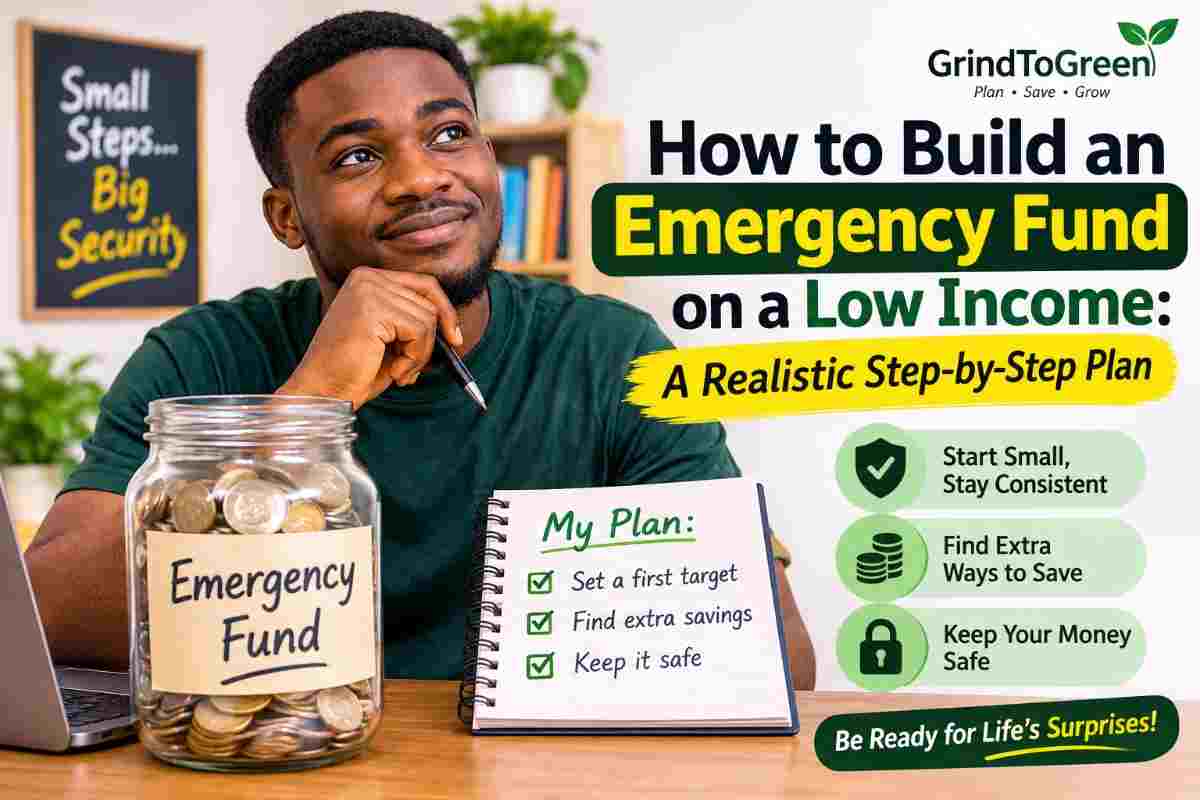
Learn how to build an emergency fund on a low income with small, realistic steps: set a first target, find extra savings and keep the money safe.
Most emergency fund advice starts with "save three to six months of expenses." If your income barely covers rent, food and transport, that number can feel like a joke. It is a useful long-term target, but it is a bad place to start.
The good news is that a much smaller fund already makes a real difference. A few hundred dollars can mean paying for a clinic visit or a broken phone from savings instead of putting it on a high-interest loan. This guide shows how to build an emergency fund on a low income in stages, using small amounts and realistic timelines. All examples use USD for illustration, so swap in your own currency and costs.
What counts as an emergency?
An emergency fund is money set aside for expenses that are unexpected, necessary and urgent. Typical examples include:
- A medical or dental bill
- An urgent repair to something you need for work or daily life, such as a phone, a bike or a car
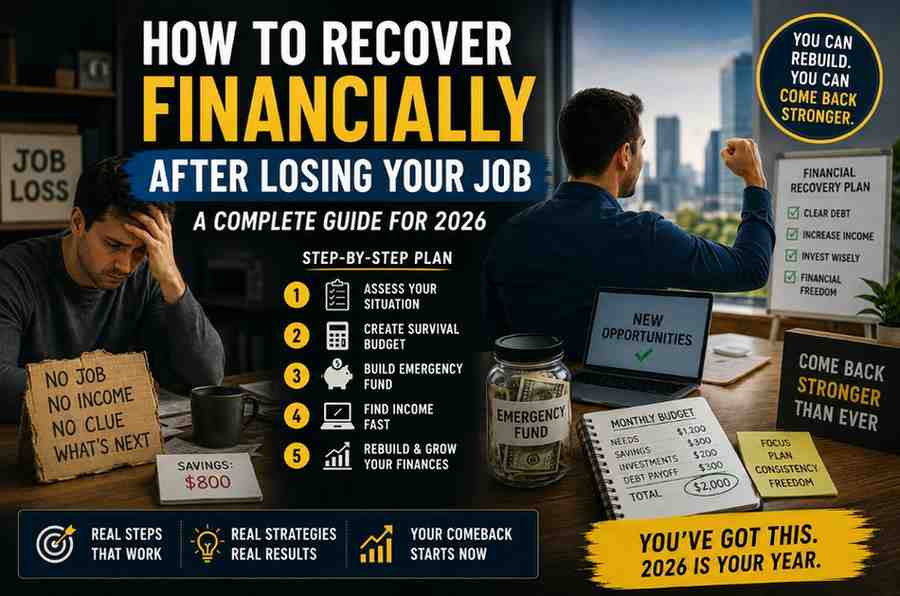
- A sudden gap in income, such as reduced hours or a lost job (if that has already happened, see our guide on recovering financially after losing your job)
- Emergency travel, for example to a sick family member
A sale, a holiday, a planned school fee or a new gadget is not an emergency, even when it feels pressing. Those belong in a separate savings goal. Keeping the two apart matters, because a fund that gets raided for ordinary spending is empty when you need it.
How much do you actually need?
The common guideline is to build up to three to six months of essential expenses. Essential expenses are the costs you must pay to keep going: housing, food, utilities, transport to work, minimum debt payments and basic healthcare. Subscriptions, eating out and other optional spending do not count.
That target is worth knowing, but you do not need to reach it before the fund helps you. Think of it in milestones. The table below assumes essential costs of $800 a month.
| Milestone | Example amount | What it protects you from |
|---|---|---|
| Starter fund | $300 to $500 | Small shocks: a minor repair, a clinic visit, a phone fix |
| One month of essentials | $800 | A short gap in income or a mid-size bill |
| Three months of essentials | $2,400 | A job loss or longer illness, for many people |
| Six months of essentials | $4,800 | Greater security, especially with irregular or single income |
The right starter amount is a judgment call. Pick a figure that would cover your most likely small emergency, and treat it as your first finish line.
Step 1: Work out your essential monthly costs
You cannot set a sensible target without knowing what you spend. Look at the last one to three months of bank statements, mobile money records or receipts, and add up the essentials only.
If you do not have records, track your spending for one month with a notes app or a notebook. You are not trying to judge yourself, only to see where the money actually goes. Most people find at least one or two categories that are larger than they assumed. If you do not use a budget yet, our comparison of seven budgeting methods can help you pick a system that fits a tight income.
Step 2: Set a small first target
Pick the starter amount from the table and give it a rough date. Suppose you can save $10 a week. That is $520 over a year, which already clears a $500 starter fund. At $15 a week you would reach one month of essentials in the example above ($800) in a little over a year.
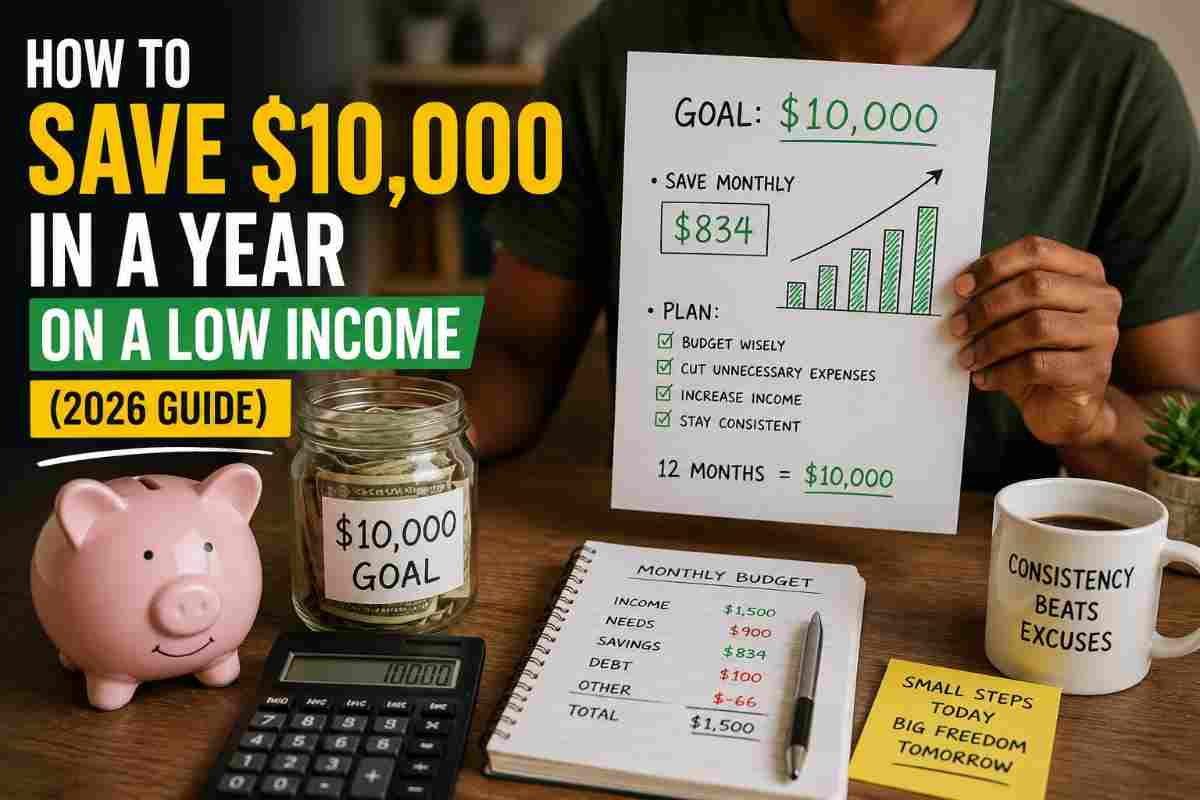
Those numbers are slow, and that is fine. Saving $5 a week is $260 a year, which is still more protection than you have today. What matters most early on is building the habit, because the amount can grow when your income does. Once your starter fund is in place, the step-by-step plan in how to save $10,000 in a year on a low income shows how to scale up the same approach.
Step 3: Find the money
When income is tight, there is rarely a large pile of waste to cut. The realistic approach is to find small amounts from several places.
Review recurring costs once. Check subscriptions, data plans, airtime top-ups and bank fees. Cancelling or downgrading one service you barely use can free up a few dollars a month with no ongoing effort. Our list of budgeting hacks that work includes a subscription audit you can follow.
Redirect irregular money. Tax refunds, bonuses, gifts, a one-off payment for extra work or a refund from a returned item can go straight into the fund. A single $100 deposit from a windfall equals months of tiny weekly savings.
Add a little income if you can. Selling things you no longer use is a one-time boost. A side income can speed things up, but be wary of anything that promises fast or guaranteed earnings. Never pay upfront to get work, and do not take on debt to chase extra income.
Lower the amount, not the habit. If a month is bad, save $2 instead of skipping. Keeping the routine alive is worth more than the amount.
Step 4: Automate it and keep it separate
Saving what is left at the end of the month rarely works, because there is usually nothing left. Move the money as soon as you are paid instead. If your bank allows it, set up an automatic transfer on payday, even for a small amount. If you are paid in cash or by mobile money, move the amount into your savings account or wallet right away, before spending.
Keep the fund in its own account, separate from your daily spending. If it sits in the same balance as your everyday money, it is easy to spend without noticing. Some people also choose an account without a debit card, which adds just enough friction to stop impulse withdrawals.
Step 5: Choose a safe place to keep it
An emergency fund has two jobs: it must be available quickly, and it must still be worth what you put in when you need it. That points to a plain savings account, or the equivalent where you live.
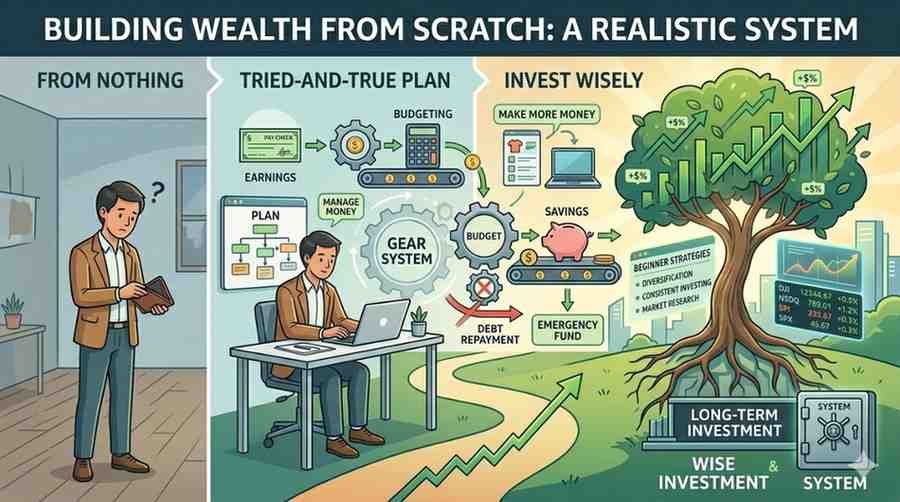
It is also why stocks, funds and cryptocurrency are usually a poor home for an emergency fund. Their prices can fall sharply, and they can be down at exactly the moment you need the money. Investing is a worthwhile goal, and our guide to building wealth from scratch covers it, but it is a separate goal from protection.
A few things to check when choosing an account:
- Access: Can you withdraw within a day or two without penalties?
- Fees: Some accounts charge monthly fees or minimum balances that eat into small savings.
- Interest: Rates differ widely between countries and banks, and they change over time. Compare current offers, but do not let a slightly higher rate matter more than safety and access.
- Protection: Many countries have deposit insurance schemes that protect savings up to a limit if a bank fails. The rules and limits vary, so check with your national regulator or the bank itself.
What if your income is irregular?
Freelancers, gig workers, traders and seasonal workers face a harder version of this problem, because both income and emergencies are unpredictable. Two adjustments help.
First, save a percentage of each payment instead of a fixed amount. Setting aside a fixed share, such as a tenth of whatever you receive, means good weeks build the fund faster and slow weeks do not break the plan. Our guide to budgeting with irregular income explains how a buffer fund differs from an emergency fund.
Second, aim for a larger fund over time. With uneven income, the upper end of the three to six month range, or beyond, gives you more room to breathe.
Should you pay off debt first?
This is a common dilemma, and there is no single answer. If you have expensive debt, putting every spare dollar toward it can look like the smartest move. The risk is that without any cushion, the next small emergency pushes you back into borrowing, and you end up in the same place.
A widely used middle path is to build a small starter fund first, then pay down high-interest debt more aggressively, then return to extending the fund. Keep paying at least the minimum on every debt throughout. Your own interest rates, income stability and local lending rules should shape the details. For a fuller look at ordering your priorities, read what to do with extra money: save, pay debt or invest.
Common mistakes to avoid
- Waiting until you can save a "proper" amount. Starting with a small sum beats waiting for a better month.
- Mixing it with other goals. A fund that doubles as a holiday pot will not be there in a crisis.
- Treating every want as an emergency. Decide your rules before the temptation arrives.
- Keeping the money where it can lose value quickly. Safe and accessible comes first.
- Giving up after using it. Using the fund is exactly what it is for. The next step is to rebuild it.
What to do after you use it
If an emergency forces you to withdraw from the fund, you did not fail. The fund did its job. Pause other optional savings goals if you can, and restart your regular transfers as soon as your situation settles. Rebuilding toward the starter amount is usually quicker the second time, because the habit is already in place.
This article is general education, not personalized financial advice. Interest rates, deposit protection and rules vary by country, so check current details with your bank or local regulator.
Continue learning
Questions and answers
How much should I have in an emergency fund if I earn very little?
Start with a small starter fund that covers your most likely minor emergency, often a few hundred dollars or its local equivalent. Then work toward one month of essential expenses, and later toward three to six months.
Is $500 enough for an emergency fund?
It can cover many small emergencies, but it will not cover a job loss or a major bill. Treat it as a first milestone, not the destination.
Where should I keep my emergency fund?
Somewhere safe and easy to access, such as a savings account separate from your everyday spending. Avoid assets whose value can swing, such as stocks or cryptocurrency.
Can I use my emergency fund for bills I know are coming?
Predictable costs like school fees, annual insurance or holidays should have their own savings plan. The emergency fund is for the unexpected.
Should I save or pay off debt first?
Many people do both in stages: a small starter fund first, then extra payments on high-interest debt, then a larger fund. Keep making at least the minimum payments on all debts while you do this.
This week, add up your essential monthly costs, pick a starter amount, and set up a small automatic transfer or a fixed payday habit. Even a modest amount, repeated steadily, gives you something to fall back on the next time life gets expensive.